
Light
Bright Indirect Light
Requires bright, filtered sunlight; protect from intense, direct midday sun.
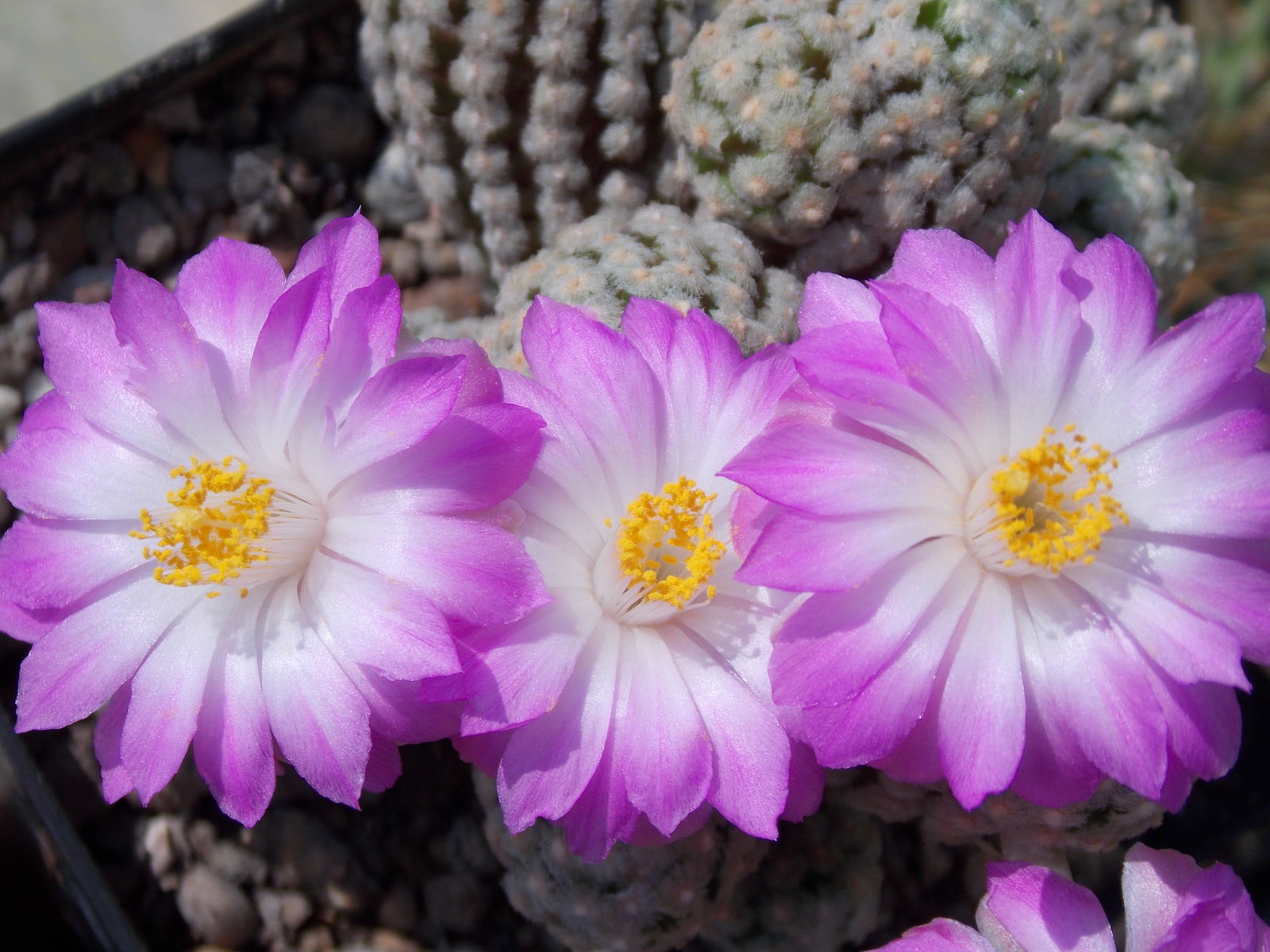 Reference image
Theresa's Cactus
Cochemiea theresae (formerly Mammillaria theresae) is a highly sought-after miniature succulent subshrub in the family Cactaceae. Famed for its disproportionately large, vivid purple-pink blossoms and feathery spine clusters, this species is a jewel in specialist collections but demands careful cultivation.
Discovered in 1967 and named in honor of Therese Bock, this species was traditionally classified under the giant genus Mammillaria. Modern phylogenetic analyses have since transferred it to the resurrected genus Cochemiea based on distinct seed and floral characteristics 1.
Endemic to the Mexican state of Durango, Cochemiea theresae thrives in a highly restricted montane habitat at elevations of 2100 to 2400 meters 2. It grows primarily in cracks of limestone rocks and among gravelly soils in semi-desert shrublands.
The plant body is olive-green, cylindrical to globose, and remains relatively small, rarely exceeding 4 cm in height. It is closely covered with white, plumose (feather-like) radials that form star-like patterns. In late spring, spectacular, funnel-shaped violet-pink flowers emerge, completely eclipsing the stem 1.
Successful cultivation requires an exceptionally porous, mineral-based potting medium with minimal organic components. Watering must be applied sparingly during the active spring and summer growth cycle. Keep the plant completely dry and cool during winter dormancy to promote healthy root systems and bud initiation.
The most prevalent issue is root rot induced by overwatering or compacted soil. Using standard commercial potting soil without extra grit will kill this species. Insufficient light leads to etiolation, while lack of winter chill results in poor flowering.
Requires bright, filtered sunlight; protect from intense, direct midday sun.
Water strictly on a dry-out cycle; keep completely dry in winter.
Opt for highly porous limestone, pumice, and grit mix with low organic matter.
Non-toxic to pets, but the fine, plumose spines should be handled gently.
Moderate to hard; requires precise watering habits and cold winter rest.
Native to the Coneto Pass area in Durango, Mexico, where it grows in high-altitude montane shrublands on rocky limestone crevices.
