
Light
Bright Indirect Light
Thrives in bright, indirect sunlight; shield from intense afternoon sun.
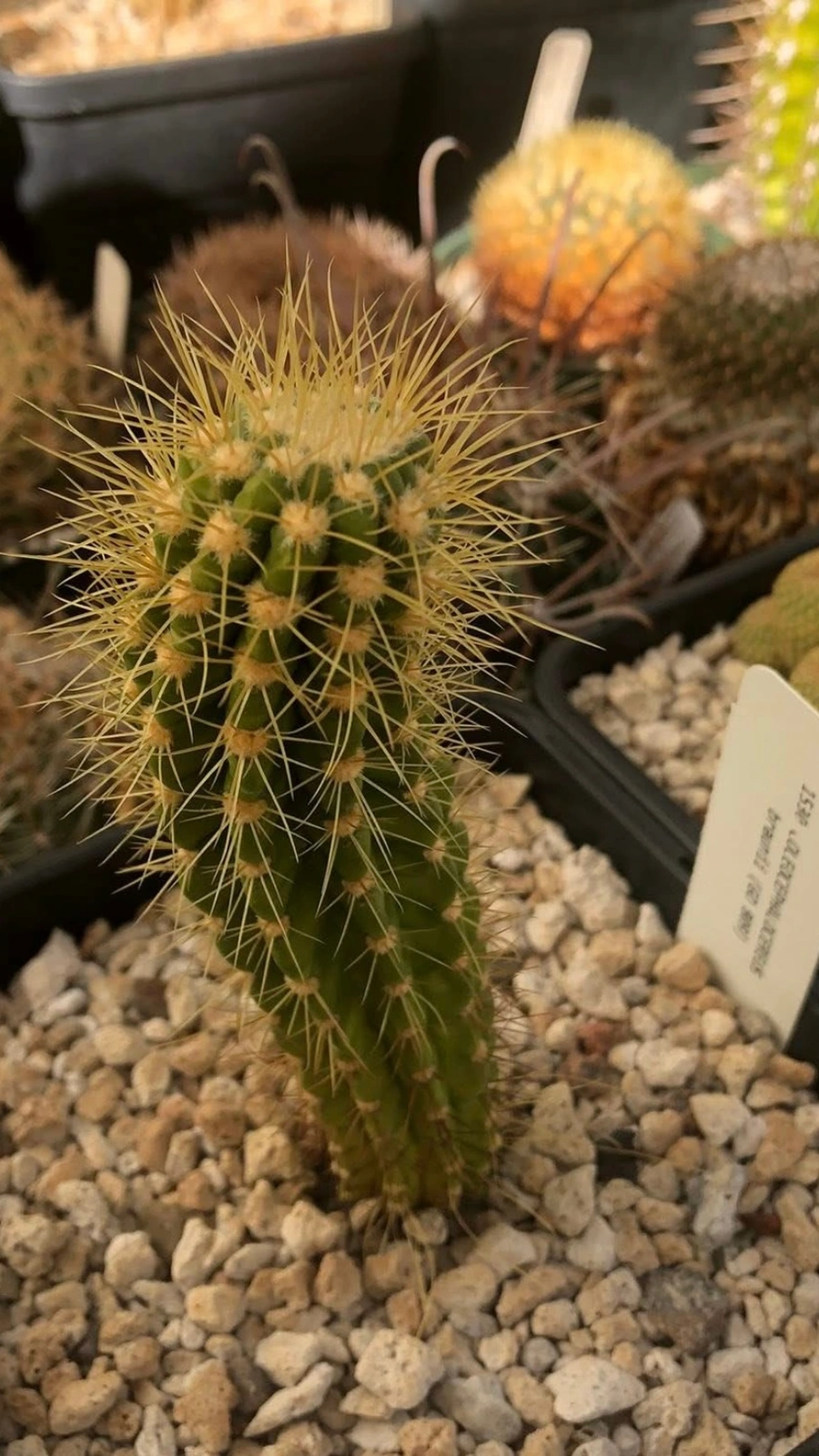 Reference image
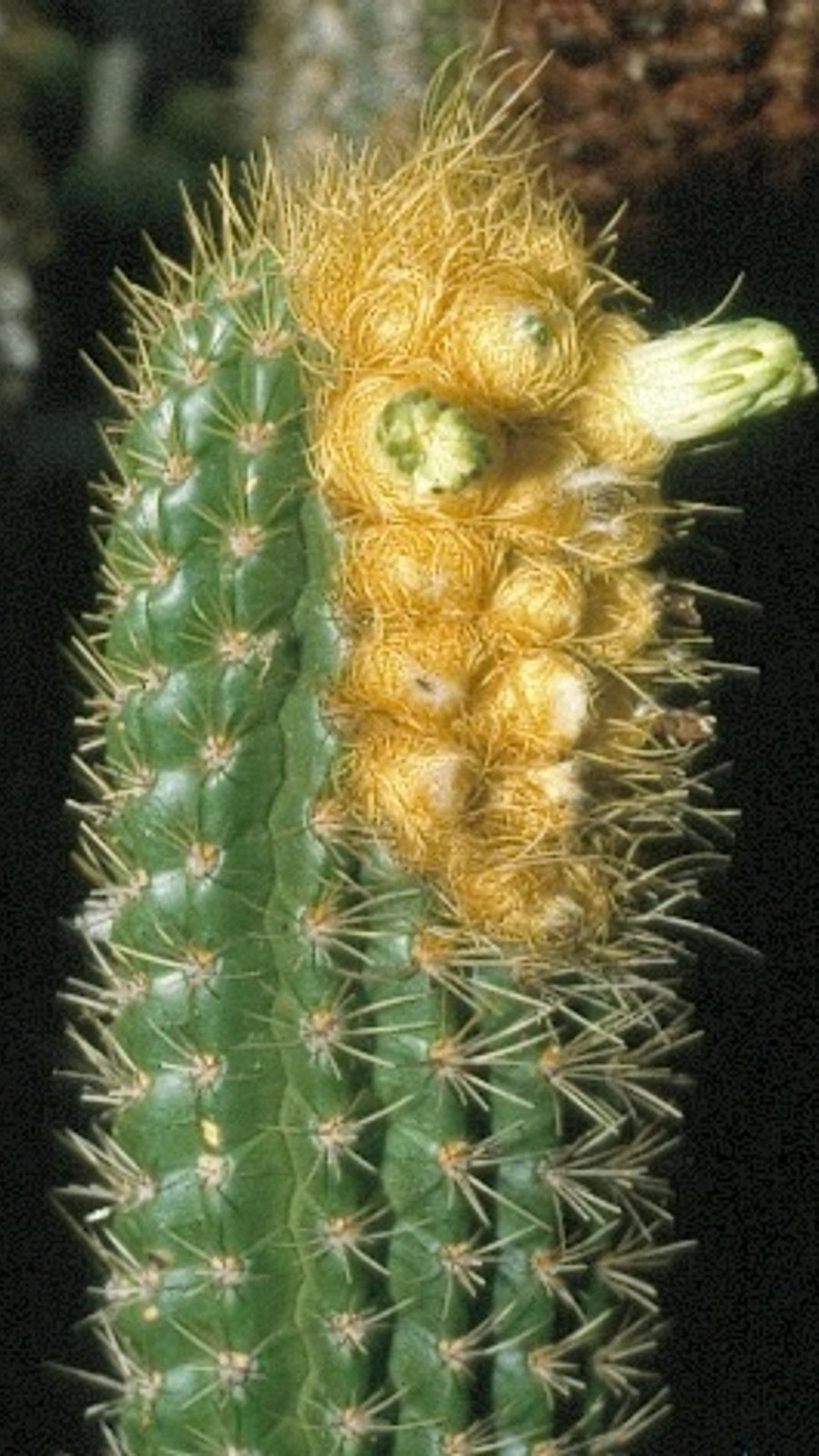 Reference image
Braun's Coleocephalocereus
Coleocephalocereus braunii is an exceedingly rare, columnar cactus species native to the seasonally dry tropical environments of Brazil 1. It is highly prized by collectors for its distinctive lateral cephalium, from which nocturnal flowers emerge.
The species was named in honor of Pierre Josef Braun, a prominent German botanist who contributed significantly to Brazilian cactus taxonomy. The generic name, Coleocephalocereus, combines the Greek 'koleos' (sheath) and 'kephale' (head) with 'cereus' (wax candle), referring to the woolly cephalium structure 2.
This species is endemic to southeastern Brazil, primarily recorded in the states of Espírito Santo and Minas Gerais 1. It grows on steep granite inselbergs, often wedged in shallow crevices with minimal organic soil. Because of its highly restricted range and habitat degradation, it is classified as Critically Endangered (CR) on the IUCN Red List.
Coleocephalocereus braunii features erect, green, cylindrical stems with numerous vertical ribs. Upon reaching maturity, it develops a prominent lateral cephalium composed of dense white wool and brownish bristles. The nocturnal flowers, which open from this cephalium, are usually white to cream-colored.
In cultivation, this plant requires a highly porous, mineral-based potting substrate with excellent drainage. It thrives in bright, indirect sunlight, mimicking the partially shaded microclimates of its rocky native habitats. Overwintering temperatures must be kept strictly above 8°C to prevent cold injury.
Excessive watering during the winter dormancy and using dense, peat-heavy soils are the most frequent causes of failure. Wetting the woolly cephalium can trap moisture, quickly leading to localized fungal infections and stem rot.
Thrives in bright, indirect sunlight; shield from intense afternoon sun.
Allow soil to dry fully between waterings in summer; keep nearly dry in winter.
Requires an acidic or neutral mineral mix rich in pumice and coarse sand.
Non-toxic, but possesses sharp spines that pose a physical hazard to pets and children.
Moderate care difficulty due to moisture sensitivity and winter warmth requirements.
Found exclusively in southeastern Brazil, where it colonizes steep granite rock faces and inselbergs surrounded by dry tropical forests.
