
Light
Full Sun
Requires full sun or very bright direct light to maintain its structural form and develop a cephalium.
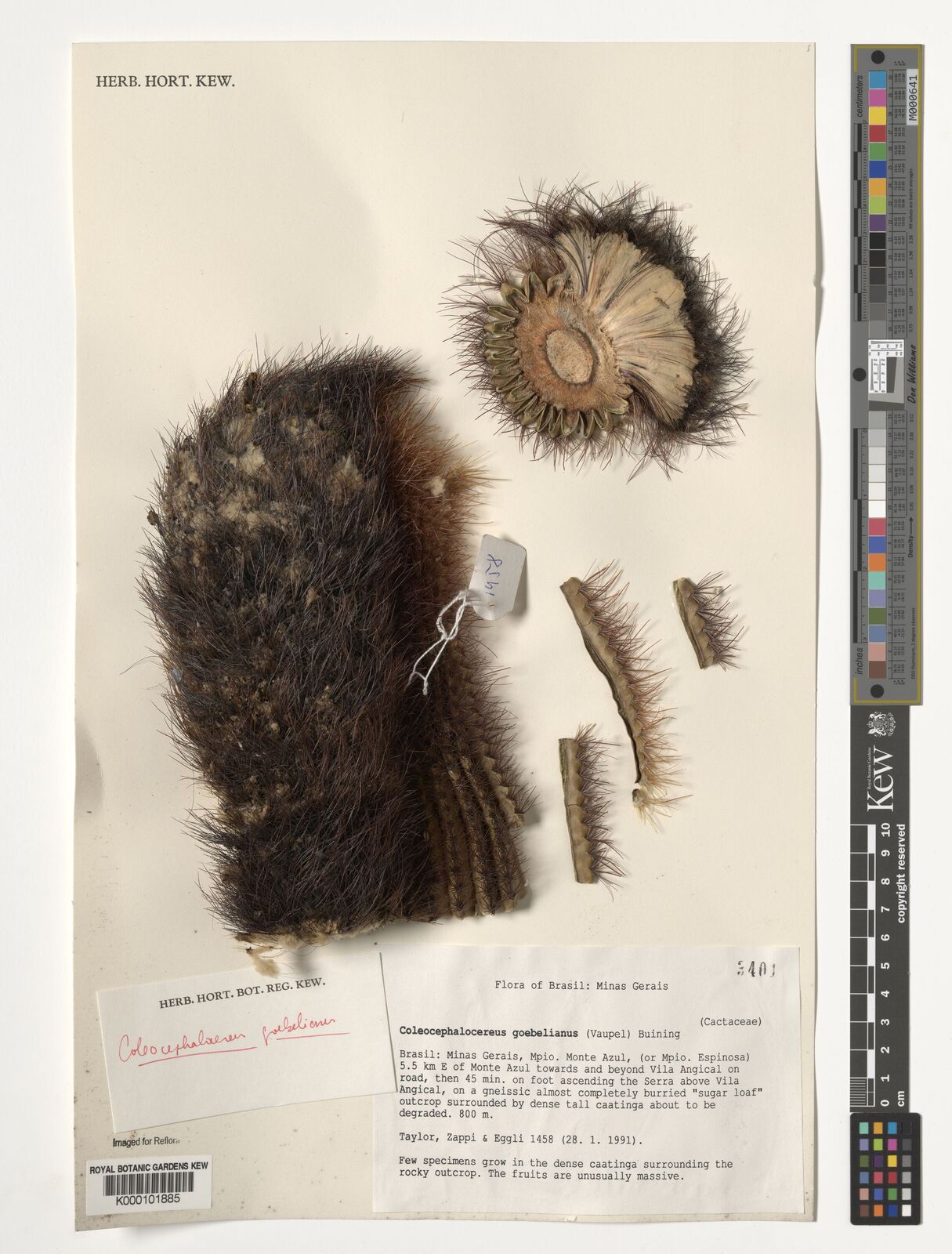 Reference image
Goebel's Coleocephalocereus
Coleocephalocereus goebelianus is a magnificent and rare columnar cactus in the family Cactaceae. It is highly prized by collectors for its dramatic growth form and the development of a woolly lateral cephalium along one side of its stem when mature, from which flowers emerge 1.
The genus name Coleocephalocereus is derived from the Greek words 'koleos' (sheath) and 'kephale' (head), referring to the way the woolly cephalium covers the flowering side of the stem like a sheath 2. The specific epithet 'goebelianus' honors the eminent German botanist Karl Immanuel Eberhard Goebel.
This species is endemic to eastern Brazil, particularly the states of Bahia and Minas Gerais 3. It thrives in seasonally dry tropical forests, rocky outcrops, and scrublands known as caatinga, where it grows in full sun, often anchoring directly in rock crevices.
In its natural habitat, it can reach heights of 2 to 5 meters, growing as an arborescent, rarely branched columnar cactus. The dark green stems feature 10 to 15 distinct ribs covered with closely spaced areoles and golden-brown spines. The lateral cephalium develops on the sunny side, sporting dense, brownish-white wool and bristles from which small, nocturnal white-to-pinkish flowers bloom 1.
In cultivation, Coleocephalocereus goebelianus requires bright, direct sunlight and warm temperatures. It must be potted in an exceptionally porous, mineral-rich soil mix. Watering should be deep but infrequent, allowing the substrate to dry completely between applications.
The most prevalent mistake is overwatering or using poorly draining soil, which quickly causes root rot. Exposure to temperatures below 10°C during winter months can also cause irreversible damage or kill the plant.
Requires full sun or very bright direct light to maintain its structural form and develop a cephalium.
Allow the substrate to dry out fully before watering. Keep almost dry in winter.
Requires an extremely porous mineral substrate with low organic matter and excellent drainage.
Possesses sharp spines. Not chemically toxic, but physical contact can cause painful punctures.
Moderately easy for experienced growers who can provide adequate light and prevent winter cold.
Native to the eastern Brazilian states, primarily Bahia and Minas Gerais, thriving in rocky, dry, and sun-drenched caatinga habitats.
