
Light
Full Sun
Requires full sun; ideally placed in a south-facing window or outdoor spot with maximum sunlight.
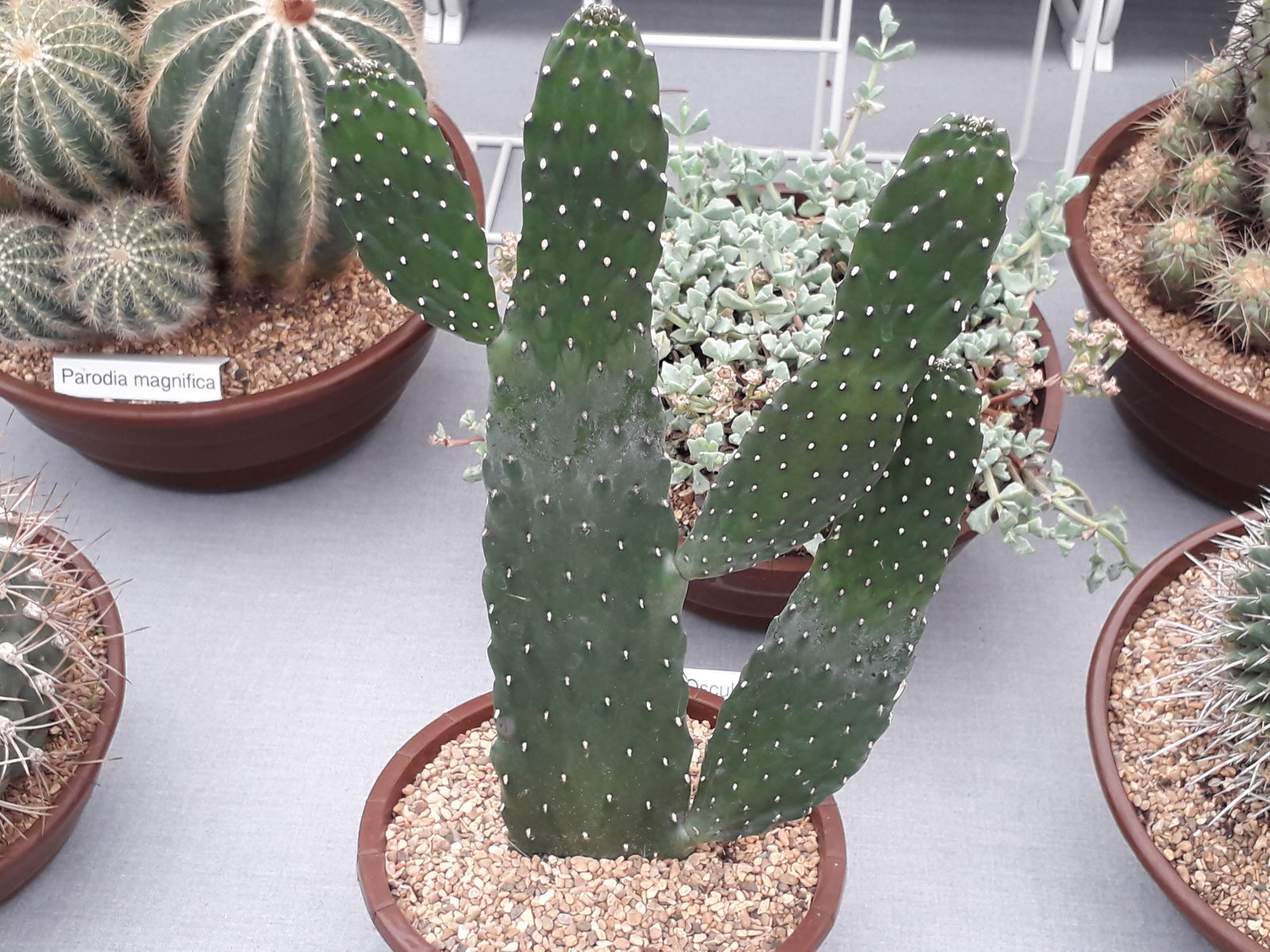 Reference image
Large-Spined Consolea
Consolea macracantha is a striking, tree-like succulent belonging to the Cactaceae family. Commonly referred to as the "Large-Spined Consolea," this species is famous for its distinct, tree-like habit and jointed, flattened segments featuring formidable spines 1. It represents a unique evolutionary lineage within Caribbean dry forests.
Classified under the subfamily Opuntioideae, the genus Consolea is closely related to Opuntia but distinguished by its single, unjointed trunk and specialized floral morphology 2. The specific epithet macracantha originates from Greek words for large ("makros") and spine ("akantha"), directly referencing its prominent armature.
This species is native to the Caribbean, with its primary distribution centered in Cuba 1. It thrives in seasonally dry tropical biomes, coastal scrublands, and rocky limestone terrains. It is well-adapted to surviving prolonged periods of drought and high heat.
In its natural habitat, Consolea macracantha can grow into a small tree reaching 3 to 5 meters in height. It develops a thick, woody trunk supporting flat, elongated, deep-green cladodes. The prominent areoles bear long, rigid, yellowish-brown spines. In late spring, it produces vibrant orange to reddish-yellow flowers at the stem tips.
In cultivation, it requires full sun and a very loose, mineral-heavy substrate. Water should be applied thoroughly only when the potting medium has dried out completely. During winter, watering must be dramatically reduced to prevent root rot.
The most frequent mistake is overwatering or using heavy clay soils that retain moisture. Insufficient sunlight will lead to etiolation, where the pads grow thin, weak, and lose their natural dark green coloration.
Requires full sun; ideally placed in a south-facing window or outdoor spot with maximum sunlight.
Allow the potting mix to dry out completely between waterings. Water sparingly in winter.
Use a well-draining cactus mix supplemented with pumice, perlite, and coarse sand.
Possesses very sharp, long spines. Keep away from high-traffic areas and curious pets.
Moderately easy if overwatering is avoided. Neglect-tolerant but sensitive to cold dampness.
Native to the dry coastal forests and limestone scrublands of Cuba and surrounding Caribbean areas, where it thrives in arid, sandy, and stony soils.
