
Light
Full Sun
Requires full direct sun; will suffer from weak growth and shape deformation in low-light environments.
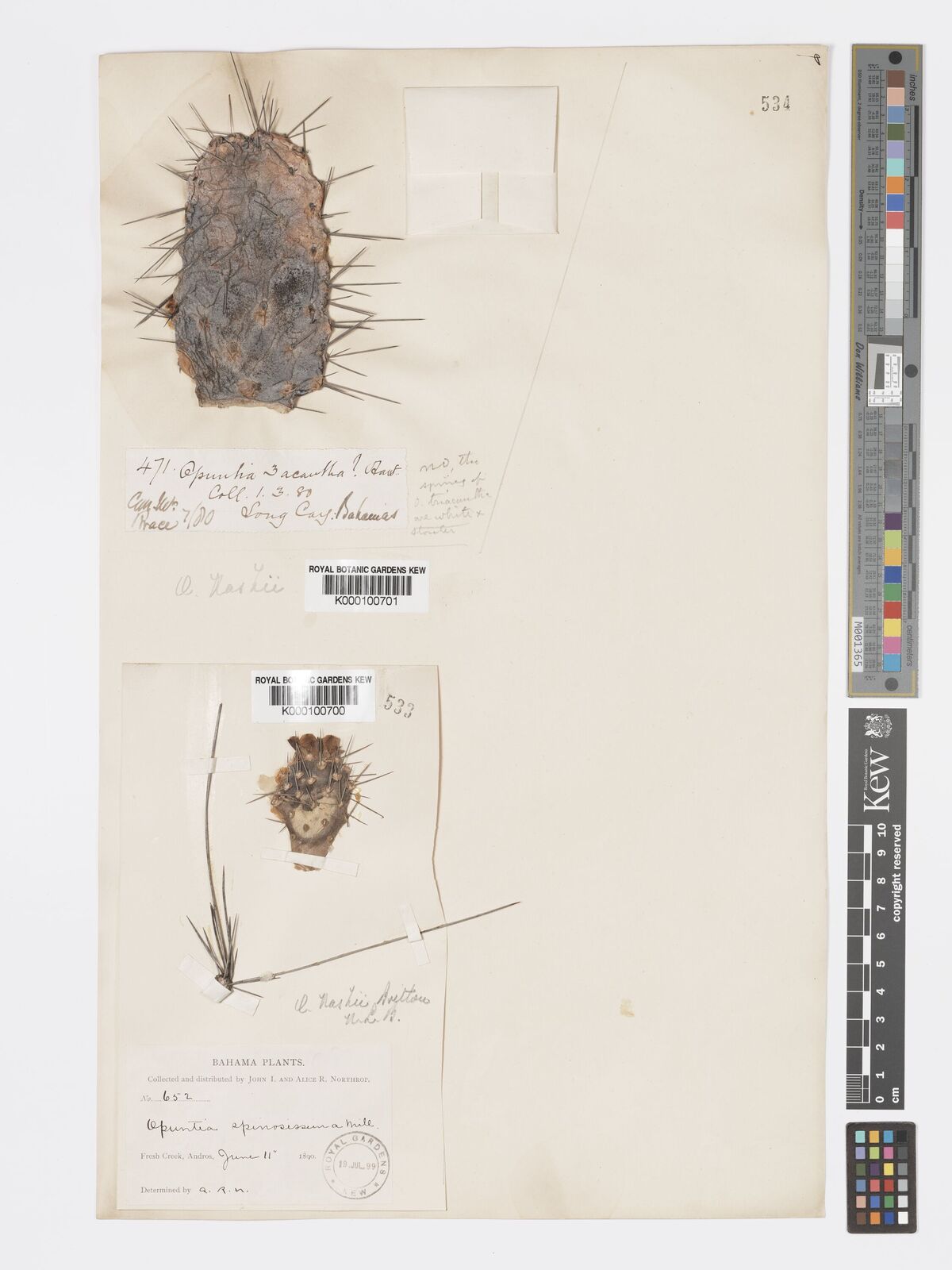 Reference image
Nash's Tree Cactus
Consolea nashii is a unique, arborescent succulent cactus species belonging to the family Cactaceae. Known for its tree-like growth habit, this species features a distinct, upright woody trunk topped with flattened, jointed photosynthetic branches.
The species was formally described by the American botanist Nathaniel Lord Britton. The specific epithet nashii honors George Valentine Nash, an American botanist and early curator of the New York Botanical Garden 1. While closely related to the prickly pears (Opuntia), the genus Consolea is distinguished by its tree-like architecture and specialized, asymmetrical floral morphology.
Nash's Tree Cactus is native to the Caribbean, specifically the Bahamas, Cuba, and the Turks and Caicos Islands 2. It thrives in seasonally dry tropical biomes, coastal scrublands, and rocky limestone outcroppings, showing high tolerance to saline coastal winds and intense solar radiation.
In its natural habitat, Consolea nashii can reach heights of 2 to 5 meters. It develops a sturdy, cylindrical main trunk that darkens with age. The flattened segments (cladodes) are dull green or grayish-green and bear clusters of sharp, pale spines. Its diurnal flowers are relatively small, showing shades of yellow, orange, or red.
This species demands full sun and excellent air circulation. For pot cultivation, a highly porous, sandy, and calcareous substrate is essential. Water should be applied only when the potting medium has dried out completely during the active growing season, and watering must be drastically reduced during winter.
The most critical errors are overwatering and using heavy, poorly drained clay soils, which rapidly cause root and stem rot 1. Insufficient sunlight leads to etiolation, weakening the plant's structure. It must be protected from freezing temperatures.
Requires full direct sun; will suffer from weak growth and shape deformation in low-light environments.
Water thoroughly only when soil is 100% dry; keep nearly dry during winter dormancy.
Extremely well-draining, sandy and gravelly cactus mix, preferably with limestone grit.
Equipped with sharp spines. Keep away from curious pets and small children.
Moderate. It is low-maintenance as long as waterlogging is avoided and ample sun is provided.
Found naturally along dry coastal plains, limestone cliffs, and scrub forests under seasonally dry tropical conditions in the Caribbean basin.
