
Light
Full Sun
Requires full sun. At least 6 hours of direct sunlight is necessary to keep its reddish hues.
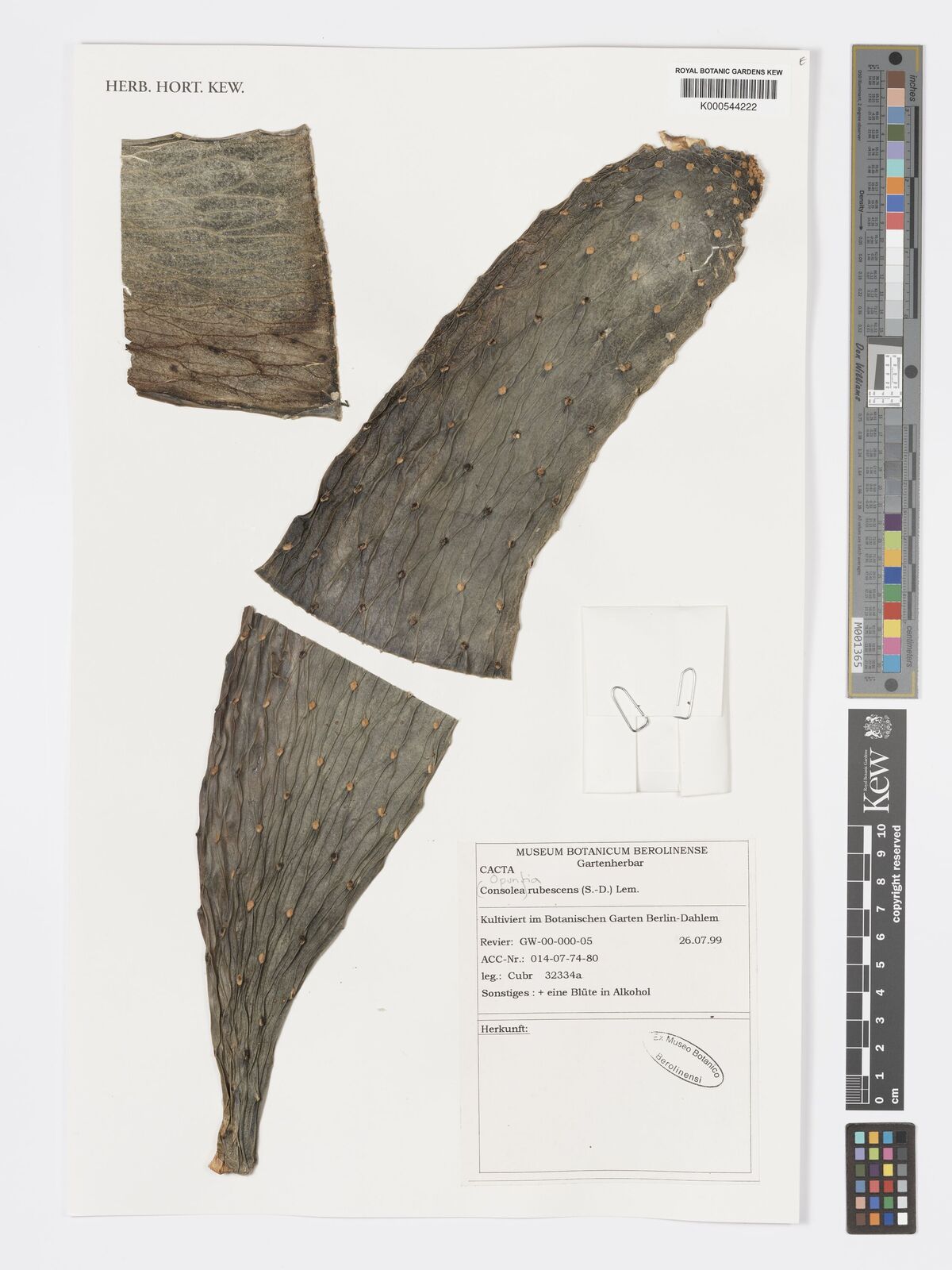 Reference image
Roadside Cactus
Consolea rubescens is a striking arborescent cactus species known for its erect, dark green to reddish-purple trunk and flat pads. Growing as a small succulent tree, it is highly sought after by collectors for its architectural value and dramatic form.
Belonging to the Cactaceae family, this species was originally classified under Opuntia rubescens before being moved to the genus Consolea due to its unique tree-like habit and unjointed main trunk 1. It is commonly referred to as the Roadside Cactus or Ruby Tree Cactus.
This species is native to the Caribbean, specifically found in Puerto Rico, the Virgin Islands, and parts of the Lesser Antilles 2. It thrives in seasonally dry tropical biomes, coastal scrublands, and rocky limestone formations where drainage is exceptionally sharp.
Consolea rubescens can reach up to 6 meters in height in its native habitat. It features a cylindrical, spiny trunk from which flat, oblong segments (cladodes) branch out. Under intense sunlight, these pads take on a distinctive reddish-purple tint. The flowers are relatively small, showing bright orange to red colors, followed by fleshy, red fruits.
This cactus requires full sun to maintain its compact growth and rich coloration. A highly porous, mineral-based potting soil is essential to prevent root rot. Watering should be thorough but infrequent, allowing the substrate to dry out completely between sessions.
The most prevalent issue is root rot triggered by waterlogged soils or poorly drained pots. Lack of adequate sunlight will also cause etiolation, leading to weak, elongated, and pale green pads.
Requires full sun. At least 6 hours of direct sunlight is necessary to keep its reddish hues.
Allow soil to dry out completely. Susceptible to rot if watered during humid or cold periods.
A gritty mix with pumice, perlite, and coarse sand is highly recommended.
Contains fine, irritating glochids. Keep away from pets and children, use gloves to handle.
Very easy if kept dry and sunny. Extremely low-maintenance.
Naturally distributed across dry coastal thickets and limestone hillsides in the Caribbean islands, adapting perfectly to high temperatures and salty sea breezes.
