
Light
Full Sun
Requires at least 6 hours of direct sunlight daily; thrives in south-facing windows.
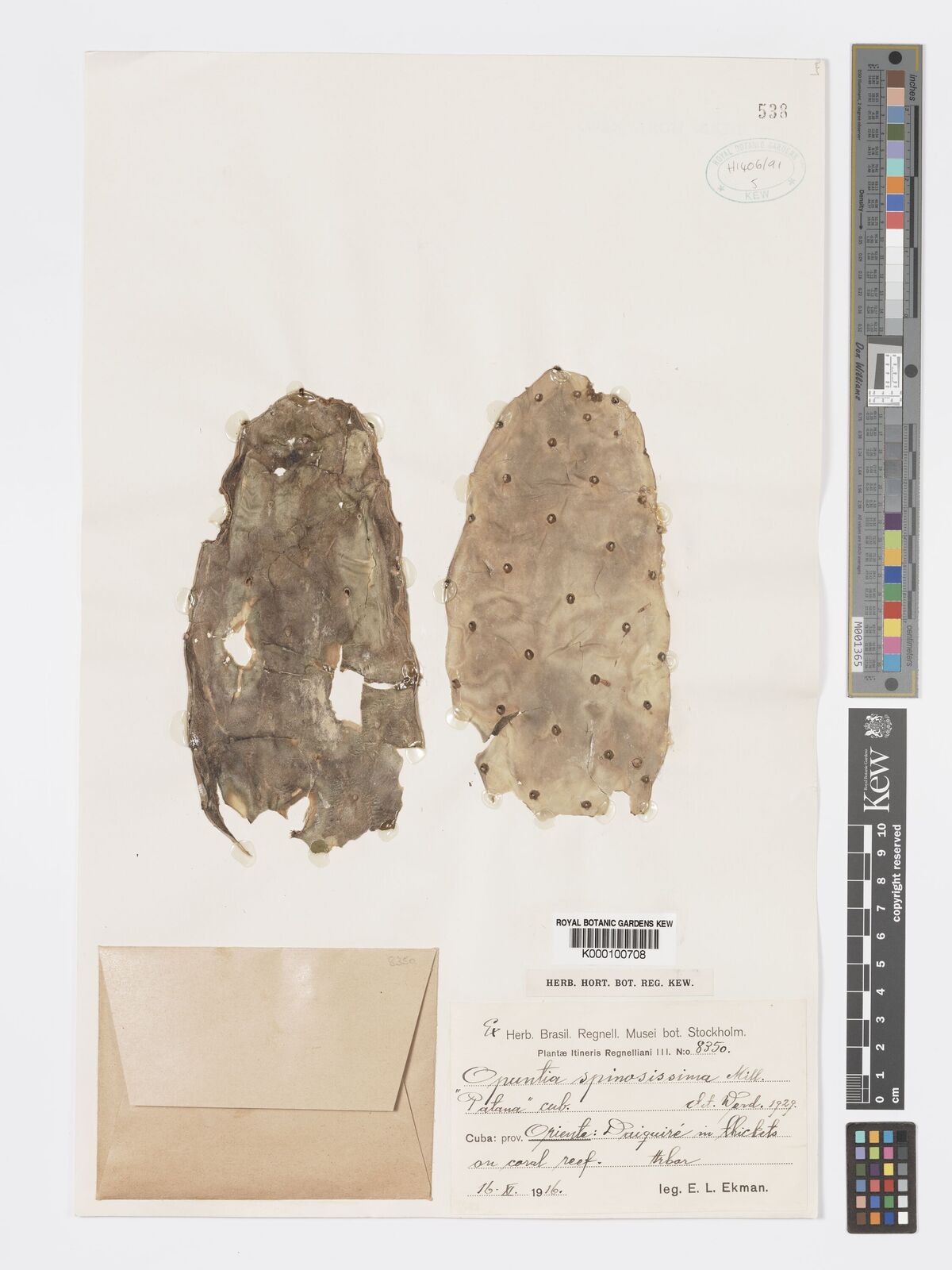 Reference image
Prickly Consolea
Consolea spinosissima, commonly known as the 'Prickly Consolea' or 'Semaphore Cactus', is a rare and striking tree-like succulent belonging to the family Cactaceae 1. It is characterized by its distinct arborescent growth habit and flattened, pad-like photosynthetic stems.
Originally described as Opuntia spinosissima, it was later moved to the genus Consolea due to its specialized sub-monoeceous or dioecious flowers and erect woody trunk 2. The specific epithet 'spinosissima' translates from Latin as 'most thorny', referring to the formidable armoring of its trunk.
This species is endemic to the Caribbean, specifically to Jamaica 1. It thrives in seasonally dry tropical biomes, growing predominantly in coastal rocky scrublands, limestone plains, and dry forests. Due to habitat destruction and limited range, it is classified as threatened in the wild 3.
In its natural habitat, Consolea spinosissima can reach heights of up to 4-5 meters, forming a small tree. It features a well-defined, cylindrical, woody trunk covered in dense, needle-like brownish-yellow spines. From this trunk, bright green, flattened, elliptical pads (cladodes) emerge in a branching, semaphore-like fashion. The areoles carry sharp spines along with clusters of tiny, irritating glochids. Flowers are relatively small, showing bright orange to reddish hues.
In cultivation, this cactus requires full sun and excellent ventilation. It is highly susceptible to root rot, meaning it must be potted in an exceptionally porous, mineral-rich substrate containing sand, grit, and limestone 2. Water should be applied only when the substrate is completely dry. Winter temperatures should ideally remain above 5°C, with watering reduced to a bare minimum.
Overwatering and poor soil drainage are the most frequent causes of failure, leading rapidly to root rot. Keeping the plant in low-light conditions causes weak, pale, and stretched growth (etiolation).
Requires at least 6 hours of direct sunlight daily; thrives in south-facing windows.
Water only when the substrate is completely bone-dry. Reduce drastically in winter.
Use a highly porous cactus mix rich in pumice, coarse sand, and limestone chips.
Warning! Armored with very sharp spines and microscopic glochids that cause skin irritation. Mildly toxic to pets.
Moderate. Easy if provided with enough direct sun and kept dry, but unforgiving of wet soils.
Native to the Caribbean, specifically endemic to Jamaica, where it grows in dry, rocky coastal areas and limestone scrublands. It is accustomed to warm, dry tropical seasons with constant air circulation.
