
Light
Full Sun
Requires full, direct sun for optimal growth and to maintain its compact, flat-padded shape.
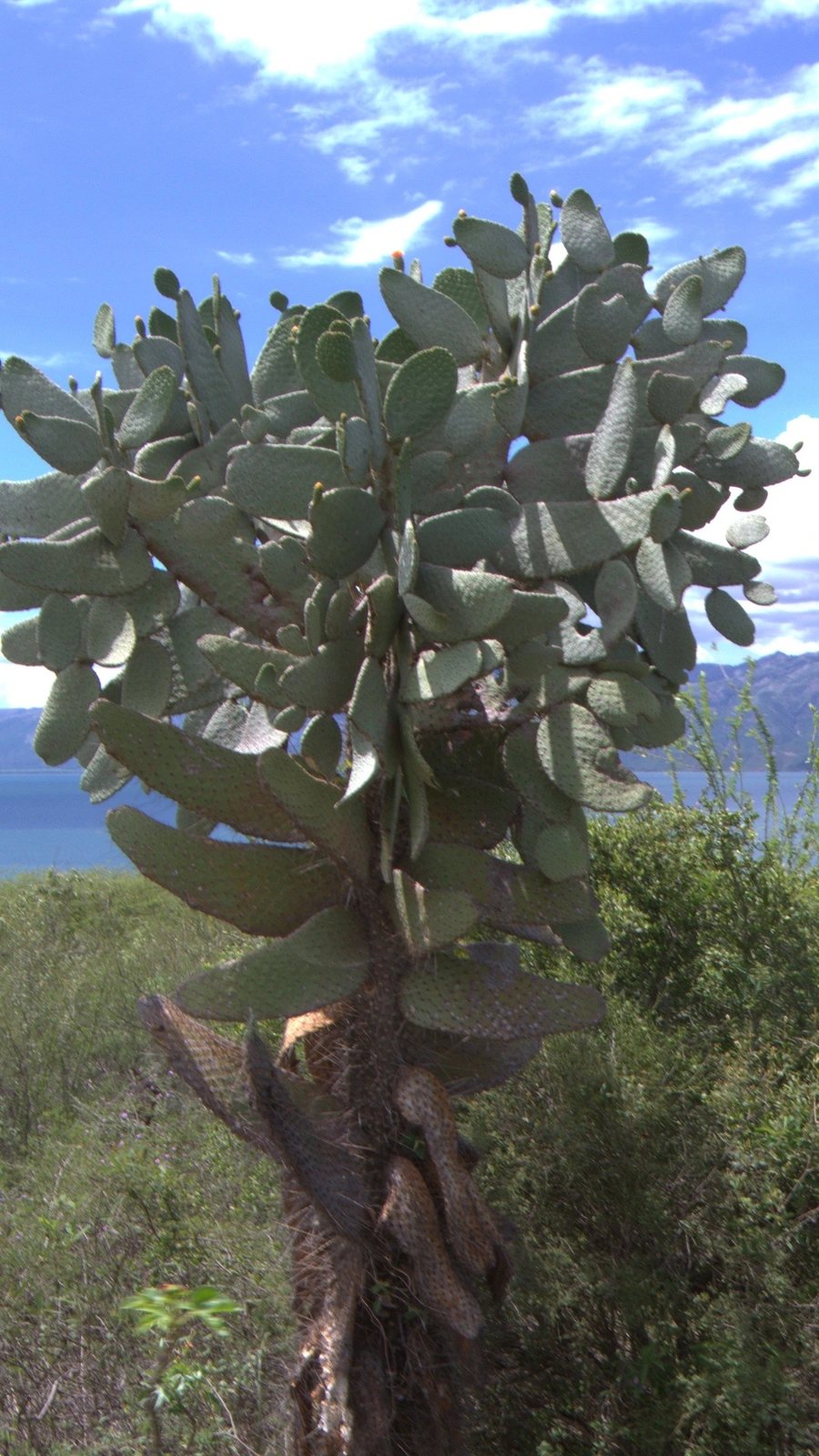 Reference image
Consolea testudinis-crus is an extraordinary, tree-like succulent species belonging to the family Cactaceae 1. Commonly referred to as a road-kill or turtle-foot cactus due to its unique flattened branch structure, it is a striking ornamental plant for arid gardens.
Historically allied with the genus Opuntia, this species was eventually placed in the genus Consolea due to its single, erect trunk-like growth habit and distinct floral morphology 2. The specific epithet 'testudinis-crus' references the shell-like or foot-like appearance of its flat segments.
Native to the Caribbean, specifically Haiti and parts of Hispaniola, it thrives in seasonally dry tropical biomes, coastal scrublands, and rocky limestone outcrops 1. It has adapted to withstand dry, salty winds and prolonged periods of heat.
This succulent tree features a defined, spiny, woody central trunk from which asymmetric, dark green, flattened pads (cladodes) emerge. It produces small, vibrant reddish-orange flowers from the edges of its uppermost pads during the warm season.
In cultivation, it requires warm temperatures, maximum sunlight, and highly porous soil. It is exceptionally drought-tolerant once established and does best in porous containers with coarse sandy substrates.
Overwatering is the primary cause of failure in cultivating Consolea. Excessive moisture triggers rapid root rot. Keeping the soil wet in low-temperature conditions during winter is almost always fatal.
Requires full, direct sun for optimal growth and to maintain its compact, flat-padded shape.
Water only when the substrate is bone dry. Drastically reduce watering during winter months.
Requires excellent drainage. Use a commercial cactus mix amended with extra pumice or perlite.
Equipped with tiny, irritating glochids (micro-spines) that can easily lodge in skin and pet paws.
Highly durable and very easy to care for, provided it is not overwatered.
This succulent tree is native to the Caribbean islands, particularly Haiti, where it thrives in coastal habitats and dry tropical forests on alkaline limestone soils.
