
Light
Full Sun
Requires full sun to keep its compact shape and produce strong spines.
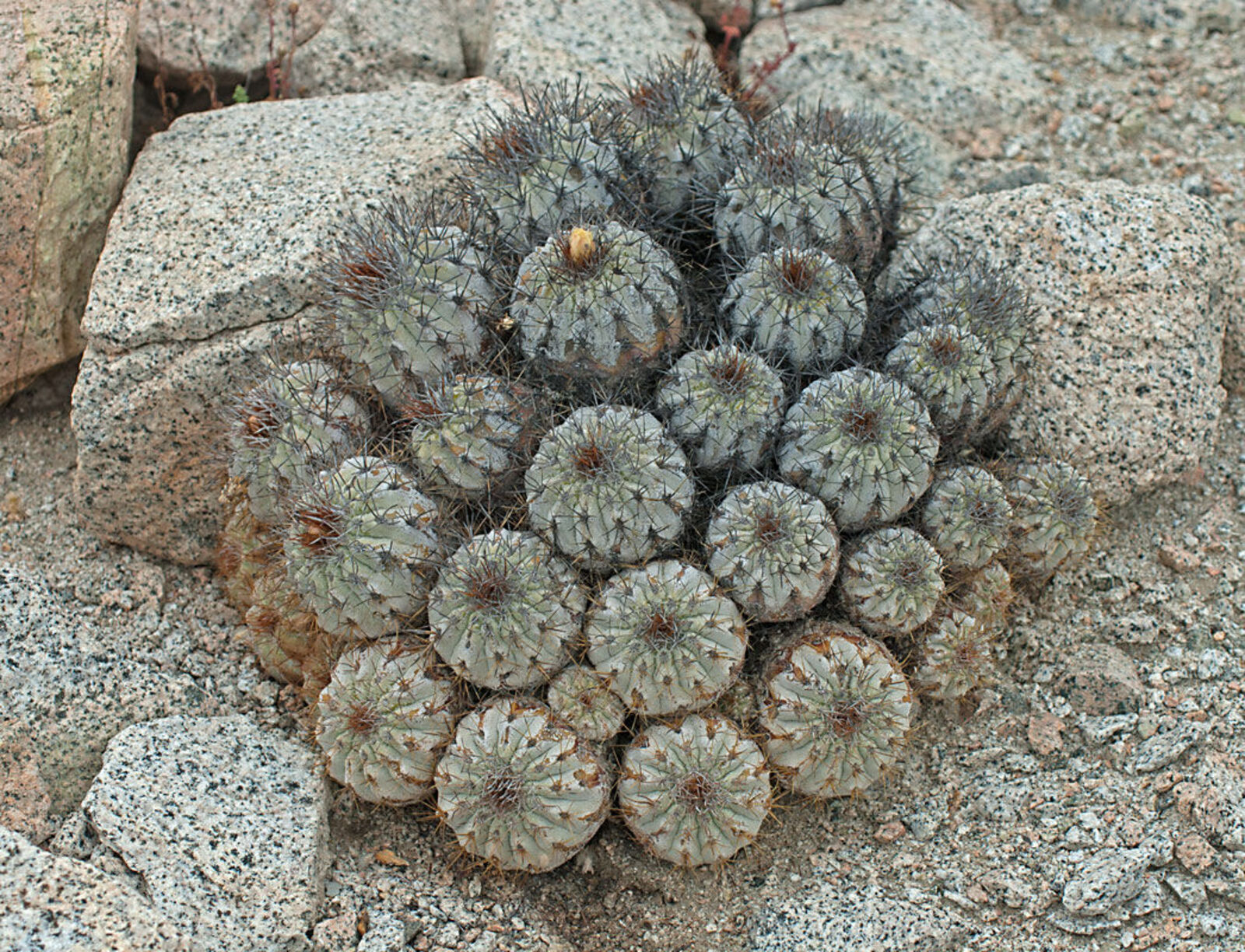 Reference image
Ahremphi's Copiapoa
Copiapoa ahremephiana is an extraordinary, slow-growing cactus species endemic to the extremely arid coastal areas of the Atacama Desert in northern Chile. It is highly prized by collectors for its beautiful wild form and resilience to harsh environments 1.
Belonging to the genus Copiapoa in the family Cactaceae, this species represents the highly specialized succulent subshrubs of South America. It was described as a distinct species due to its unique spination and stem morphology, differing from its close relatives in the C. calderana complex 2.
This cactus is native to the coastal hills of northern Chile, particularly in the Antofagasta region. It thrives in gravelly, rocky coastal slopes where rainfall is virtually non-existent, and the primary source of moisture is the dense marine fog known as 'Camanchaca' 3.
Copiapoa ahremephiana forms low-growing clusters or subshrubs with globose to short cylindrical stems. The epidermis is grayish-green, sometimes developing a waxy glaucous coating to reflect intense sunlight. It features prominent ribs armed with strong, dark brown to blackish spines that turn gray with age. The bell-shaped flowers are pale yellow and appear at the apical meristem.
In cultivation, it requires a very gritty, purely mineral substrate with perfect drainage. It demands full sun to maintain its compact shape and intense spination. Watering must be done with extreme care, allowing the soil to dry completely between waterings, and stopped entirely during winter.
The most frequent mistakes are overwatering, using rich organic soil, and lack of air circulation. This combination quickly leads to root rot and loss of the plant.
Requires full sun to keep its compact shape and produce strong spines.
Allow soil to dry out completely. Keep absolutely dry during winter dormancy.
Highly porous mineral substrate, mostly pumice, grit, and very little peat.
Non-toxic, but sharp and rigid spines can cause injury. Handle with care.
Moderate to hard due to its strict watering requirements and rot sensitivity.
Found exclusively along the hyper-arid coastal cliffs of the Antofagasta region in northern Chile, where it survives primarily on moisture harvested from coastal ocean fogs.
