
Light
Full Sun
Requires full sun, preferably direct southern exposure with high air movement.
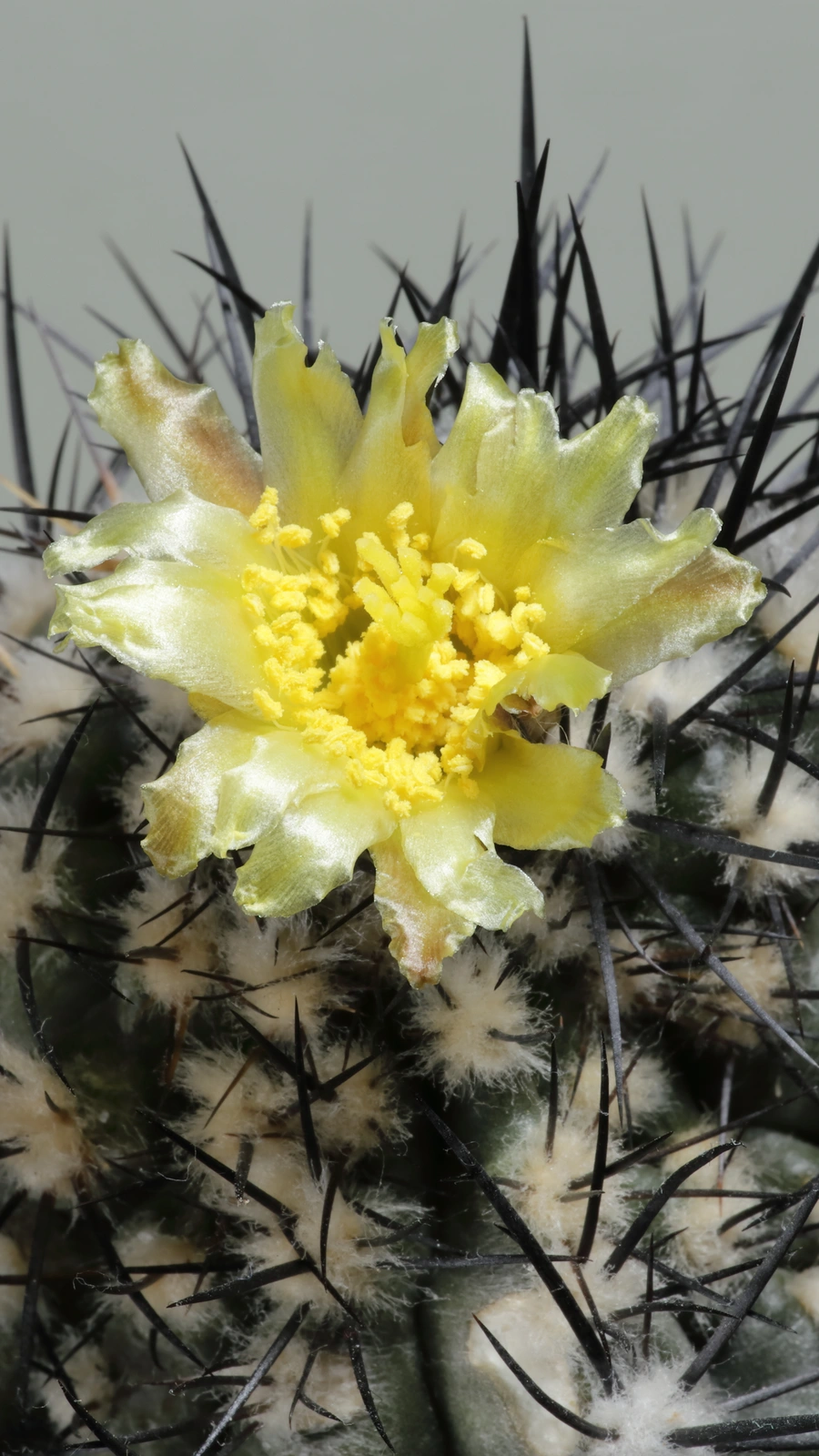 Reference image
Algarrobo Copiapoa
Copiapoa algarrobensis is an extremely rare and highly specialized succulent cactus belonging to the Cactaceae family, perfectly adapted to the hyper-arid conditions of the Atacama Desert. It is highly prized by collectors for its unique tuberous root system and striking appearance 1.
Belonging to the iconic genus Copiapoa, this species is named after the Algarrobo region in Chile. It represents a distinct evolutionary line within the genus, characterized by its slow growth rate and subterranean water-storage capabilities 2.
This species is strictly endemic to the coastal deserts of northern Chile. It thrives in gravelly terraces and rocky hillsides where rainfall is virtually non-existent. The plants survive almost exclusively on atmospheric moisture provided by the dense coastal fog known locally as 'Camanchaca' 1.
The stem is globose to shortly cylindrical, with a matte greyish-green or bluish epidermis that helps reflect intense solar radiation. It features well-defined ribs armed with stout, dark spines. Below the soil lies a massive, tuberous taproot that acts as a reservoir. The diurnal, bell-shaped yellow flowers emerge from the woolly apex of mature specimens.
In cultivation, it is considered a challenging species. It requires maximum light exposure and excellent ventilation to mimic its windy desert home. Watering must be done with extreme caution, only during the warm active growth season, and using a completely mineral substrate 2.
The most prevalent mistake is utilizing standard peat-based potting soils or overwatering during cool periods, which instantly triggers fatal root rot. Lack of sufficient direct sunlight will cause the plant to etiolate and lose its compact shape.
Requires full sun, preferably direct southern exposure with high air movement.
Extremely drought-tolerant. Water sparingly in summer, keep completely dry in winter.
Purely mineral mix consisting of pumice, lava rock, coarse sand, and clay.
Spiny armor can cause injury; non-toxic to pets but handle with thick leather gloves.
Expert level. Highly susceptible to rot if watering and soil parameters are not perfect.
Endemic to the hyper-arid coastal regions of Chile, surviving primarily on the ambient moisture of dense morning sea fogs.
