
Light
Full Sun
Requires full, direct sun to maintain its signature powdery gray epidermis and sharp spination.
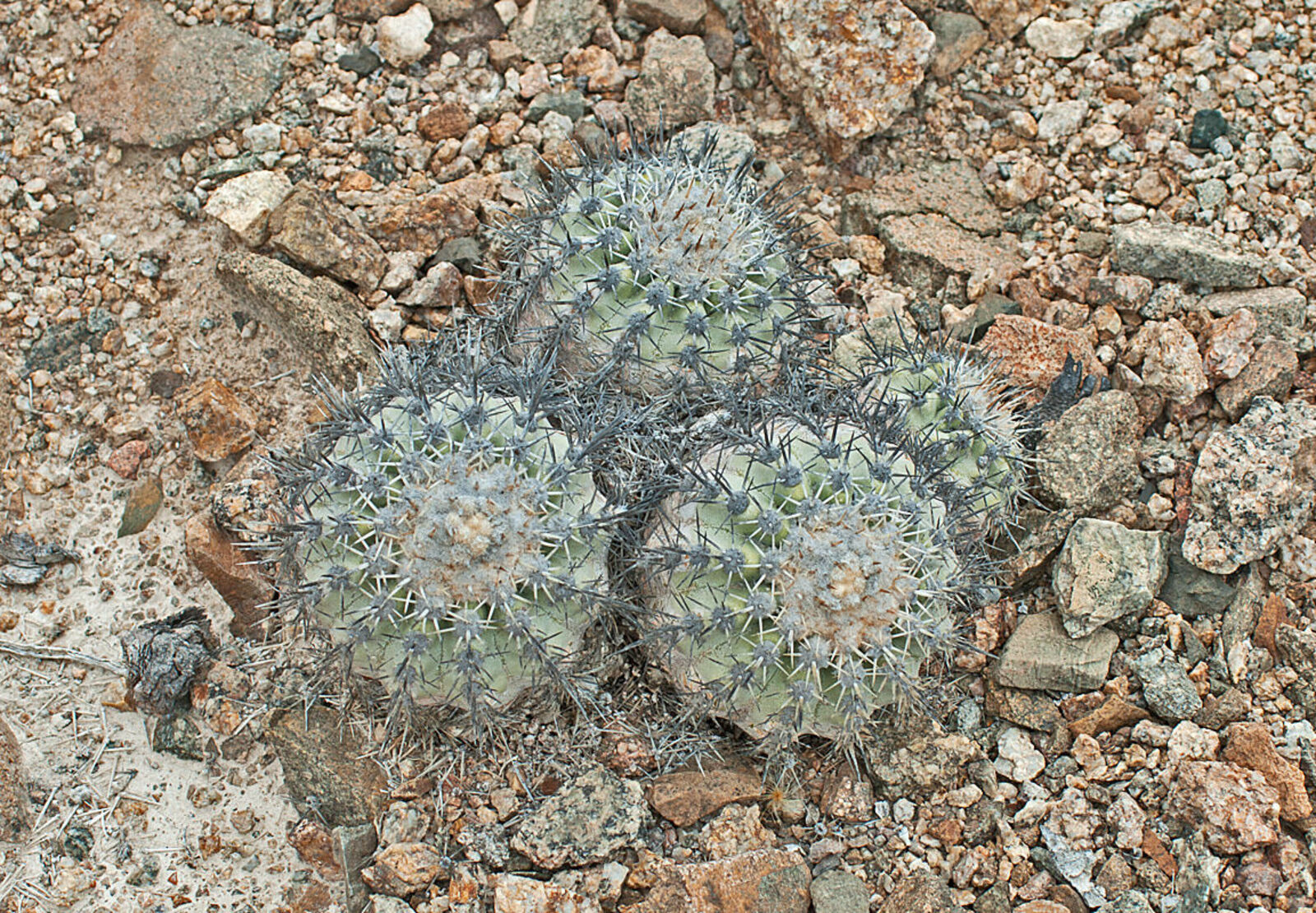 Reference image
Ash-Colored Copiapoa
Copiapoa cinerascens is a rare, slow-growing globose to subcylindrical cactus species belonging to the Cactaceae family, native to the hyper-arid coastal regions of the Atacama Desert in Chile 1.
The genus name Copiapoa honors the Copiapó province in Chile where these plants are abundant. The specific epithet cinerascens translates to 'ash-colored' or 'becoming ash-gray' in Latin, referencing the characteristic grayish, waxy pruina covering its epidermis 2.
This species is restricted to a narrow coastal strip of northern Chile, particularly around the Pan de Azúcar National Park area 1. It thrives in rock-strewn slopes where rainfall is virtually non-existent, depending almost entirely on coastal fogs known locally as 'camanchaca' for moisture.
Copiapoa cinerascens forms dense, multi-headed clumps over time. The stems are globose to short cylindrical, colored pale green to ash-gray, with 12 to 21 distinct ribs. The areoles bear stout, yellowish-brown to gray spines. It produces beautiful pale yellow, bell-shaped flowers at the apex during summer.
In cultivation, it requires an extremely porous, mostly mineral substrate to simulate its desert home. It thrives in full sun, which helps it maintain its dense spination and waxy gray coating. Watering should be sparse in summer and completely suspended during the winter rest 2.
The most prevalent mistakes are overwatering and using soil mixes high in organic matter, which lead to root rot. Lack of adequate direct sunlight will cause the stems to etiolate and lose their distinctive gray coloration.
Requires full, direct sun to maintain its signature powdery gray epidermis and sharp spination.
Water very sparingly in summer after the soil dries out fully, and keep completely dry in winter.
Use an almost entirely mineral substrate consisting of pumice, perlite, and coarse sand.
Non-toxic, but the sharp spines pose a physical hazard to curious pets and children.
Moderately challenging; success relies heavily on preventing root rot and providing strong light.
Endemic to the coastal cliffs and gravelly plains of the Atacama Desert in northern Chile, surviving in a hyper-arid climate sustained by dense marine fogs.
