
Light
Full Sun
Requires full sun to maintain its compact shape and dark spination. At least 6 hours of direct sunlight is recommended.
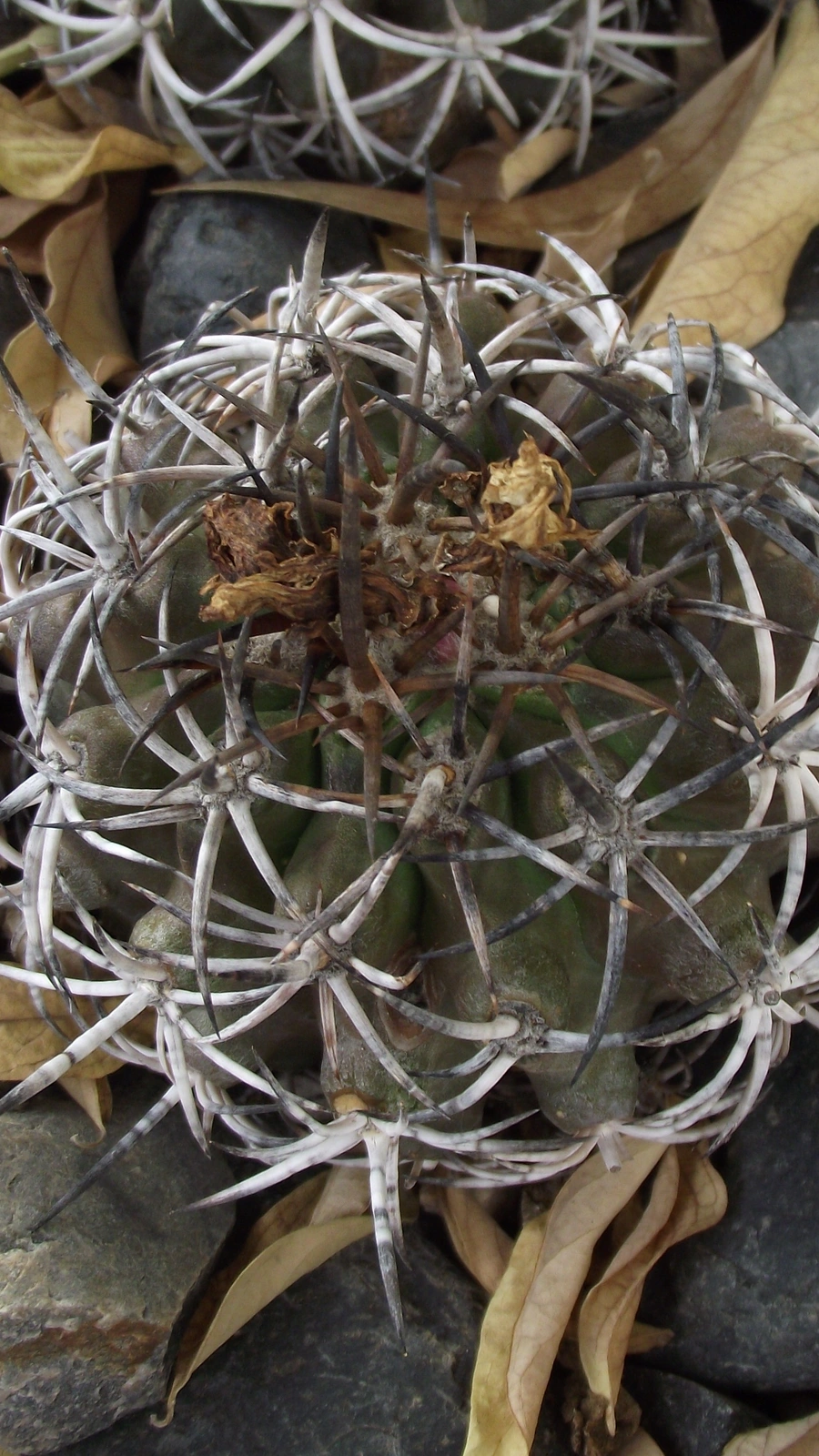 Reference image
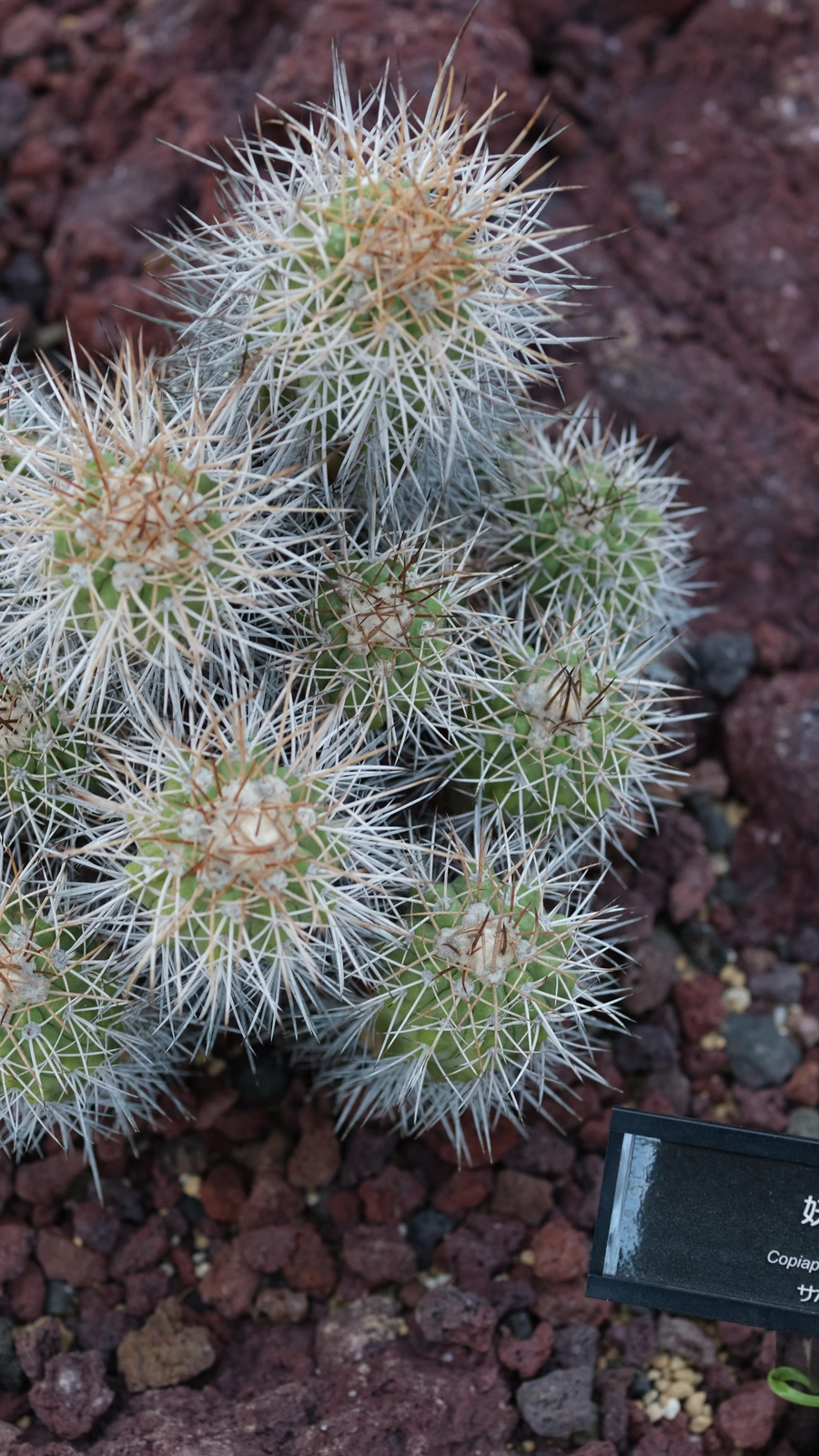 Reference image
Spiny Copiapoa
Copiapoa echinoides is a highly sought-after, slow-growing succulent subshrub belonging to the Cactaceae family, perfectly adapted to the extreme arid conditions of the Atacama Desert 1.
First described in the 19th century, the specific epithet echinoides derives from the Greek word 'echinos', meaning sea urchin or hedgehog, referring to its spiny appearance. The genus Copiapoa is named after the province of Copiapó in northern Chile. It is also historically referred to as Copiapoa dura 2.
Native to the coastal desert areas of northern Chile (primarily regions of Antofagasta and Atacama), this species thrives on steep, rocky hillsides. These areas experience virtually no rainfall; instead, the plants survive by absorbing moisture from the dense coastal fogs known locally as 'Camanchaca' 1.
The plant features a globose to short-cylindrical stem, often solitary but forming small clumps with age. The epidermis is distinctive, ranging from dull greyish-green to dark bronze. It features 11 to 17 well-defined ribs topped with stout, dark brown to black spines. It produces pale yellow, funnel-shaped flowers at the woolly apex 2.
In cultivation, it requires maximum light intensity and superb air circulation. The watering regime must be strictly controlled; water only when the growing medium has dried completely. During winter dormancy, keep the plant completely dry and in a cool environment to prevent root rot.
The most prevalent error is using peat-heavy potting mixes that retain moisture. Overwatering, especially during the cold winter months, will quickly lead to lethal root rot. Insufficient sunlight results in etiolation, causing the natural globose form to stretch and weaken.
Requires full sun to maintain its compact shape and dark spination. At least 6 hours of direct sunlight is recommended.
Water thoroughly only after the soil is 100% dry. Keep completely dry in winter.
Requires an extremely gritty, low-organic soil mix consisting mostly of pumice, perlite, and coarse sand.
Non-toxic, but the sharp, rigid spines can cause physical injury. Handle with care and keep away from pets.
Moderate. Easy if you can resist the urge to water, but highly unforgiving of wet soils.
Inhabits the extremely dry coastal terraces of northern Chile, where it relies on ocean mists to survive in one of the driest places on Earth.
