
Light
Full Sun
Requires full sun, preferably at least 6 hours of direct sunlight daily and good ventilation.
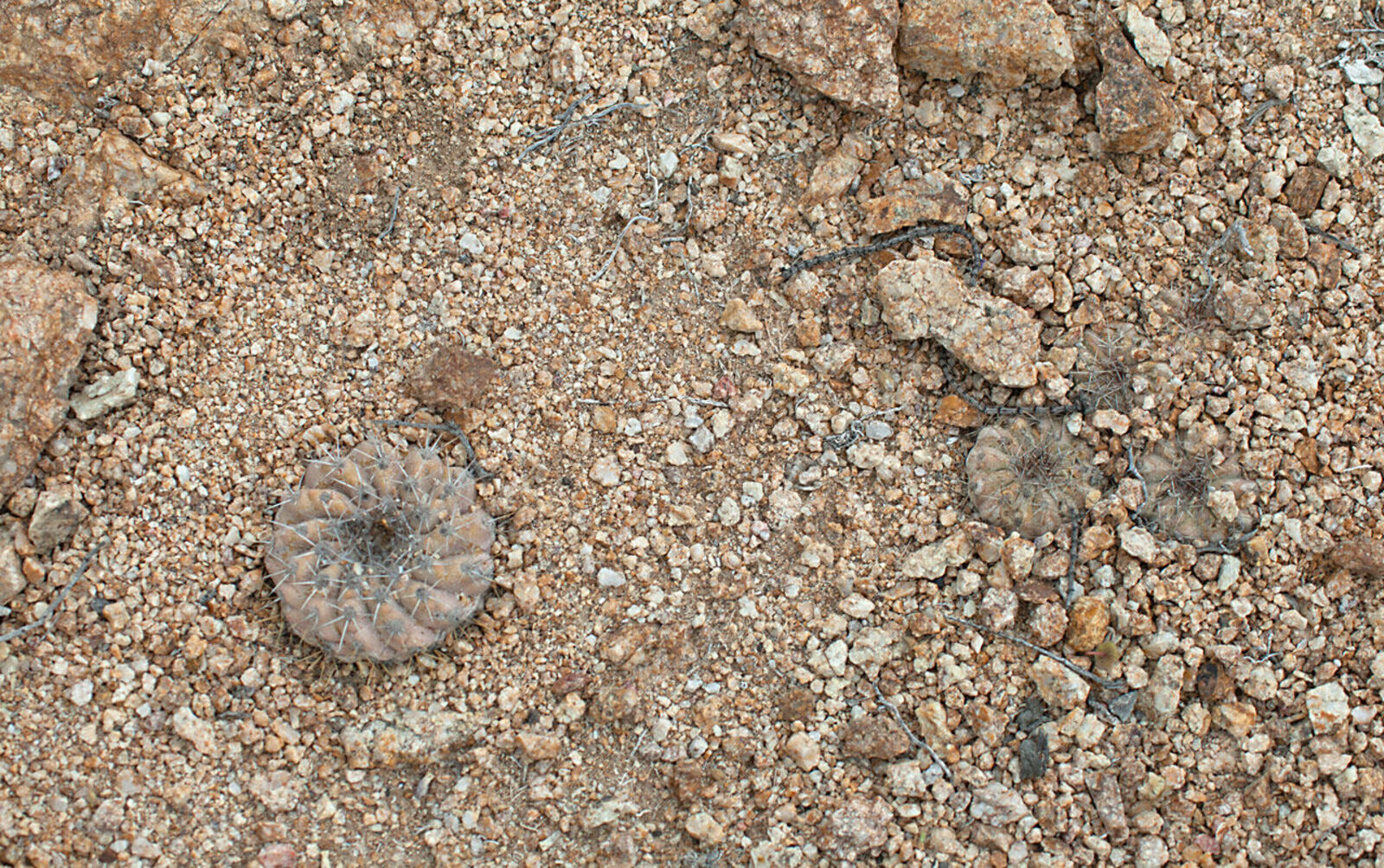 Reference image
Esmeralda Copiapoa
Copiapoa esmeraldana is an extraordinary globose cactus species native to the coastal cliffs of the Atacama Desert in Chile. Recognized as a succulent subshrub, it has evolved sophisticated survival strategies to thrive in one of the driest regions on Earth 1.
Belonging to the family Cactaceae, genus Copiapoa, this species is named after the Esmeralda locality in northern Chile. Although historically associated with Copiapoa grandiflora, systematic research and morphological distinctions have established it as an independent species 2.
This species is narrowly endemic to the coastal hills of the Antofagasta and Atacama regions of Chile. It inhabits hyper-arid desert biomes where rainfall is practically zero. Survival depends almost entirely on the dense ocean fogs, locally known as "Camanchaca," which provide vital moisture 1.
The body is globose to shortly cylindrical, with a greenish to bronzy-brown epidermis. It tends to offsets from the base, forming tight, low-growing clumps over time. Spiraled ribs carry prominent areoles equipped with stiff, dark brown to blackish spines. It produces attractive, funnel-shaped yellow flowers at the apex during summer 2.
In cultivation, it requires maximum light exposure and exceptional ventilation. A highly mineral, porous potting medium is mandatory. Watering should follow the 'soak and dry' method strictly during the active summer growth, while winter demands a dry, cool, and frost-free dormancy 1.
The most prevalent errors are overwatering and using peat-heavy organic soils, which inevitably result in root and stem rot. Lack of adequate winter chill and dry rest also prevents flowering and leads to weak, etiolated growth.
Requires full sun, preferably at least 6 hours of direct sunlight daily and good ventilation.
Water thoroughly only when the soil is completely dry. Keep bone dry throughout the winter.
Purely mineral substrate containing pumice, lava gravel, and coarse sand. Avoid organic peat.
Equipped with sharp, rigid spines. Keep out of reach of children and pets. Non-toxic.
Moderate. Highly sensitive to excess moisture but very hardy under dry, sunny conditions.
Native to the coastal ranges of northern Chile's Atacama Desert, where it grows in gritty mineral soils. It relies heavily on coastal fog condensation rather than actual rainfall to survive.
