
Light
Full Sun
Requires full sun to maintain its natural shape and dense spination; ideal for south-facing windows.
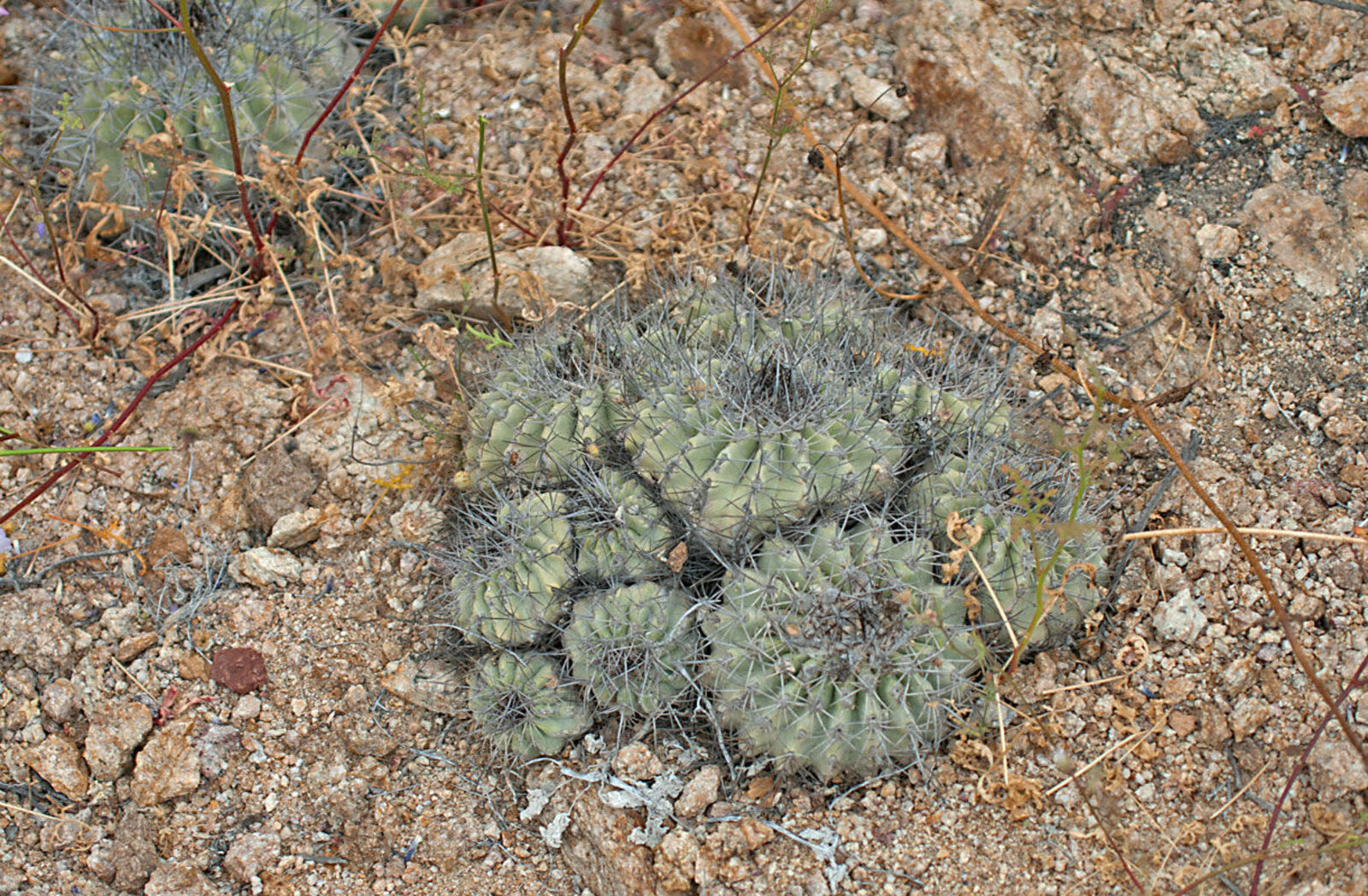 Reference image
Large-Flowered Copiapoa
Copiapoa grandiflora is an extraordinary cactus species native to the hyper-arid coastal cliffs of Chile. Well-adapted to the extreme dryness of the Atacama Desert, this species is highly coveted by succulent enthusiasts for its clump-forming growth and unusually large, yellow blossoms 1.
The genus Copiapoa is named after the Chilean province of Copiapó, where these cacti are dominant. The specific epithet grandiflora translates to "large-flowered" in Latin, highlighting its showy blooms. It was formally described and classified in the mid-20th century by the renowned botanist Friedrich Ritter 2.
This species is restricted to a narrow coastal strip between the Antofagasta and Atacama regions of Chile. It grows on rocky slopes and gravelly marine terraces where rainfall is virtually non-existent. Instead, the plants rely heavily on dense coastal fog, known locally as "camanchaca," for moisture 1.
Copiapoa grandiflora is a succulent subshrub that branches from the base to form dense cushions. The individual stems are globose to short-cylindrical, displaying a grayish-green hue. Each stem features prominent ribs armed with strong, dark spines. During spring and summer, it produces large, funnel-shaped, bright yellow flowers at the apex 2.
In cultivation, mimicking its desert habitat is key. It requires full sun, excellent air circulation, and a highly mineral, fast-draining substrate. Watering should be sparse and completely suspended during the winter dormant phase to prevent root rot 1.
The most prevalent issue is overwatering combined with organic-heavy soils, which leads to immediate root rot. Insufficient sunlight will cause etiolation, causing the natural globose stems to stretch unnaturally.
Requires full sun to maintain its natural shape and dense spination; ideal for south-facing windows.
Allow soil to dry out 100% between waterings; keep bone dry throughout the winter.
Use a specialized mix of 80-90% pumice, lava rock, coarse sand, and minimal organic matter.
Non-toxic to pets, but has sharp spines. Handle with thick leather gloves during repotting.
Moderate difficulty due to strict watering requirements and high light demands.
Endemic to the extremely arid coastal terraces of northern Chile. In this region, rain is incredibly rare, and the species relies on condensing coastal fog called camanchaca to survive.
