
Light
Full Sun
Requires full sun to maintain its natural dark coloration and strong spine development.
 Reference image
 Reference image
Hoffmann's Copiapoa
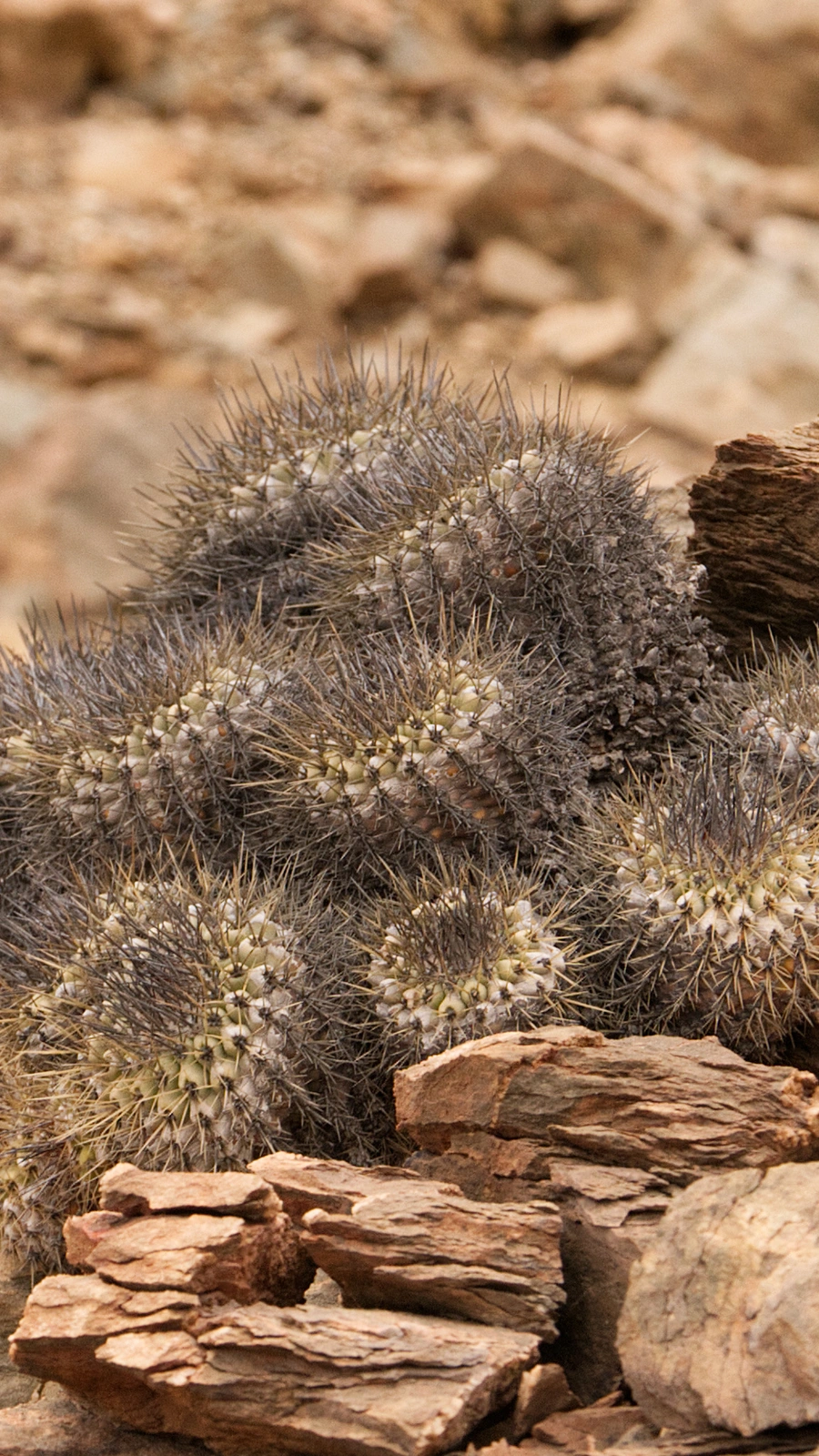
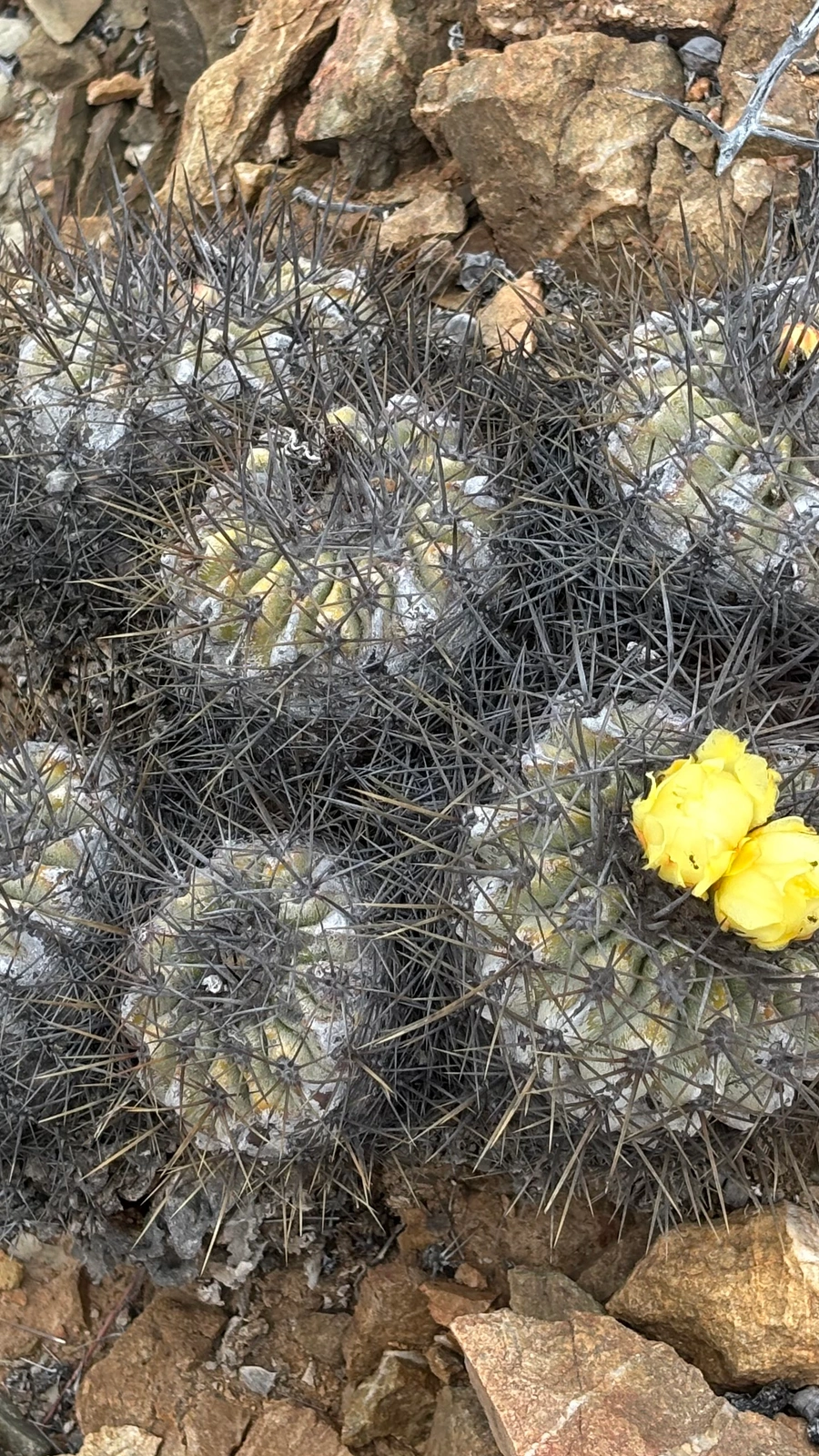
Copiapoa hoffmanniana is an extremely rare, slow-growing succulent subshrub belonging to the Cactaceae family. Endemic to the hyper-arid coastal cliffs of northern Chile, it is highly prized among succulent enthusiasts for its globose, dark-pigmented stem, robust dark spines, and the dense woolly crown that develops on mature specimens.
Classified within the genus Copiapoa, this taxon has historically been associated with the Copiapoa cinerea complex, sometimes treated as a subspecies or local variant 1. Modern taxonomists often distinguish it due to its unique dark epidermal tones, spine density, and specific geographical isolation 2.
This species is restricted to very narrow coastal bands in Chile's Atacama region 1. It survives in one of the driest deserts in the world, relying almost entirely on moisture condensed from the daily coastal fog, locally known as 'camanchaca'.
The stem is globose to short-cylindrical with a greyish-black or copper-brown epidermis. The apex is covered in a prominent tuft of yellowish-brown wool from which small, funnel-shaped yellow flowers emerge in summer. Its radial and central spines are thick, rigid, and dark red to black.
In cultivation, replicating its desert habitat is crucial. It requires an almost purely mineral substrate with excellent drainage and minimal organic matter 2. Full sun exposure is essential to maintain its compact shape, intense spine color, and healthy epidermal waxy coating.
Overwatering, especially during the cold winter dormancy, is the most common cause of failure, quickly leading to root rot. Lack of sufficient direct sunlight will cause etiolation, where the plant stretches and loses its characteristic dark color.
Requires full sun to maintain its natural dark coloration and strong spine development.
Allow substrate to dry completely between waterings; keep bone dry in winter.
Highly porous mineral mix composed of pumice, lava rock, and coarse sand.
Has sharp, sturdy spines. Place out of reach of children and pets. Non-toxic.
Moderate care difficulty due to its extreme sensitivity to moisture and slow growth rate.
Native to the coastal areas of the Atacama Desert in northern Chile, where it survives on rocky ocean-facing slopes relying heavily on coastal fog for moisture.
