
Light
Bright Indirect Light
Requires bright, filtered sunlight; protect from intense, direct midday sun.
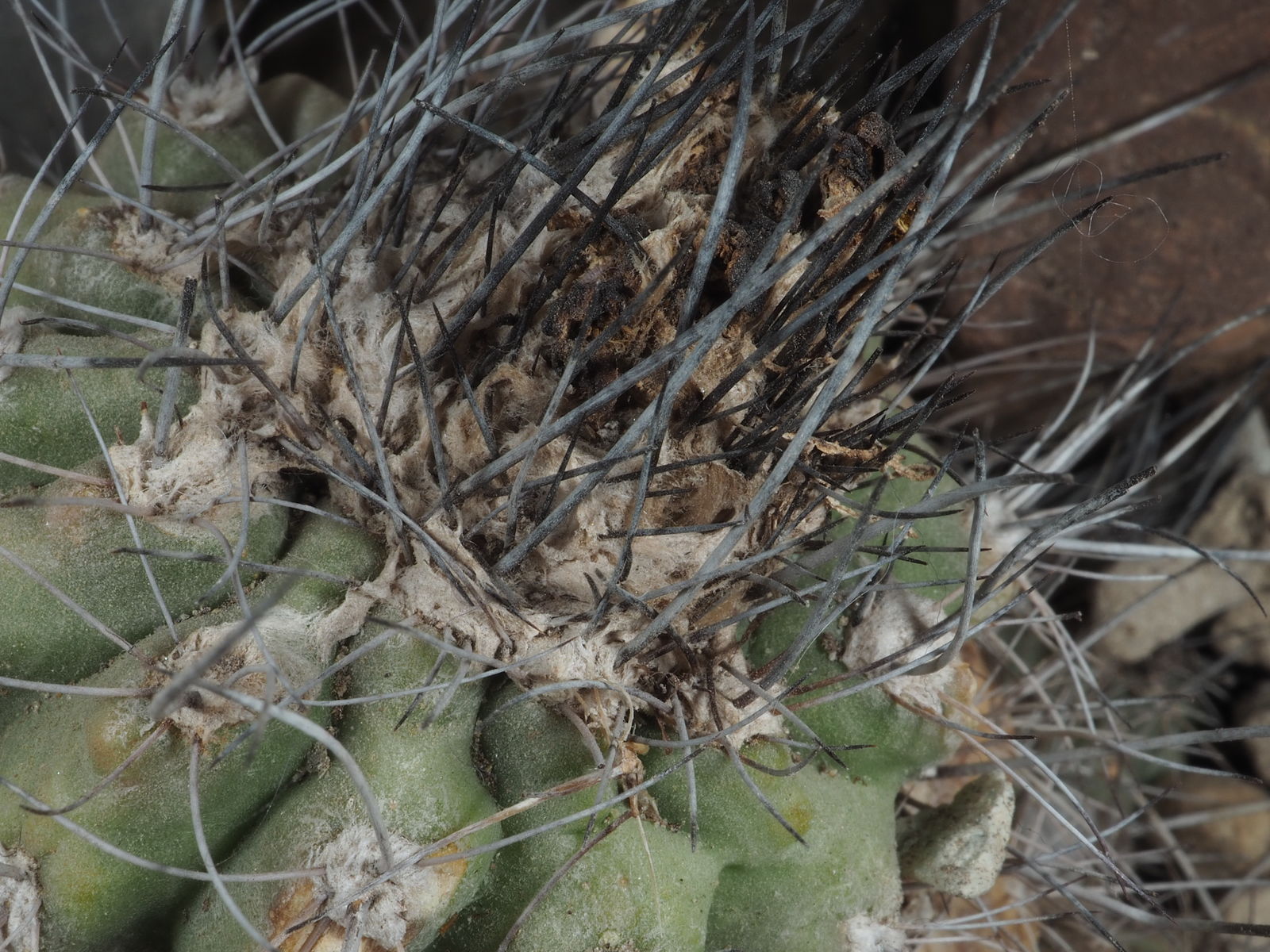 Reference image
Humble Copiapoa
Copiapoa humilis is a highly sought-after, relatively small globose cactus species belonging to the family Cactaceae. Famously adapted to some of the most arid conditions on Earth, this succulent subshrub is highly valued among collectors for its distinctive dark body coloration and neat spination 1.
Described scientifically in the mid-20th century, it belongs to the unique genus Copiapoa, which is named after the Chilean province of Copiapó. The specific epithet 'humilis' translates from Latin as 'lowly' or 'dwarf', referencing the species' compact growth habit and modest size compared to its giant generic relatives 1.
This species is endemic to northern Chile, specifically residing along the coastal cliffs of the Atacama Desert in regions like Antofagasta and Taltal. It thrives on rocky slopes where virtually no rainfall occurs. Instead, these plants survive by absorbing moisture from the dense coastal fog known locally as 'Camanchaca' 2.
The stem is spherical to short-cylindrical, often clustering from the base to form small mounds. Its skin color ranges from olive green to dark purple-grey. The plant features distinctive tuberculate ribs crowned with woolly apical areoles. Sharp, dark grey to black radial and central spines emerge from these areoles. In spring and summer, it produces attractive, sweet-scented, funnel-shaped yellow flowers from the woolly crown 1.
In cultivation, Copiapoa humilis requires an extremely porous, mineral-rich potting medium to prevent root rot. Watering should mimic its dry habitat: apply moisture only when the soil is completely bone-dry during the warm growing season, and withhold water entirely during the cold winter dormancy 2.
The most prevalent error is using standard organic potting soil and overwatering, which quickly rots the plant's thick taproot. Placing the cactus in stagnant, humid air during winter also promotes fungal infections and scarring.
Requires bright, filtered sunlight; protect from intense, direct midday sun.
Water only when the substrate is completely dry. Keep dry in winter.
Prefers a highly mineral, well-draining mix containing pumice, gravel, and sand.
Non-toxic, but sharp spines require careful handling around children and pets.
Moderately easy if watering is strictly controlled; prone to rot if overwatered.
Native to the coastal mountains of the Atacama Desert in Chile, particularly in the regions around Taltal. It thrives on rocky, gravel-covered cliffs where it relies almost entirely on moisture condensed from coastal fog.
