
Light
Bright Indirect Light
Requires bright, filtered sunlight. Protect from intense, direct midday summer sun.
 Reference image
 Reference image
Underground Copiapoa
Copiapoa hypogaea is an extraordinary geophytic cactus native to the extremely arid coastal hills of the Atacama Desert. Adapting to one of the driest places on Earth, it survives primarily on moisture harvested from coastal fogs 1.
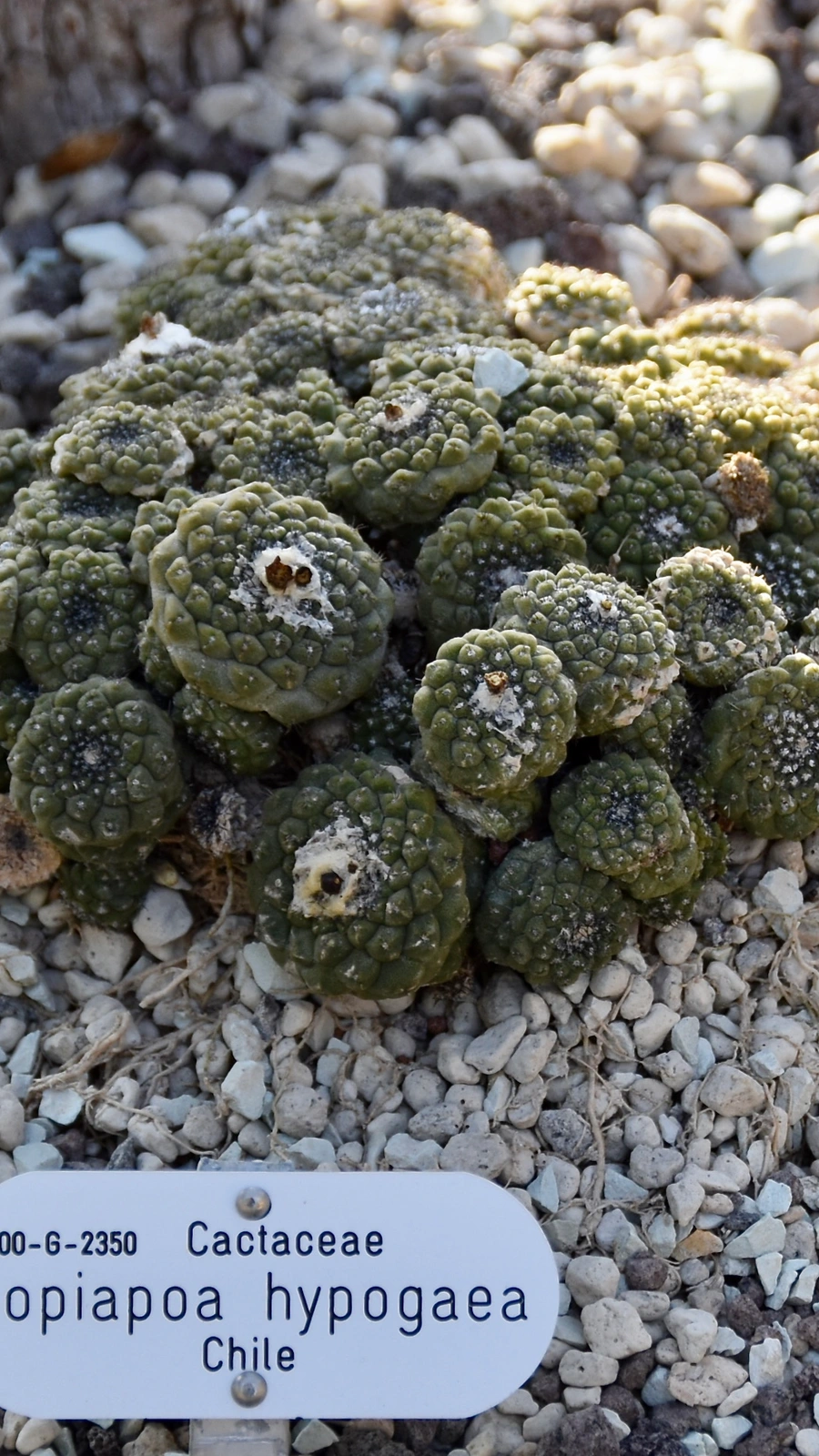
Belonging to the Cactaceae family, the specific epithet 'hypogaea' means 'underground' in Greek. This describes its unique growth habit, where the plant body sits flat at soil level, often retracting beneath the gravel during dry spells to limit evaporation 2.
This species is endemic to northern Chile, particularly around the Antofagasta and Atacama regions. It grows on rocky slopes and gravel plains where rainfall is virtually non-existent, relying heavily on the condensation of the dense morning fog known as 'Camanchaca' 1.
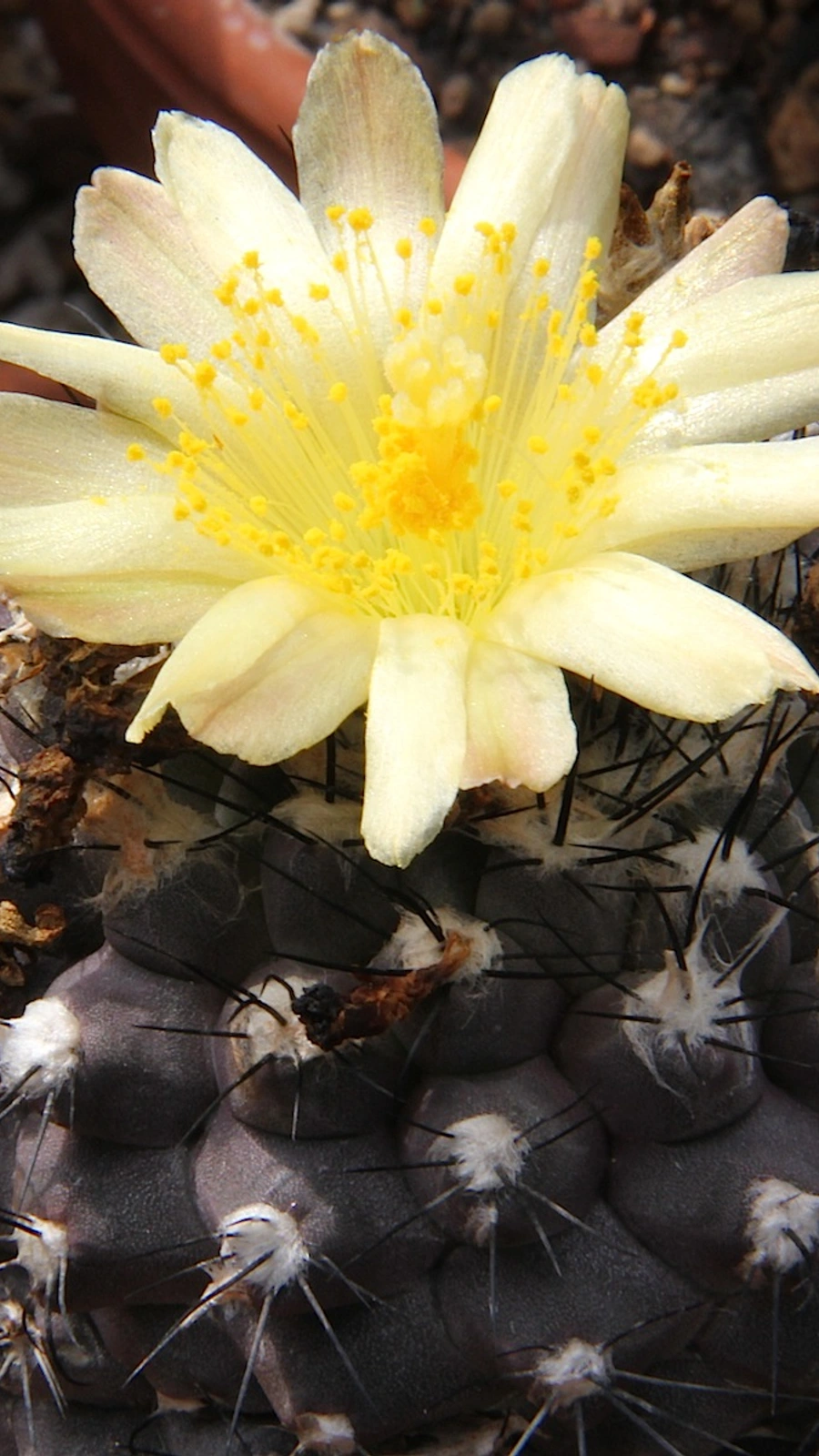
The globose stem is flattened, typically grey-bronze, brownish-green, or nearly black, with a bumpy epidermis. In summer, it produces funnel-shaped, pale yellow flowers from the woolly apex, which are delightfully scented 2.
In cultivation, it requires an extremely porous, mineral-rich substrate containing very little organic material. Irrigation must be strictly controlled; the soil should dry out completely between waterings, and winter dormancy must be kept dry 1.
Overwatering is the primary cause of failure, leading to rapid rot of the large taproot. Insufficient sunlight will cause etiolation, causing the naturally flat stem to stretch unnaturally and lose its characteristic dark pigmentation.
Requires bright, filtered sunlight. Protect from intense, direct midday summer sun.
Allow substrate to dry completely. Suspend watering entirely during winter dormancy.
Highly porous mineral substrate, predominantly pumice, gravel, and coarse sand.
Non-toxic to pets and humans, though tiny spines require gentle handling.
Moderate difficulty due to strict watering requirements and susceptibility to root rot.
Endemic to the coastal cliffs and dry hills of northern Chile, where it survives in extremely arid desert ecosystems relying on coastal morning mists.
