
Light
Full Sun
Requires full, direct sun all year round; perfect for south-facing windows or outdoor rock gardens in dry climates.
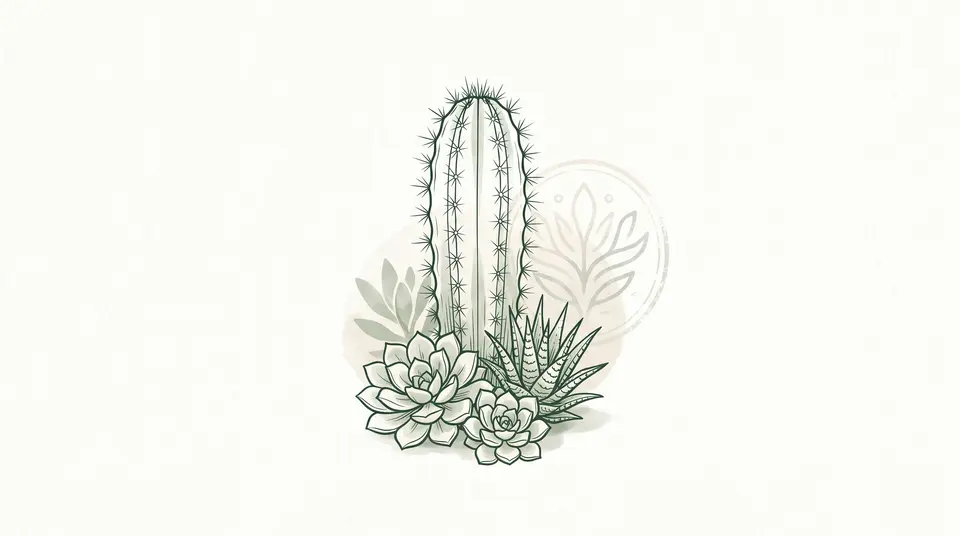 Reference image
Intricate Copiapoa
Copiapoa intricata is a highly specialized cactus species belonging to the family Cactaceae, renowned for its remarkable adaptation to the hyper-arid deserts of Chile 1. It is highly prized by succulent collectors for its dense, protective spine network and tough nature.
This species is classified under the genus Copiapoa. The specific epithet 'intricata' refers to the intricate, tangled, and interwoven nature of its heavy spination 2. It is sometimes considered a closely related form or synonym under the variable Copiapoa coquimbana complex.
Copiapoa intricata is endemic to the coastal hills of the Atacama Desert in Chile, particularly around the Huasco province 1. This habitat experiences virtually zero rainfall; survival depends almost entirely on the dense coastal fog known as 'camanchaca', which condensation the plants absorb through their spines and specialized epidermis.
The plant features a globose to short cylindrical stem that eventually offsets from the base to form dense clumps. The epidermis is a chalky grey-green. Areoles host strong, dark-colored, interwoven spines that shade the stem. Bell-shaped yellow flowers appear at the woolly apex during summer 2.
In cultivation, it demands maximum direct sunlight and an exceptionally porous mineral substrate. Water should only be applied when the substrate is completely dry. During winter, it must be kept dry and in a cool, well-ventilated location to encourage dormancy.
The most prevalent mistake is overwatering or using soils with high organic matter, which rapidly triggers root rot. Insufficient sunlight leads to etiolation, where the cactus loses its compact shape and stretches weakly.
Requires full, direct sun all year round; perfect for south-facing windows or outdoor rock gardens in dry climates.
Let the soil dry out completely to the bottom before watering again; keep dry in winter.
Use a highly mineral substrate composed mostly of pumice, grit, and coarse sand, with very minimal peat.
Non-toxic, but the extremely sharp, dense spines pose a physical hazard to pets and small children.
Moderately easy for growers who can respect strict watering regimes and provide intense sunlight.
Naturally distributed on the arid, rocky coastal cliffs and sandy plains of the Huasco province in the Atacama Desert, Chile, where it is sustained by coastal fog.
