
Light
Filtered Sun
Bright filtered sun. Protect from intense afternoon sun to prevent scorching.
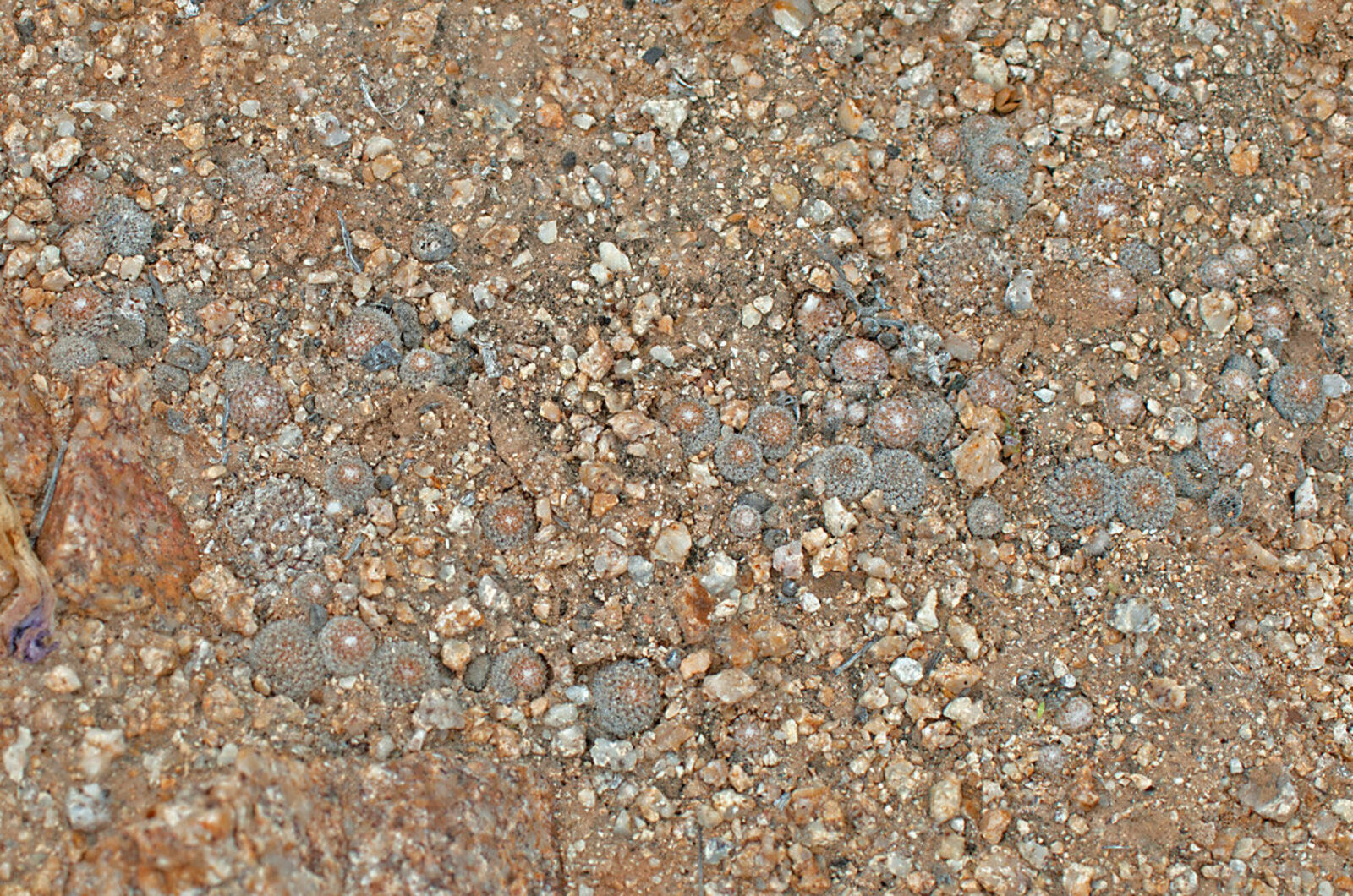 Reference image
Lau's Copiapoa
Copiapoa laui is the smallest and one of the most highly prized species within the genus Copiapoa (family Cactaceae). Its miniature size makes it an exceptional specimen for specialized collections.
Named after its discoverer Alfred Bernhard Lau, this species is a distinct miniature succulent subshrub. It represents an extreme adaptation of the genus towards miniaturization 1.
This species is micro-endemic to the coastal cliffs of the Atacama Desert in northern Chile, specifically near El Cobre 2. It survives in one of the driest places on Earth, relying almost entirely on coastal fog.
The globose stems are tiny, reaching only 1 to 3 cm in diameter, often forming dense cushions. The body color ranges from olive-green to reddish-brown, arising from a massive taproot. Pale yellow flowers emerge from the woolly apex.
It requires a strictly mineral-based, porous substrate to accommodate its large taproot. Watering must be sparse during the growing season and entirely withheld in winter 1.
Using standard organic potting soil is the leading cause of root rot. Overwatering or lack of ventilation, especially in humid conditions, will quickly destroy the sensitive root system.
Bright filtered sun. Protect from intense afternoon sun to prevent scorching.
Water only when the substrate is completely dry. Keep bone dry in winter.
Purely mineral mix. Highly porous with pumice, grit, and no peat.
Non-toxic to pets, but features small spines that require careful handling.
Moderate care; sensitive to excess moisture and requires precise soil mix.
Endemic to the rugged coastal hills of El Cobre in Chile's Antofagasta region. It thrives in an hyper-arid environment where liquid rainfall is scarce, depending instead on the condensing coastal fog known as Camanchaca.
