
Light
Full Sun
Requires full sun, preferably a bright south-facing windowsill or outdoor balcony with direct sunlight.
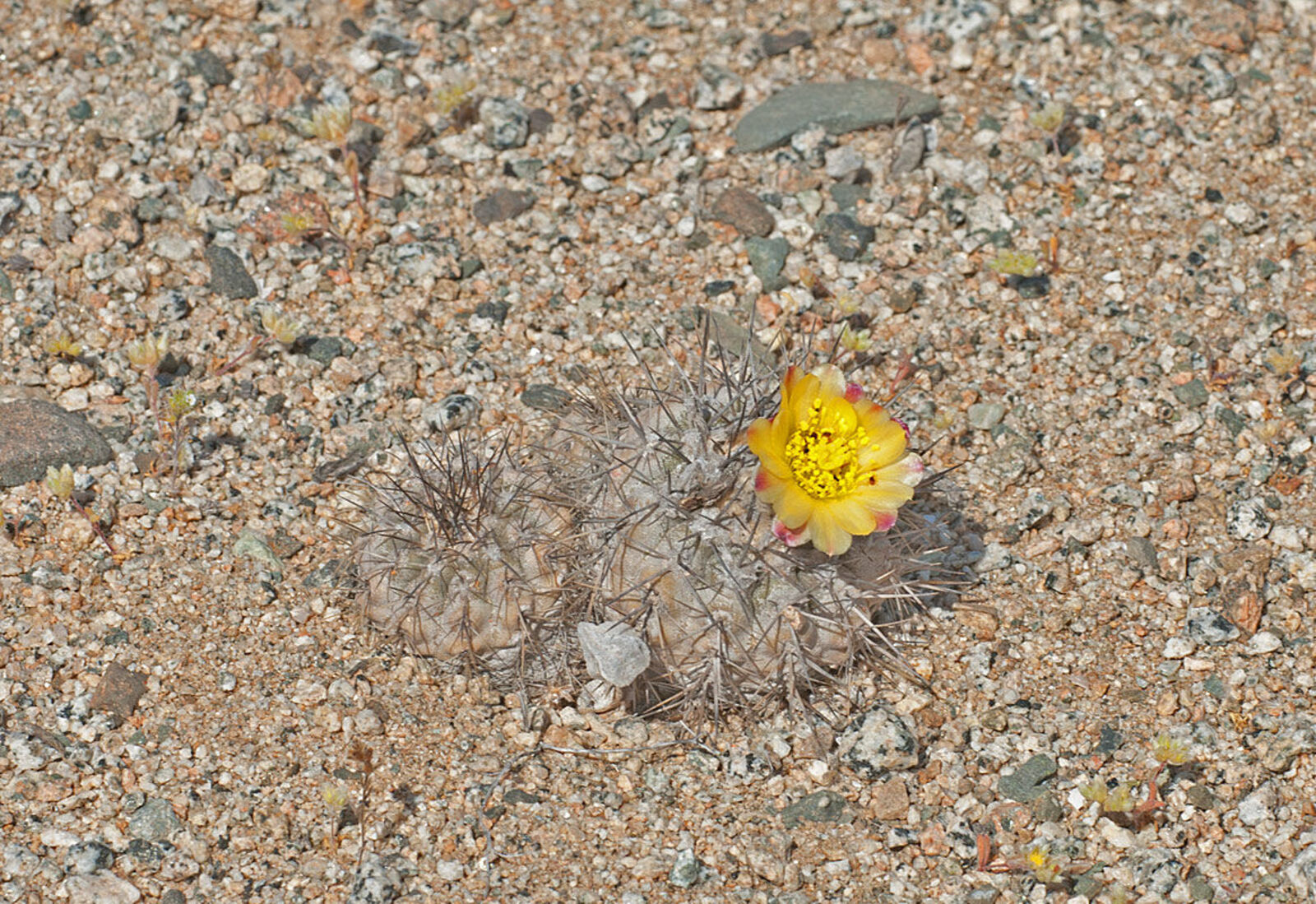 Reference image
Leonensis Copiapoa
Copiapoa leonensis is a rare and highly sought-after cactus species, perfectly adapted to the hyper-arid conditions of the Atacama Desert 1. It is characterized by its slow growth rate and clustering growth habit.
Belonging to the family Cactaceae and the genus Copiapoa 1, this species is named after the Quebrada de León valley in Chile. In some taxonomic revisions, it has been treated as a form or variety of Copiapoa coquimbana.
This species is endemic to northern Chile, specifically along the southern fringes of the Atacama Desert 2. It grows on rocky slopes and coastal hills where rainfall is virtually non-existent, surviving almost exclusively on moisture from coastal fog, locally known as camanchaca 2.
It forms subshrubby clusters of green to greyish-green globular stems. The stems feature prominent ribs lined with rigid, dark spines that age to grey. In summer, it produces beautiful, bell-shaped yellow flowers at the apex.
In cultivation, it requires maximum sunlight and excellent air circulation. Watering should be highly seasonal, allowing the mineral-rich substrate to dry completely between applications during summer, and keeping it completely dry in winter.
Overwatering and using soil with poor drainage are the most common causes of root rot. In addition, low-light conditions will cause the plant to etiolate, losing its compact, globular form.
Requires full sun, preferably a bright south-facing windowsill or outdoor balcony with direct sunlight.
Water thoroughly when the soil is dry in summer, suspend watering almost completely in winter.
Highly porous mineral substrate containing pumice, lava rock, and coarse sand with minimal peat.
Non-toxic, but the sharp spines pose a physical hazard to curious pets and small children.
Moderate. Demands strict watering discipline to prevent root and stem rot.
Found along the coastal hills of northern Chile, where it relies on dense maritime fog for survival amidst extreme desert conditions.
