
Light
Full Sun
Requires full, direct sunlight. Insufficient light leads to etiolation and loss of characteristic color.
 Reference image
 Reference image
Large-rooted Copiapoa
Copiapoa megarhiza is a highly specialized, slow-growing cactus species native to the hyper-arid coastal deserts of northern Chile. It is celebrated among collectors for its extraordinary evolutionary adaptation: a massive, turnip-like taproot that dwarfs the aerial stem 1.
The genus name Copiapoa refers to the province of Copiapó in Chile. The specific epithet megarhiza combines the Greek mega (large) and rhiza (root) 2, perfectly describing the oversized underground caudex-like root system that helps the plant survive prolonged periods of drought.
Endemic to the Atacama Desert in northern Chile, Copiapoa megarhiza grows in dry shrublands and rocky desert slopes 1. This environment receives virtually no rainfall; instead, the species relies on the dense coastal fog locally known as "camanchaca" as its primary source of moisture 3.
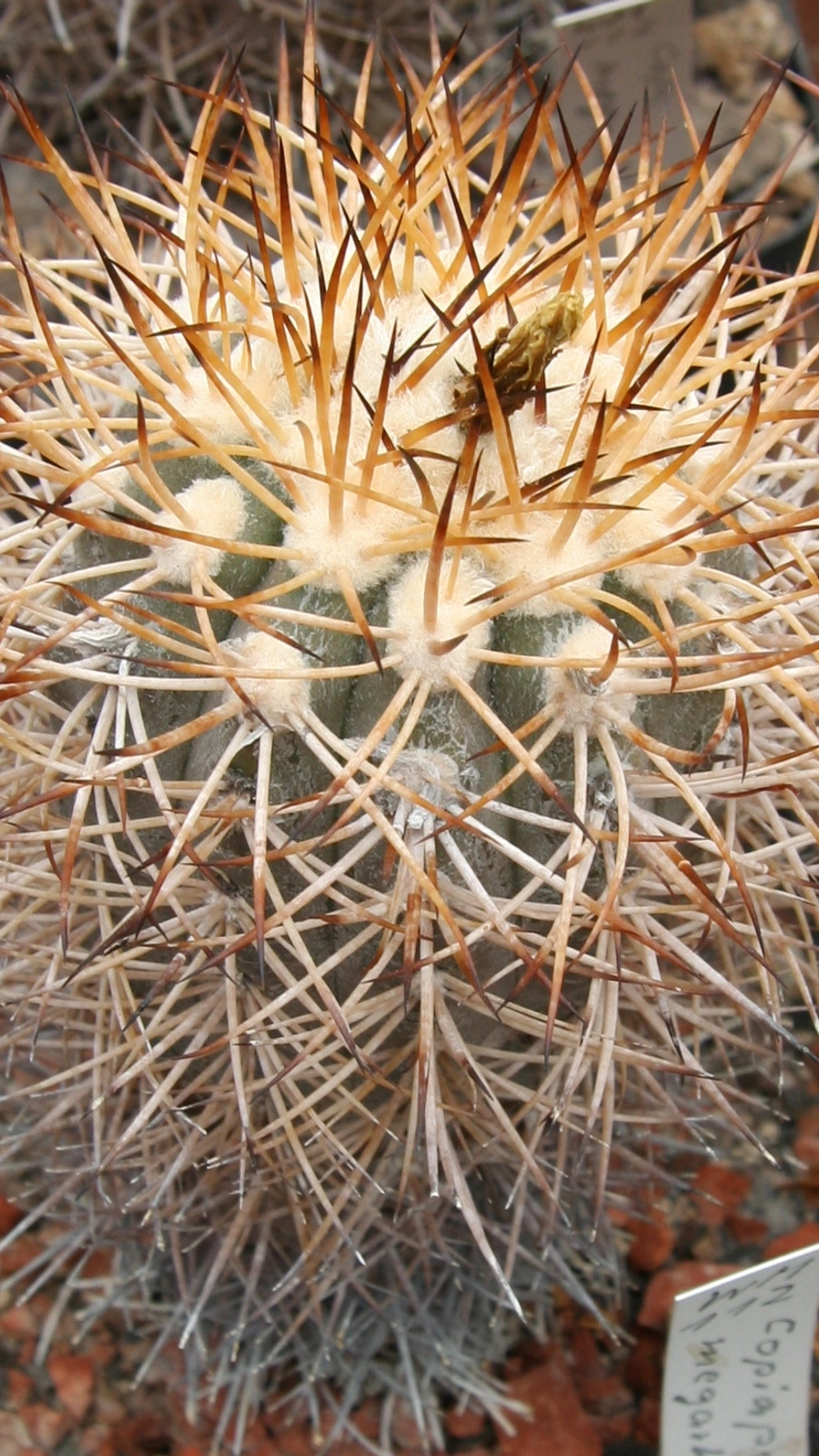
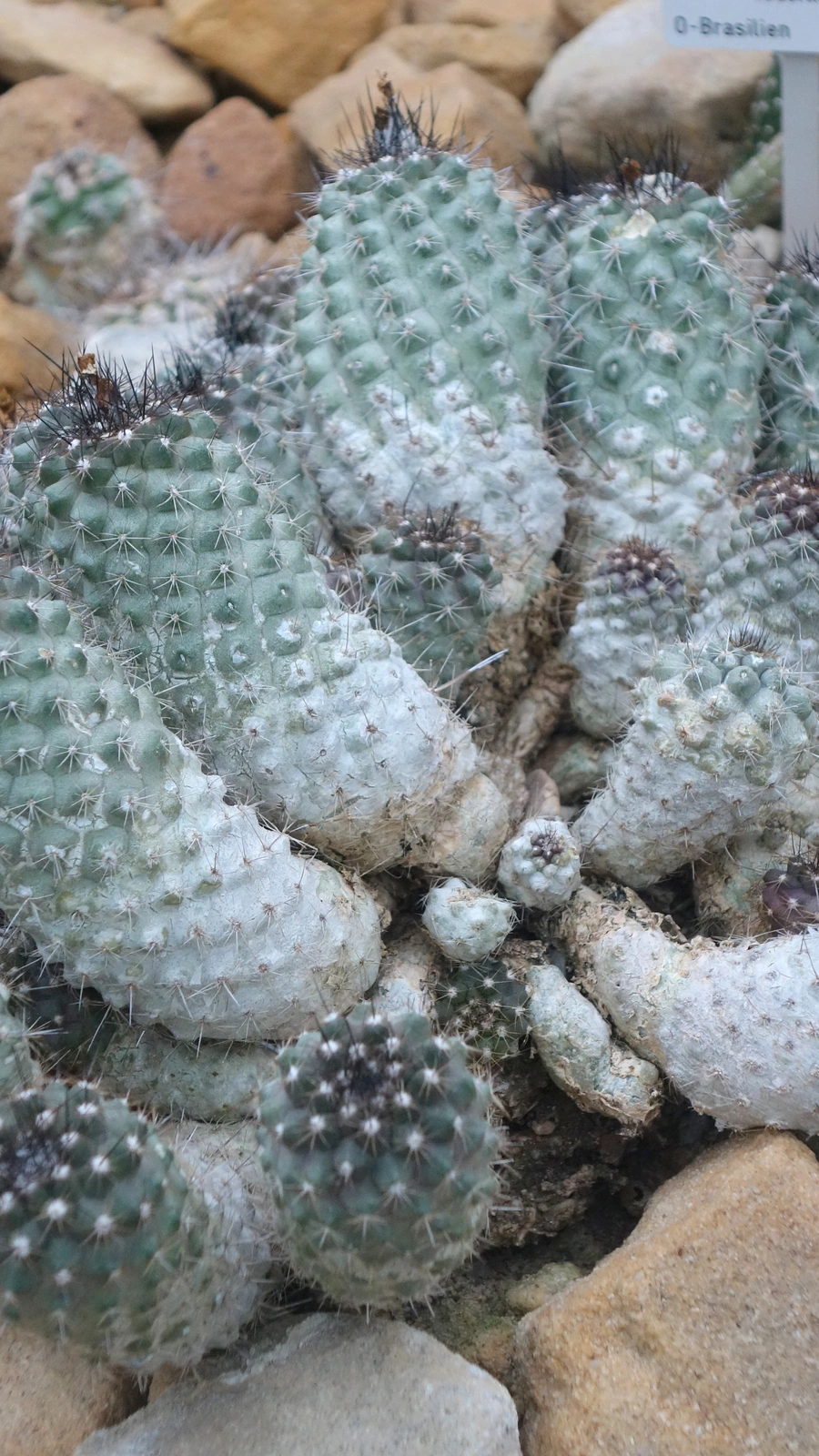
The stems are globose to shortly cylindrical, gray-green or bronzed, with prominent ribs covered in dark, stiff spines. The yellow flowers emerge from the woolly apex of the stem, contrasting beautifully with the dark epidermis. Underground, the massive taproot acts as a reservoir for water and carbohydrates.
In cultivation, replicating its native dry, mineral-rich habitat is key. It requires an exceptionally porous substrate with very low organic content and must be kept in a well-ventilated, sunny spot.
The most frequent issue is root rot caused by overwatering or the use of heavy soils. Without adequate air circulation and rapid drainage, the giant taproot will quickly decay.
Requires full, direct sunlight. Insufficient light leads to etiolation and loss of characteristic color.
Allow the substrate to dry out completely between waterings. Keep completely dry in winter.
Use an ultra-draining mineral mix with high pumice, gravel, and minimal organic matter.
Equipped with sharp, rigid spines. Non-toxic, but should be handled with care and kept away from pets.
Moderate to hard. Best suited for collectors who can strictly manage watering and air circulation.
Native to the coastal mountains and gravel plains of the Atacama Desert, where it survives in one of the driest places on Earth by harvesting atmospheric moisture from dense ocean fogs.
