
Light
Bright Indirect Light
Requires bright, indirect sunlight or filtered sun; shield from harsh, direct midday summer rays.
 Reference image
 Reference image
Soft Copiapoa
Copiapoa mollicula is an extremely rare and highly prized cactus species in the Cactaceae family, endemic to the hyper-arid Atacama Desert of Chile. Growing as a succulent subshrub, this species has adapted to some of the harshest conditions on Earth through a specialized morphology that is highly sought after by succulent enthusiasts 1.
The genus Copiapoa is widely recognized as the botanical icon of the Atacama. The specific epithet 'mollicula' derives from Latin, meaning 'softish' or 'quite soft', referencing the relatively soft and flexible epidermal tissue of this species compared to its hard-bodied congeners 2. Some taxonomists consider it a subspecies or synonym of Copiapoa montana.
This species is restricted to the coastal cliffs and gravelly slopes of northern Chile, where it survives primarily on moisture gathered from the daily coastal fog known as 'camanchaca' 1. Rainfall in its natural habitat is virtually non-existent, making these fogs the sole source of life-sustaining water. Due to illegal poaching and climate shifts, wild populations are critically endangered.
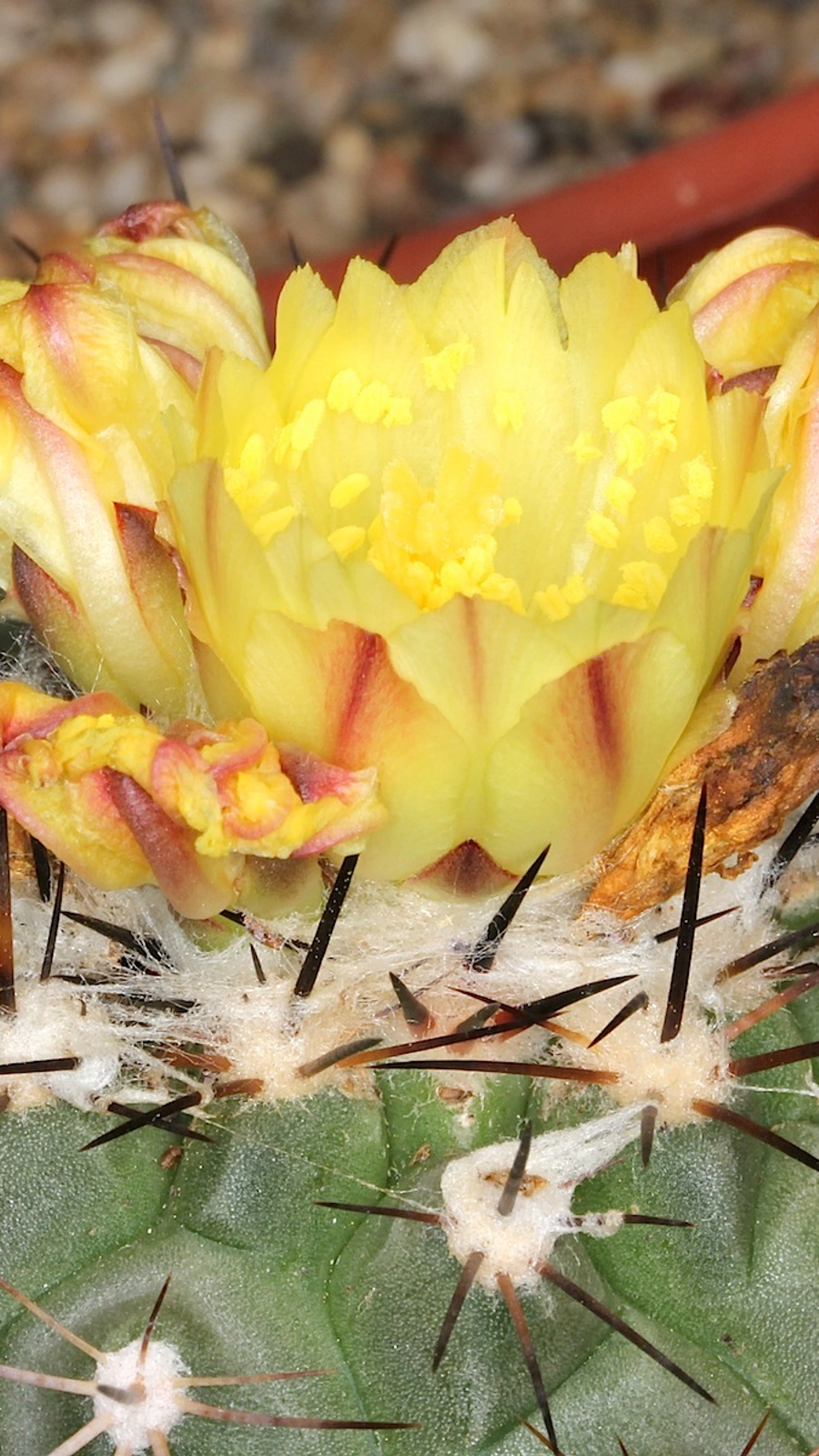
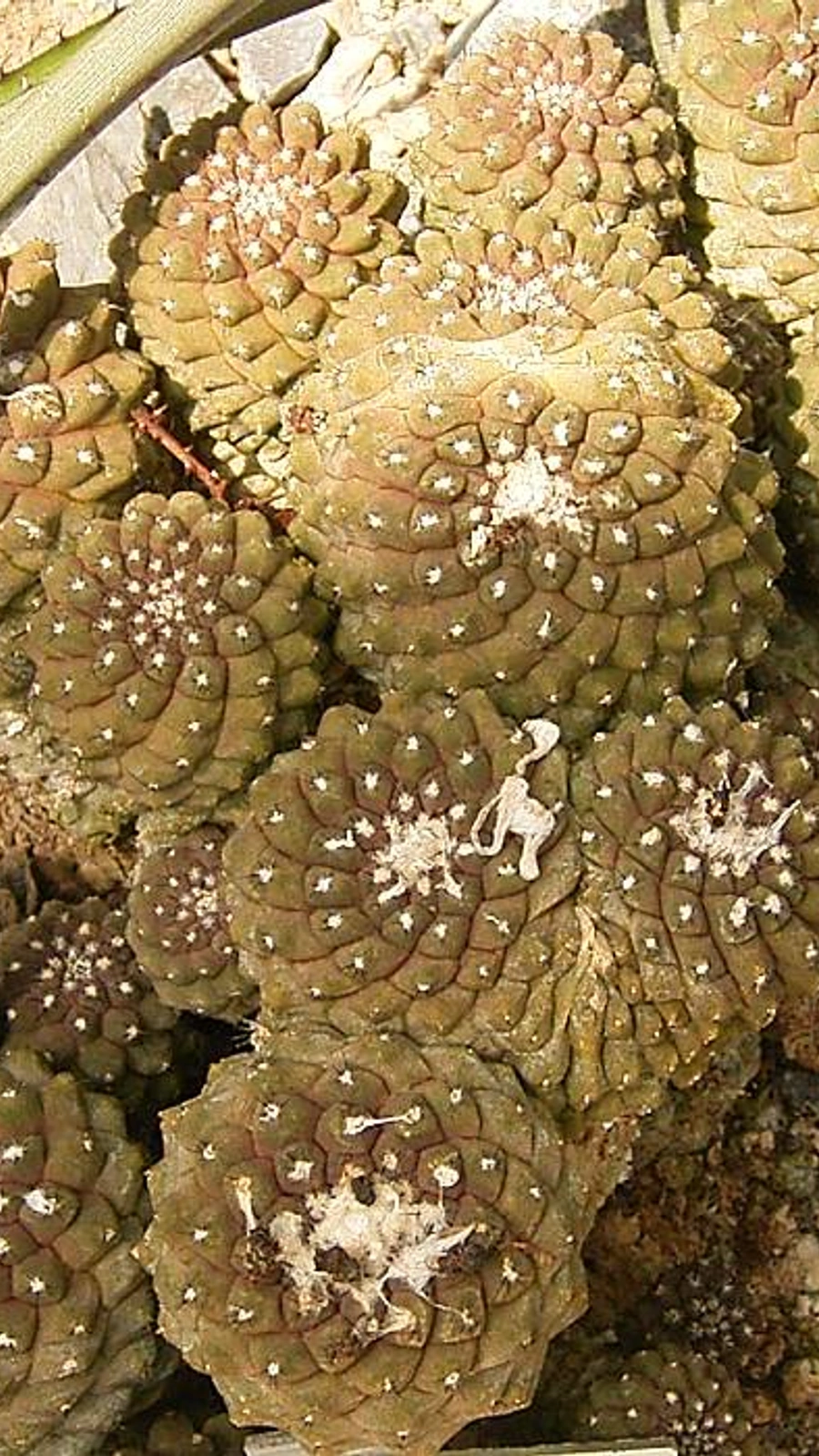
It forms globose to shortly cylindrical stems that exhibit a grayish-green to purplish-brown hue. The stems feature distinct ribs lined with small areoles bearing short, slender, and dark-colored spines. During the growing season, pale yellow, bell-shaped flowers emerge from the woolly apex of the mature stems.
Cultivating Copiapoa mollicula requires expert-level care. It is highly susceptible to root rot; thus, an entirely mineral-based, free-draining substrate is mandatory 2. Watering should be sparse, only applied during spring and summer after the substrate has dried out completely. In winter, keep the plant completely dry and cool to mimic its natural dormancy.
The most prevalent error is utilizing organic-rich, peat-based potting soils and watering too frequently in poorly ventilated spaces. This combination inevitably triggers fungal decay. Furthermore, inadequate light levels will cause etiolation, wherein the tight, spherical stem stretches and loses its characteristic form.
Requires bright, indirect sunlight or filtered sun; shield from harsh, direct midday summer rays.
Water very sparingly in spring and summer. Keep completely dry throughout winter dormancy.
Strictly mineral mix containing pumice, grit, and sand. Avoid organic peat or standard soils.
The spines are relatively sparse and small, but handle with care. Non-toxic to domestic pets.
Rated as expert due to its extreme intolerance to overwatering and specific soil needs.
Endemic to the extremely dry coastal hills of northern Chile, where it survives on atmospheric moisture harvested from incoming ocean fog, adapting to gravelly slopes with no reliable rainfall.
