
Light
Full Sun
Requires full sun; insufficient light leads to pale, elongated growth.
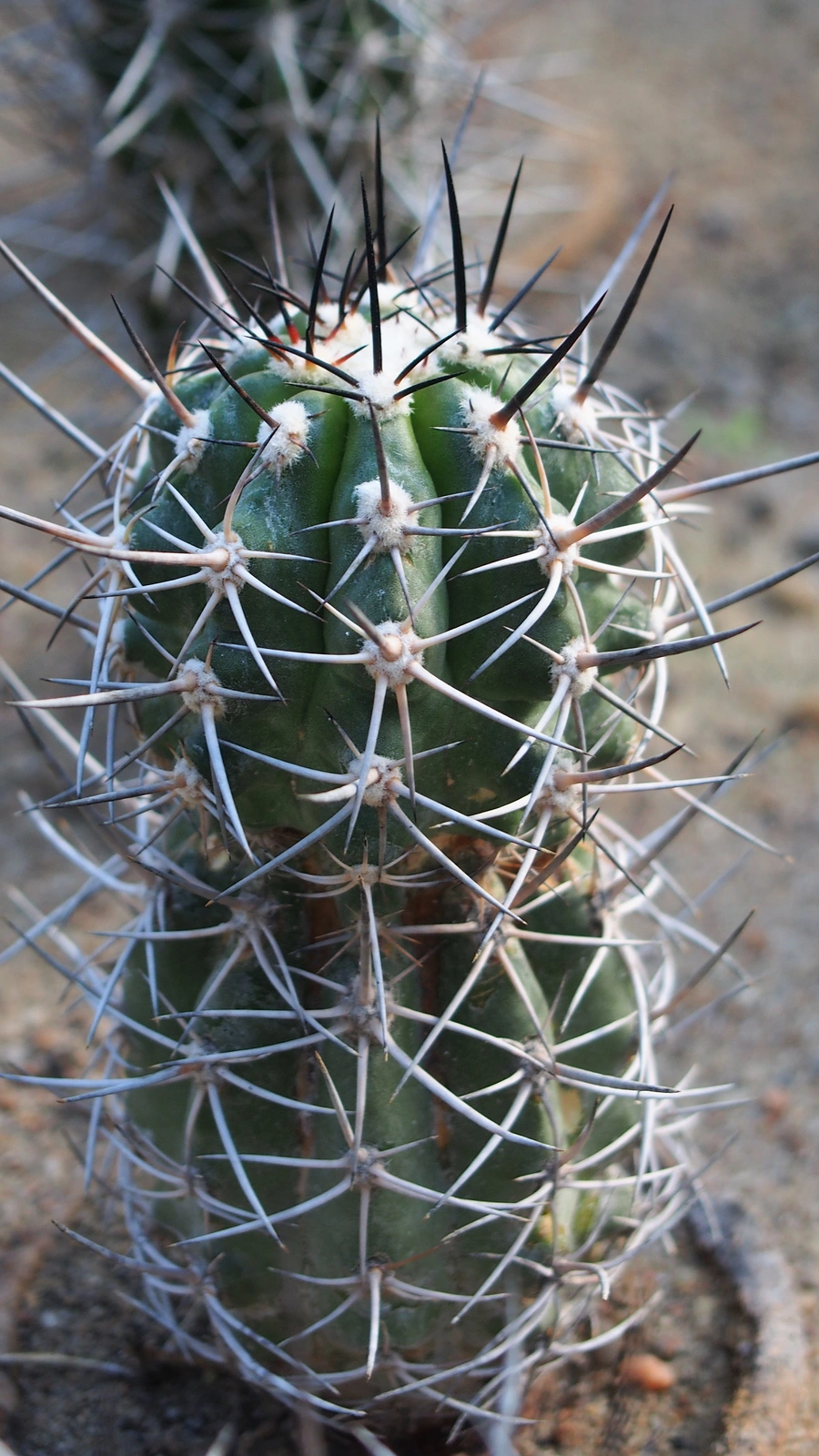 Reference image
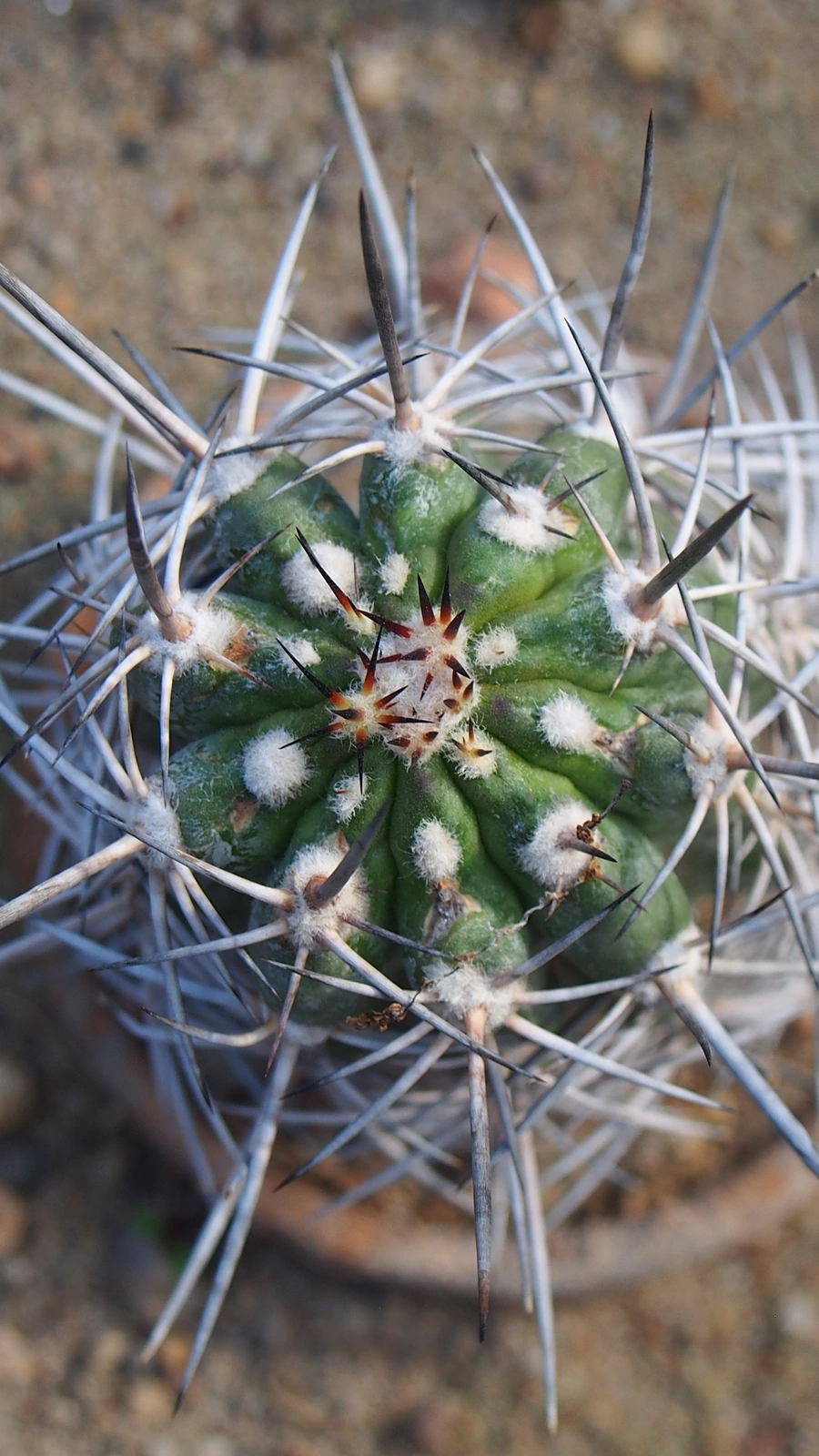 Reference image
Pendulous Copiapoa
Copiapoa pendulina is an endangered and highly specialized cactus species belonging to the family Cactaceae, native to the hyper-arid coastal cliffs of the Atacama Desert 1. Well-adapted to extreme drought, this succulent subshrub has evolved highly efficient physiological mechanisms to survive with minimal water resources.
Classified within the genus Copiapoa, Copiapoa pendulina represents the unique evolutionary lineage of northern Chile's desert flora 2. The specific epithet 'pendulina' refers to the slightly arching or pendulous growth habit that older clumps display as they spill over rocky crevices.
This species is restricted to the coastal desert hills (lomas) of northern Chile 1. It thrives in rocky soils and extremely dry shrublands, where rainfall is practically non-existent. The plants rely heavily on the coastal fog, locally known as 'Camanchaca', which condenses on their bodies and provides crucial moisture.
Copiapoa pendulina forms low-growing, clustered mounds of greyish-green to dark brown stems protected by a waxy cuticle. The ribs are prominent and support woolly areoles bearing stout, dark-colored spines that screen the plant from intense solar radiation and capture moisture from the air. Under favorable conditions, pale yellow, bell-shaped flowers emerge from the woolly crown.
In cultivation, replicating its desert habitat is essential for success. It requires maximum sunlight to maintain its compact shape and dark spine coloration. The potting medium must be predominantly mineral-based, providing immediate drainage. Watering should be infrequent and restricted to the active growing season.
The most frequent mistakes are overwatering and using peat-heavy organic soils 2, which inevitably lead to root rot. Additionally, keeping the plant in low-light conditions causes unnatural elongation (etiolation) and weakens its structural integrity.
Requires full sun; insufficient light leads to pale, elongated growth.
Allow soil to dry out completely. Suspend watering entirely during winter.
Use a strictly mineral mix high in pumice, lava rock, and coarse sand.
Non-toxic, but sharp spines require careful handling away from pets.
Moderate; highly rewarding if overwatering is strictly avoided.
Endemic to the coastal ranges of northern Chile in South America, where it clings to rocky slopes and survives almost exclusively on moisture harvested from the heavy incoming ocean fogs.
