
Light
Direct Sun
Requires at least 6 hours of direct, unfiltered sunlight daily.
 Reference image
 Reference image
Golden Column Cactus
Corryocactus aureus is a succulent subshrub belonging to the family Cactaceae, characterized by its semi-erect to decumbent growth habit. Known for its brilliant golden spines and showy yellow blooms, it is a prized species among succulent and cacti enthusiasts 1.
Originally described as Cereus aureus, the species was later integrated into the genus Corryocactus, which honors the botanist Thomas Corry 2. It is also known under the synonym Erdisia aurea in historical botanical records.
This species is native to the arid mountains of southern Peru, particularly in regions like Arequipa. It typically thrives at elevations between 2000 and 3000 meters above sea level, growing on rocky, dry slopes and in soils rich in volcanic minerals 1.
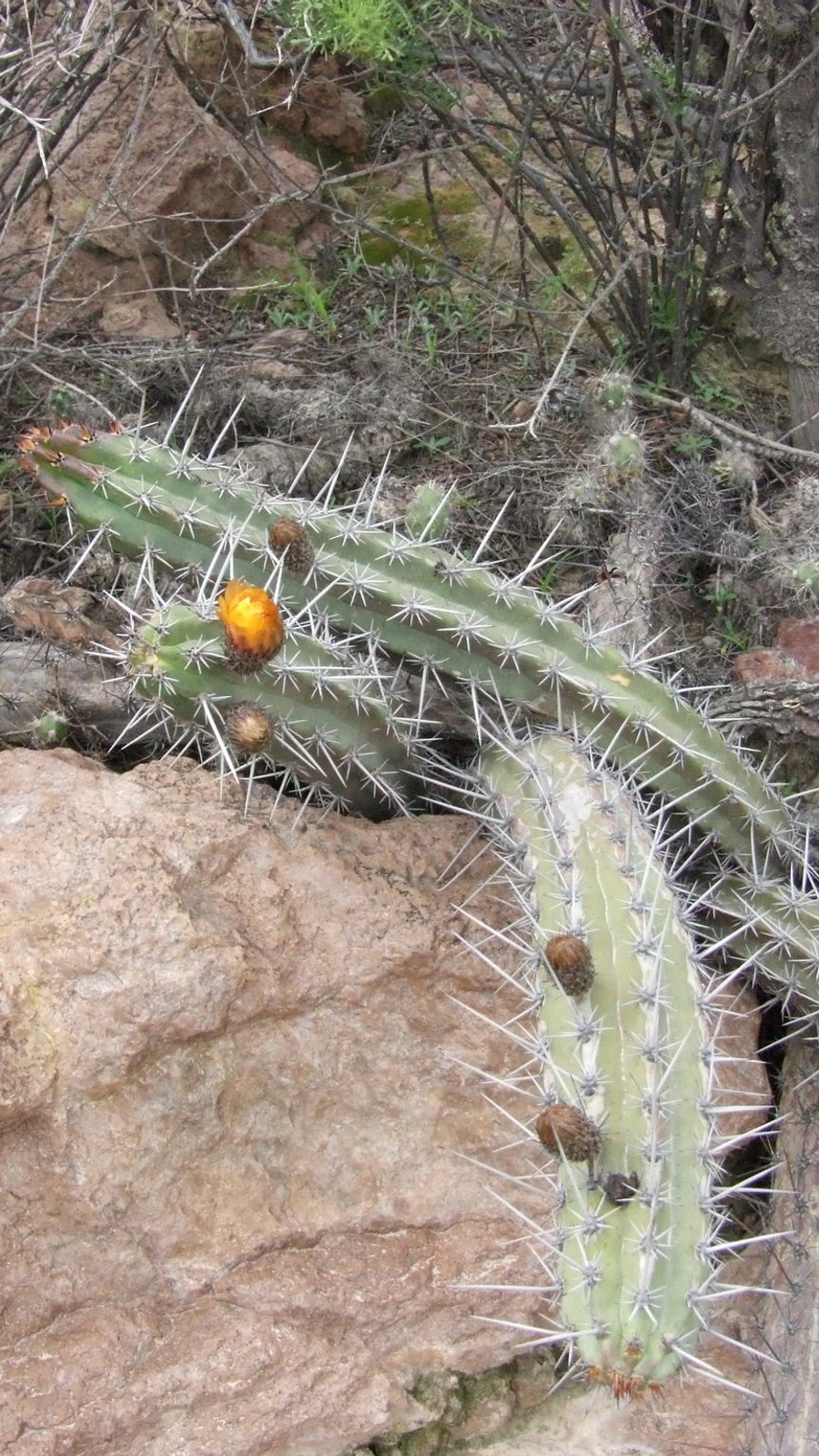
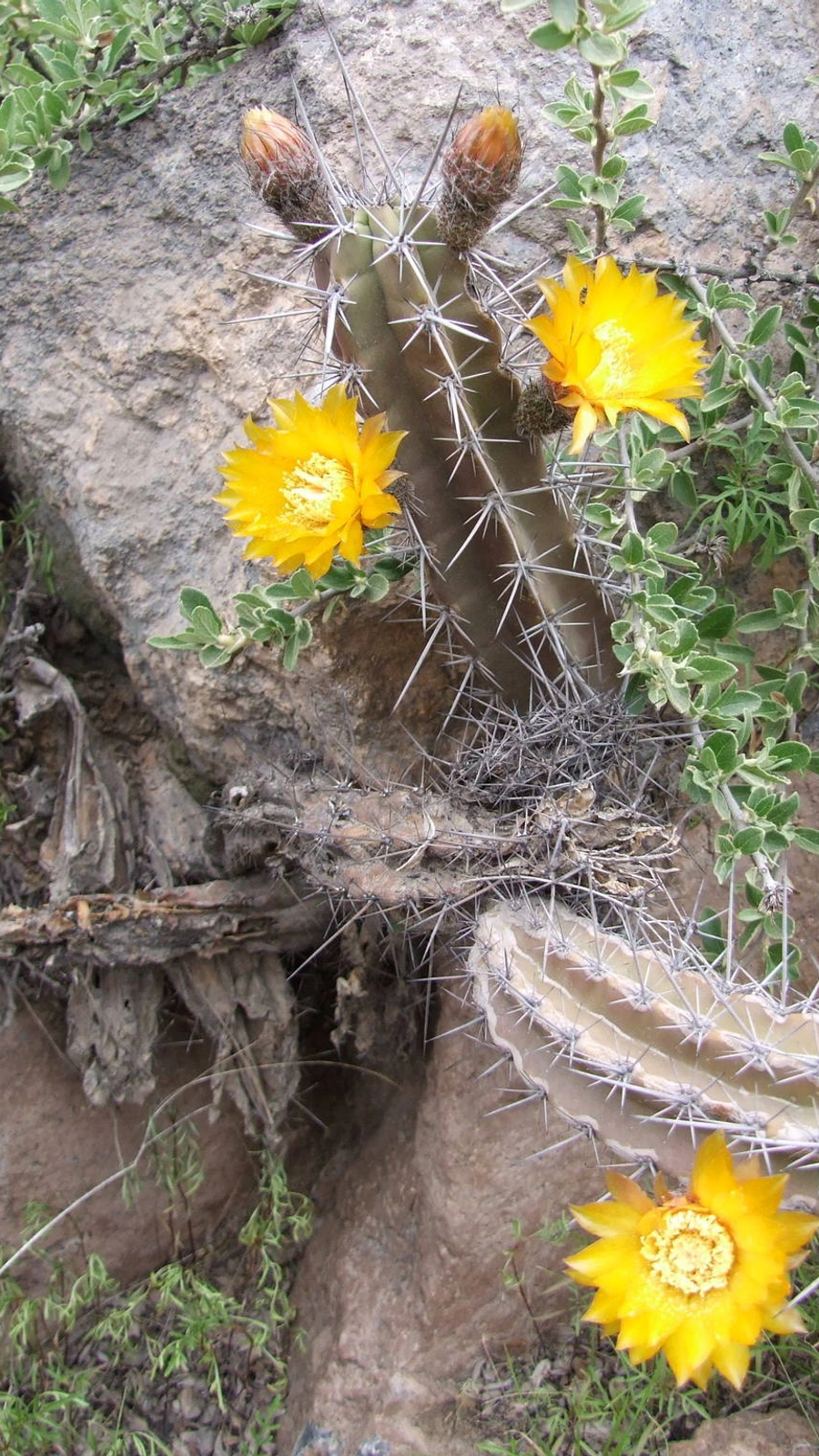
The stems are cylindrical, light green, and branch from the base, reaching heights of up to 1 meter. It possesses 5 to 8 pronounced ribs adorned with woolly areoles. The spines are stiff, needle-like, and bright golden-yellow to brownish. In summer, it produces funnel-shaped, vibrant yellow flowers, followed by globose fruits.
This cactus requires full, direct sun and excellent ventilation. Water thoroughly only when the potting substrate is completely dry. During the winter, watering must be reduced to a bare minimum or halted entirely to simulate its natural dormant cycle 3. It prefers highly porous, mineral-rich soils.
The most frequent issue is root rot caused by overwatering or compacted soil. Keeping the cactus in damp, cold conditions during winter is almost always fatal.
Requires at least 6 hours of direct, unfiltered sunlight daily.
Let the soil dry out fully between waterings; keep dry in winter.
Use a well-draining mineral mix with plenty of pumice or perlite.
Non-toxic, but features very sharp spines; handle with care and keep away from pets.
Very easy to care for if overwatering is strictly avoided.
Native to the high-elevation rocky slopes of southern Peru, specifically thriving in the dry Andean shrublands where volcanic, well-draining mineral soils dominate.
