
Light
Direct Sun
Place in south or west-facing windows receiving at least 6 hours of direct sunlight daily.
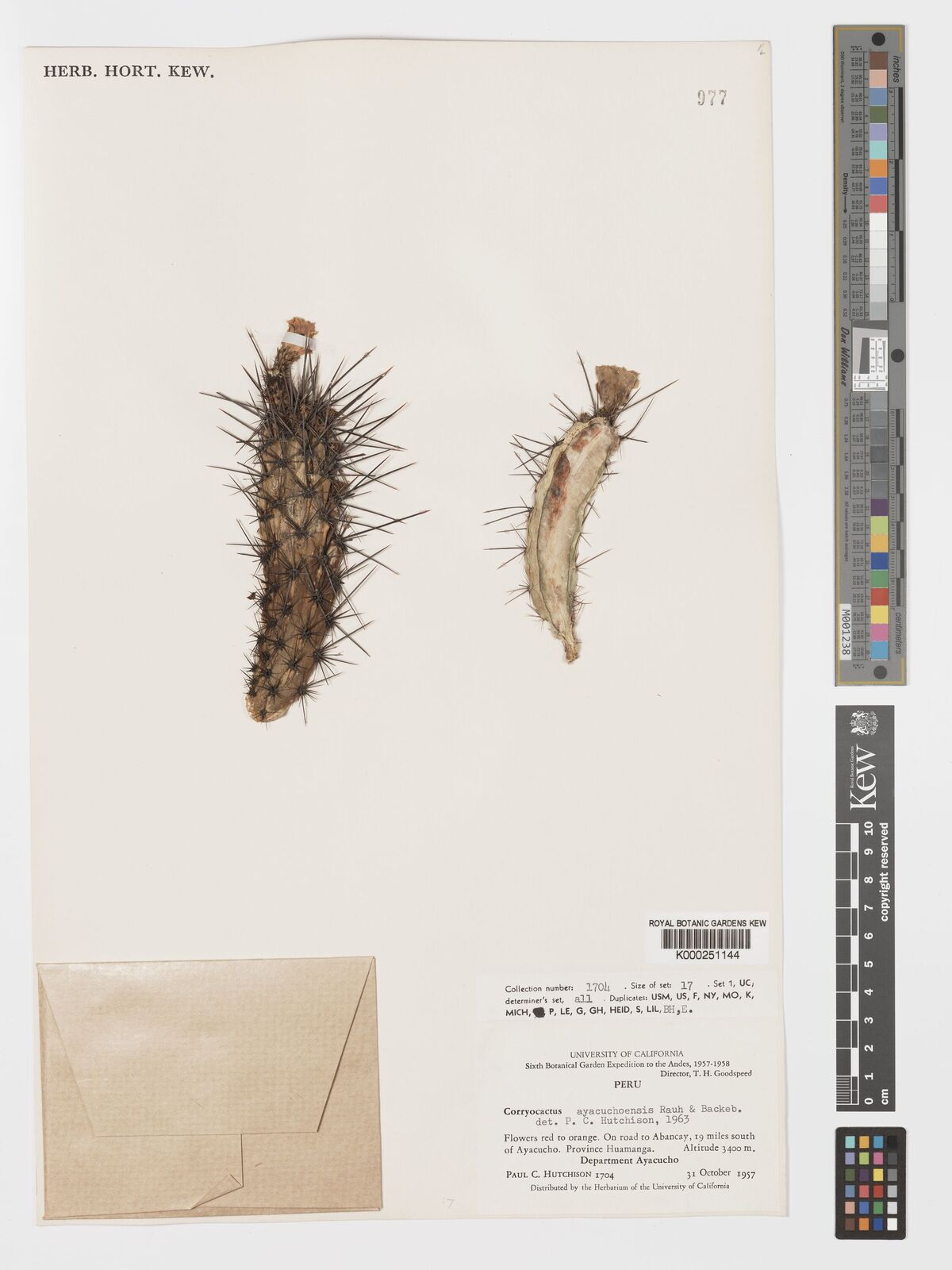 Reference image
Ayacucho Columnar Cactus
Corryocactus ayacuchoensis is a rare, upright to semi-erect columnar cactus belonging to the Cactaceae family. Highly adapted to arid montane environments, this species is prized among collectors for its rugged architectural form 1.
The species belongs to the genus Corryocactus and was documented by taxonomists including Carl Backeberg. The specific epithet "ayacuchoensis" refers directly to its type locality in the Ayacucho region of Peru 2.
Native to Western South America, particularly the high-altitude regions of Peru, Corryocactus ayacuchoensis thrives in dry shrublands and desert biomes. It is typically found growing on rocky, steep slopes at elevations between 2,500 and 3,500 meters, where soils drain rapidly 1.
This cactus features a grayish-green ribbed stem adorned with strong, needle-like spines clustered along the areoles. The plant has a tendency to branch from the base. It produces beautiful, funnel-shaped flowers, typically in shades of yellow, orange, or red 2.
When grown in cultivation, it requires intense light and outstanding soil drainage. Position the plant in a spot that receives plenty of direct sunlight. Water thoroughly only when the substrate has dried out completely, and keep the soil almost bone-dry throughout the winter months.
Overwatering and poor air ventilation are the most common issues, rapidly causing root rot and stem decay 1. Insufficient light exposure leads to etiolation, where the plant grows weak, thin, and loses its natural coloration.
Place in south or west-facing windows receiving at least 6 hours of direct sunlight daily.
Allow soil to dry out 100% between waterings. Reduce watering to almost zero in winter.
Use a fast-draining, mineral-heavy soil mix composed mostly of pumice, perlite, and sand.
Non-toxic, but features sharp spines that can cause mechanical injury. Keep away from pets and kids.
Moderate to grow; requires strict adherence to dry-winter rest and very high light levels.
Native to the high-altitude arid slopes and dry shrublands of the Andes in the Ayacucho region of Peru.
