
Light
Full Sun
Requires full, direct sun. South or west-facing windows are ideal for indoor cultivation.
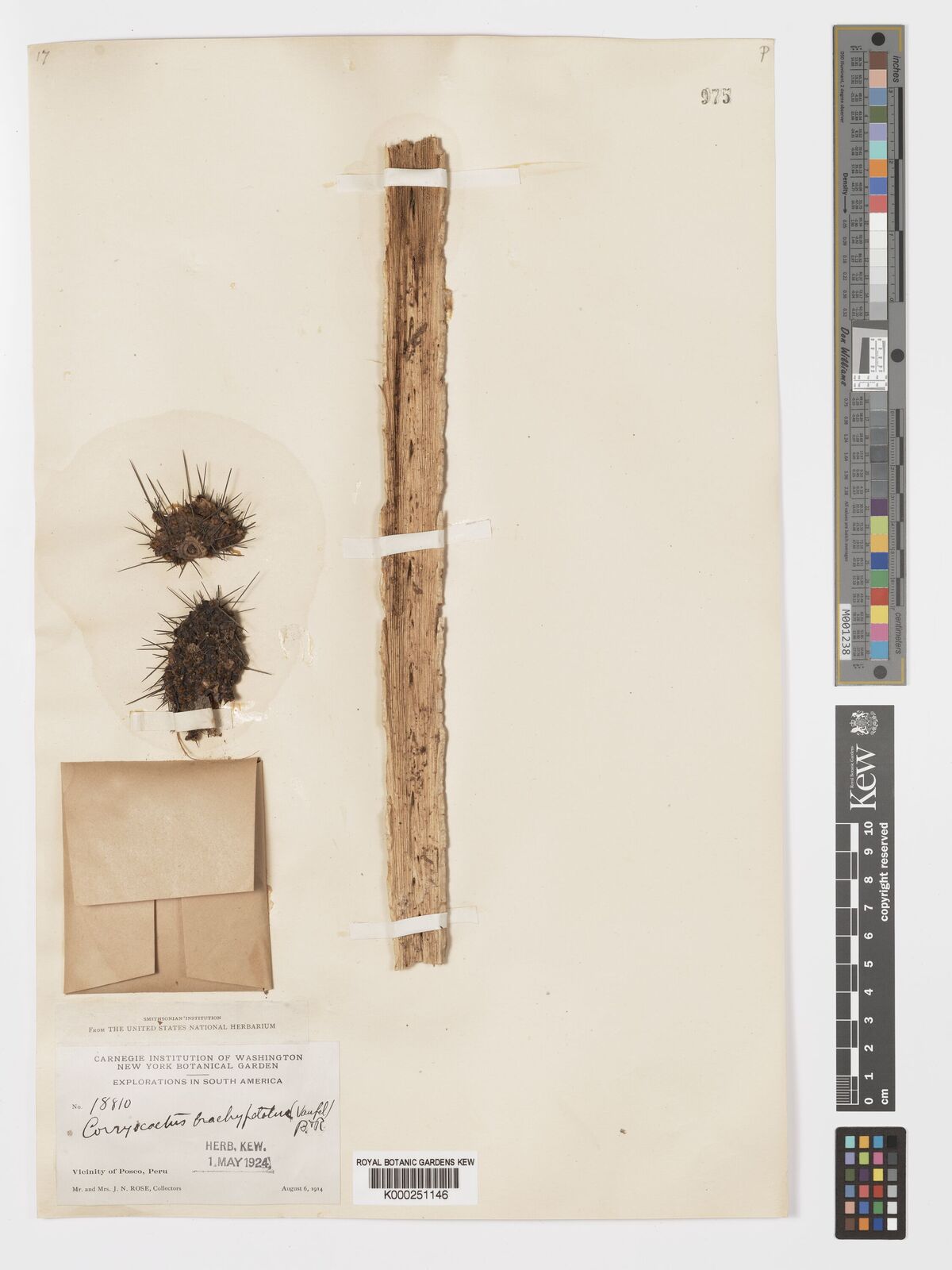 Reference image
Golden Flowered Tree Cactus
Corryocactus brachypetalus is a remarkable, large shrubby to tree-like cactus species belonging to the family Cactaceae 1. Native to arid desert environments, this plant is highly prized by collectors for its robust columnar growth and brilliant, golden-yellow summer blooms.
Classified under the genus Corryocactus, it was first formally documented by botanists Britton & Rose 2. The specific epithet brachypetalus is derived from Latin, translating to "short petals," describing the distinct structure of its flower petals.
This species is native to Western South America, particularly endemic to the arid regions of Peru 1. It thrives in hyper-arid coastal deserts, rocky hillsides, and dry shrublands where rainfall is extremely scarce and sunshine is intense.
In its natural habitat, it can reach heights of 2 to 4 meters, developing a branched, tree-like form. The stems are deeply ribbed with prominent areoles bearing stout, yellowish-to-brown spines. The eye-catching flowers are golden-yellow, funnel-shaped but with relatively short petals, appearing in late spring or summer.
It requires full sun and exceptionally well-draining soil to prevent root rot. It is highly drought-tolerant and performs best when watered thoroughly only after the soil has completely dried out. Air circulation is vital for its health.
Overwatering and placing the plant in poorly drained or dense clay soil are the most common causes of plant death via root rot. Additionally, low-light conditions cause weak, pale, and stretched growth (etiolation).
Requires full, direct sun. South or west-facing windows are ideal for indoor cultivation.
Allow soil to dry out 100% between waterings in summer; keep completely dry in winter.
Use a specialized mineral-heavy cactus mix containing pumice, coarse sand, and minimal organic matter.
Features sharp, stout spines that can cause injury. Keep away from pets and children.
Moderately easy if winter dryness is strictly maintained and maximum light is provided.
Native to the coastal desert valleys and rocky slopes of Western Peru, surviving in hyper-arid conditions under intense solar radiation.
