
Light
Bright Indirect Light
Requires abundant bright, indirect light; shield from scorching afternoon sun.
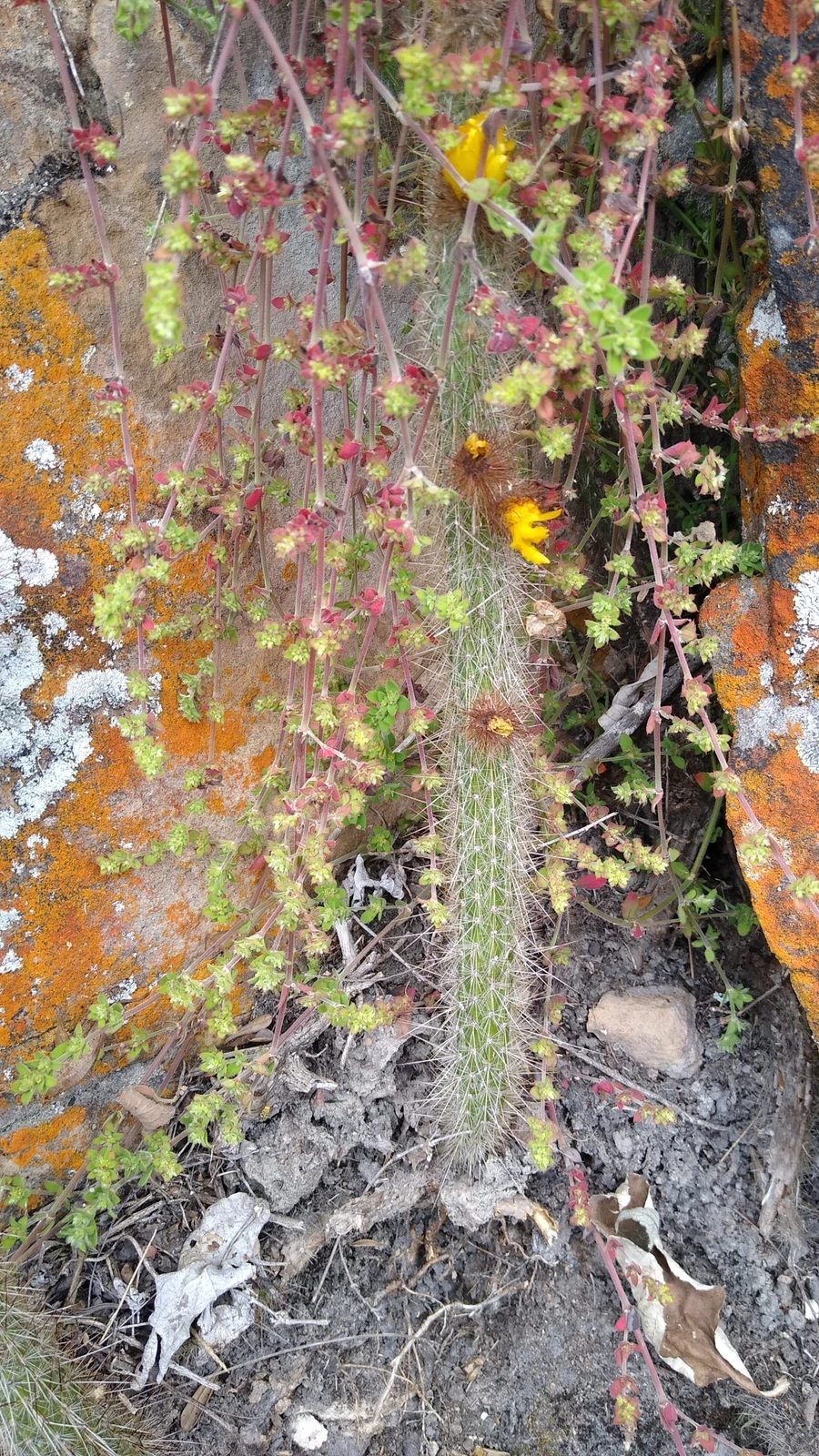 Reference image
Chachapoyas Cactus
Corryocactus chachapoyensis is a rare and distinct cactus species belonging to the family Cactaceae. Native to specific arid regions of Peru, this plant is appreciated by succulent collectors for its upright growth habit and dense spine clusters 1.
Belonging to the genus Corryocactus, this species was named after the Chachapoyas province in Peru, where it was first documented. Its taxonomy is defined by its distinct ribbed stems and unique floral characteristics 2.
This species is native to Western South America, particularly the dry shrublands and rocky valley slopes of Peru. It thrives in well-drained, rocky soils at moderate elevations where rainfall is seasonal and sparse 1.
It features cylindrical, green stems with distinct longitudinal ribs. The areoles along the ribs are armed with sharp, robust spines. During the blooming season, it produces striking flowers near the stem tips that add brilliant color to its rugged look.
In cultivation, it requires a very gritty, porous soil mix to ensure rapid drainage. It prefers bright, indirect light or filtered sunlight. Watering should be done thoroughly only after the potting medium has dried out completely 2.
Overwatering is the primary cause of failure with this species, quickly leading to root rot. Keeping the plant in poorly ventilated spaces or exposing it to freezing temperatures combined with wet soil will also cause severe damage.
Requires abundant bright, indirect light; shield from scorching afternoon sun.
Water only when the substrate is completely dry. Keep almost dry in winter.
Highly porous, fast-draining mineral soil with high pumice or coarse sand content.
Features sharp spines. Keep away from pets and small children to avoid injuries.
Moderate. Requires careful watering control but is otherwise low-maintenance.
Native to the rocky, arid slopes and dry shrublands of the Chachapoyas region in Peru, growing under intense daylight and low water availability.
