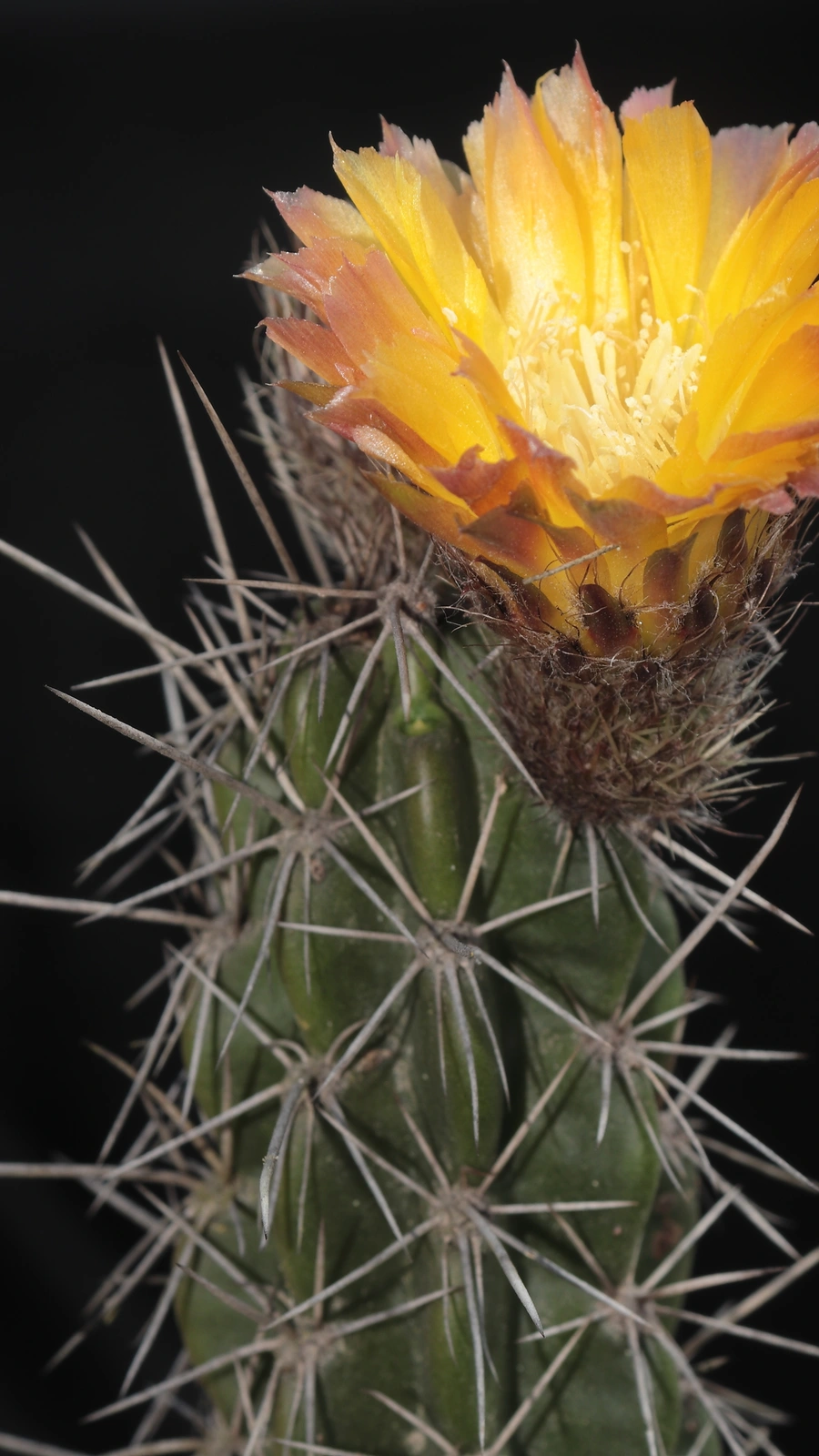
Corryocactus dillonii

Dillon's Corryocactus

Overview

Corryocactus dillonii is a rare, column-like cactus species native to the arid valleys of western South America, highly valued by succulent collectors for its dramatic spiny architecture.

Taxonomy and Naming

Belonging to the Cactaceae family, this species is named in honor of the renowned botanist Michael O. Dillon 1. The genus Corryocactus comprises erect, branching cacti found primarily throughout the Andean region.

Distribution and Habitat

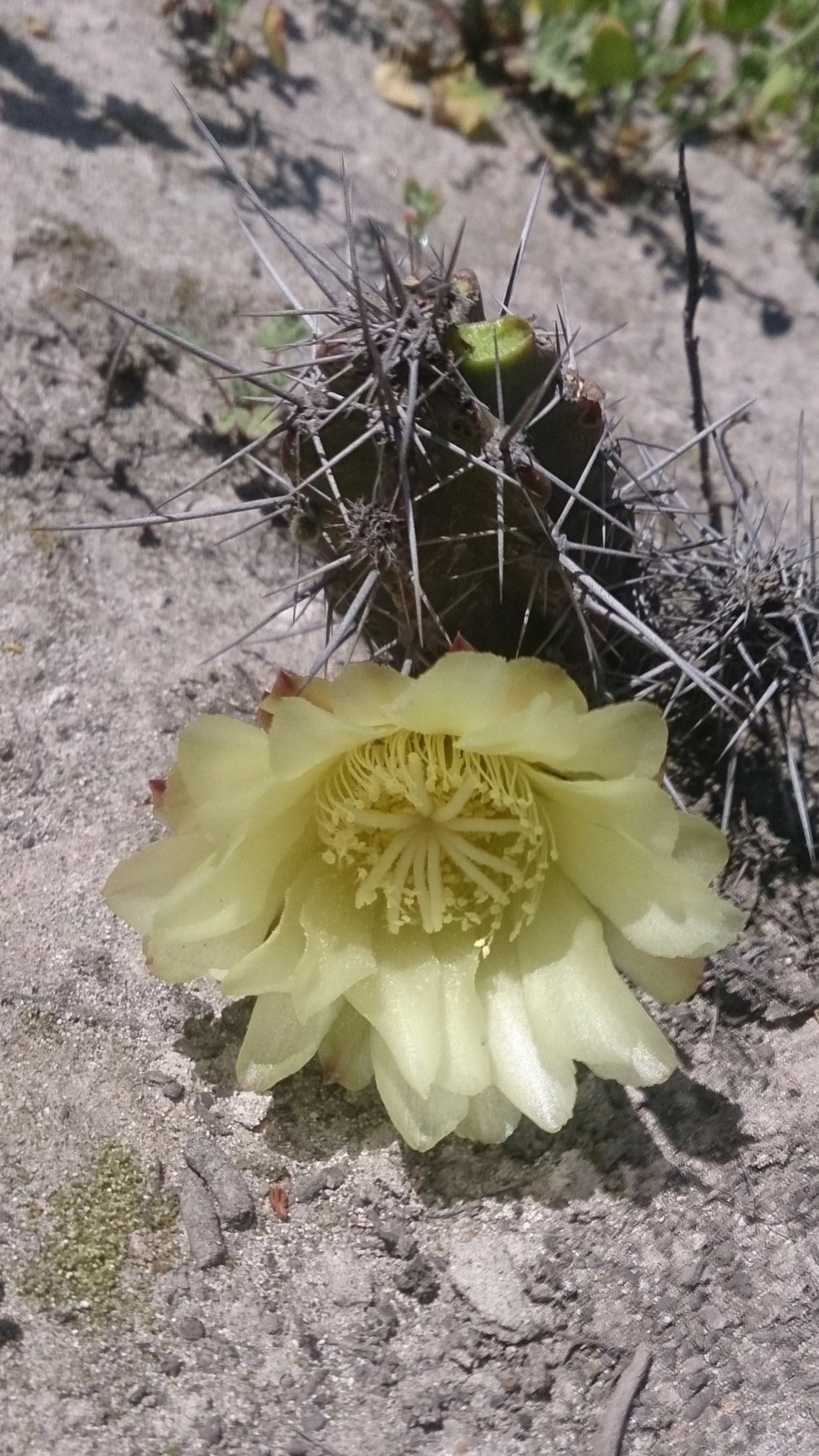
This species is endemic to Peru, specifically the western arid slopes of the Andes mountains 2. It thrives in desert conditions, growing on steep, rocky hillsides amidst dry scrublands where annual precipitation is extremely low.

Appearance

Corryocactus dillonii features cylindrical, ribbed stems with a prominent erect habit. The ribs are armed with clusters of stiff, grayish-brown spines. When mature, it produces beautiful funnel-shaped, yellow to orange flowers near the stem tips.

Cultivation

In cultivation, it requires maximum direct sunlight, making south-facing windows or outdoor patios ideal. Watering should be done thoroughly only after the potting medium has dried out completely, and must be reduced significantly in winter 2.

Common Mistakes

The most common cultivation errors are using heavy, moisture-retentive soil and overwatering during the winter dormancy. Insufficient light exposure will lead to etiolation, causing the stems to stretch thin and weaken.

Bibliography

References

  1. Plants of the World Online (POWO), Kew Royal Botanic Gardens.
  2. IUCN Red List of Threatened Species, Corryocactus dillonii Conservation Assessment.
Light

Full Sun

Requires full sun, preferably at least 6 hours of direct sunlight daily.
Watering

12-30 Days

Allow soil to dry out 100% between waterings. Keep dry during the winter.

Soil

Well-draining cactus mix with pumice and coarse sand

Use a mineral-heavy soil mix with plenty of pumice and grit to prevent water retention.

Safety

Pet Friendly

Sharp, rigid spines can cause injury. Keep away from curious pets and children.

Difficulty

Moderate

An easy-going cactus if you strictly avoid overwatering and provide ample light.

Native Habitat

Peru, Western South America

Endemic to the extremely dry coastal desert slopes and rocky Andean valleys of Western Peru.

Frequently Asked Questions

How often should I water Corryocactus dillonii?
In summer, water only after the potting soil dries out completely (about every 10–14 days). In winter, almost entirely stop watering during its dormancy period.
Can this cactus be grown indoors?
Yes, but it must be placed in a very bright, south-facing window receiving at least 6 hours of direct sunlight daily to prevent weakening and etiolation.
What kind of potting soil should be used?
Use a highly porous, fast-draining cactus mix amended with plenty of pumice, perlite, and coarse sand.
Is it toxic to pets?
It is non-toxic and has no poisonous sap, but its very sharp and stiff spines pose a physical injury hazard to curious pets.
When does Corryocactus dillonii bloom?
Mature specimens produce beautiful funnel-shaped, yellow-orange flowers during late spring or summer when provided with adequate warmth and sunlight.
What is its growth rate?
Like most desert cacti, it has a slow growth rate. It only grows a few centimeters per year and requires patience.
Where should I keep my cactus during winter?
Keep it in a cool, dry room or enclosed balcony with temperatures between 5°C and 10°C, safely away from frost, to respect its winter rest period.
When should I repot this cactus?
Due to its slow growth, repot only every 2–3 years in early spring, upgrading to a slightly larger pot only when the plant has outgrown its current one.
Is browning at the base of my cactus normal?
Corking (wood-like texture) at the base is a natural aging process. However, if the brown areas feel soft or mushy, it indicates root or stem rot.
Does it need fertilizer?
During spring and summer, you can apply a diluted, low-nitrogen cactus fertilizer once a month. Do not fertilize during autumn and winter.