
Corryocactus pulquinensis

Pulquina Cactus

Overview

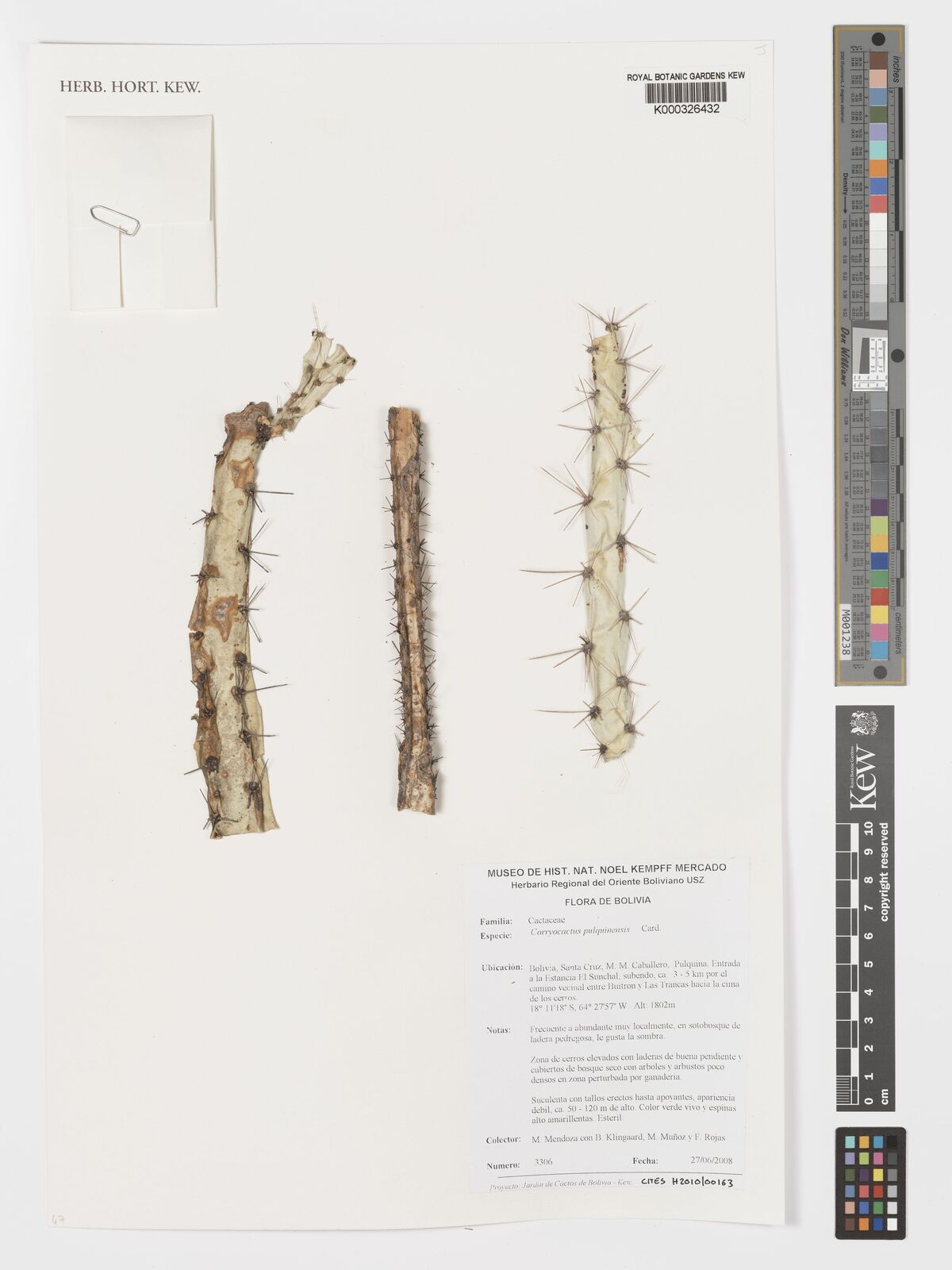
Corryocactus pulquinensis is a shrubby to tree-like succulent cactus belonging to the family Cactaceae. It is characterized by its upright, branching habit and robust stems, thriving in dry, arid valleys 1.

Taxonomy and Naming

Described initially by the Bolivian botanist Martín Cárdenas, this species takes its epithet 'pulquinensis' from its native locality of Pulquina 2. The genus Corryocactus is well known for its columnar species native to the Andean regions.

Distribution and Habitat

This species is endemic to Bolivia, particularly restricted to the dry deciduous shrublands and arid inter-Andean valleys of Santa Cruz. It typically grows on gravelly slopes at elevations between 1,500 and 2,000 meters above sea level 1.

Appearance

The stems are greyish-green, featuring prominent ribs adorned with woolly areoles and sharp, yellowish-brown spines. During summer, it produces funnel-shaped yellow or orange-yellow flowers that open during the day 2.

Cultivation and Care

In cultivation, it requires full sun exposure and a sharply draining substrate. Water thoroughly only when the soil has dried out completely. Winter care dictates keeping the plant dry and in a cool environment to encourage dormancy 3.

Common Cultivation Mistakes

The most frequent issues arise from overwatering in poorly drained soils, which leads to root rot, or inadequate sunlight causing the stems to become weak, thin, and etiolated 3.

References

  1. POWO (2024). Plants of the World Online. Royal Botanic Gardens, Kew.
  2. Cárdenas, M. (1957). Cactus and Succulent Journal of Great Britain, 19: 156-159.
  3. Anderson, E. F. (2001). The Cactus Family. Timber Press.
Light

Full Sun

Requires full sun; minimum 6 hours of direct sunlight daily for healthy growth.
Watering

10-30 Days

Allow soil dry out entirely between waterings. Reduce to near-zero in winter.

Soil

Highly draining cactus mix containing pumice, coarse sand, and minimal organic matter

Sandy, mineral-rich gritty cactus mix with excellent aeration and drainage.

Safety

Pet Friendly

Non-toxic to pets, but has sharp spines that can cause mechanical injury. Keep out of reach.

Difficulty

Moderate

Moderately easy for those who can provide intense sunlight and avoid overwatering.

Native Habitat

Bolivia (Santa Cruz, Pulquina region)

Native to the dry, stony valleys of the Bolivian Andes, inhabiting sunny, well-draining rocky slopes.

Frequently Asked Questions

Is Corryocactus pulquinensis toxic to pets?
It is chemically non-toxic, but its sharp spines present a physical injury hazard to pets and children.
How often should I water this cactus?
During summer, water roughly every 10 days (only when soil is bone dry), and reduce to once a month or none during winter.
What kind of potting soil should be used?
Use a nutrient-lean but highly porous cactus mix rich in pumice, perlite, and coarse sand.
Can I leave my cactus outside during winter?
If temperatures drop below 5°C (41°F), you should bring the cactus indoors to protect it from frost damage.
How fast does Corryocactus pulquinensis grow?
While it can form a large shrub in the wild, it is a slow to moderate grower when kept in indoor pots.
How can I encourage it to bloom?
Provide ample direct sunlight during summer and ensure a cool, completely dry dormancy period in winter.
What does a softening stem indicate?
A softening stem is usually a sign of root rot caused by overwatering. Stop watering immediately and inspect the roots.
Can it withstand direct midday sun?
Yes, this species is adapted to full sun exposure and can tolerate intense midday sunlight easily.
When should I repot this cactus?
Repot in early spring when the roots begin to outgrow the drainage holes, using thick protective gloves.
Why is my cactus growing thin and pale?
This is a symptom of insufficient light (etiolation). Move your plant to a much brighter location with direct sun.