
Light
Filtered Sun
Requires plenty of bright, filtered sunlight. Protect from intense direct midday sun.
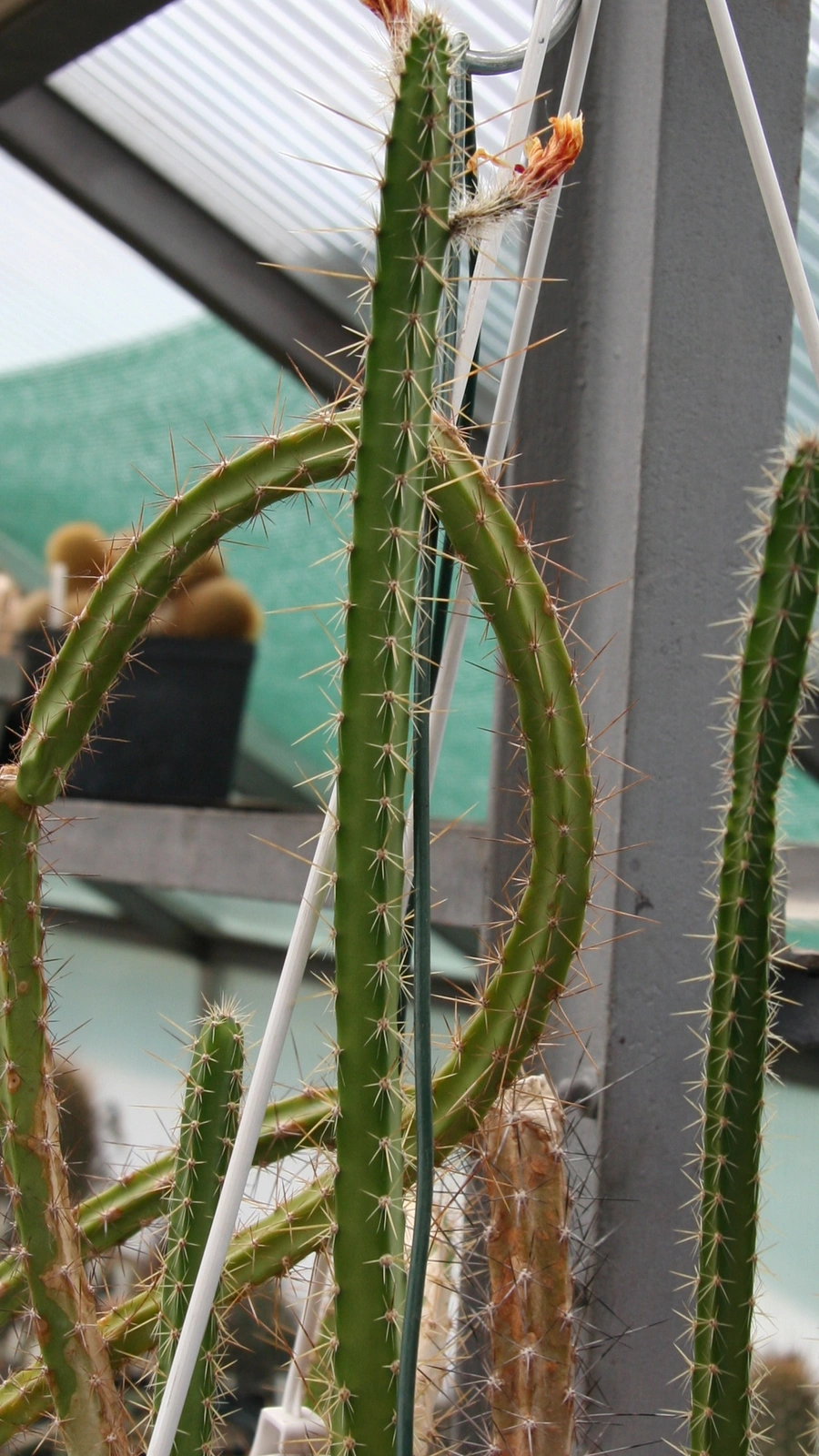 Reference image
Creeping Corryocactus
Corryocactus serpens is a unique, sprawling, or semi-climbing cactus species belonging to the Cactaceae family. Known for its creeping growth habit, it is highly sought after by succulent collectors.
The species belongs to the genus Corryocactus 1. The specific epithet "serpens" is derived from Latin, meaning "creeping" or "snake-like," describing its prostrate stems that spread along the ground 2.
This species is native to Western South America, particularly the dry shrublands and rocky desert valleys of Peru 1. It thrives in arid conditions with skeletal, low-nutrient soils.
It features slender, cylindrical stems with moderate ribbing and sharp, fine spines along the areoles. During its blooming season, it produces funnel-shaped, vibrant flowers, typically in shades of yellow.
In cultivation, Corryocactus serpens requires excellent soil drainage, mimicking its rocky natural habitat. Water should be applied only when the substrate is completely dry. It thrives under filtered sun to bright indirect light and needs a dry, cool winter rest.
The most frequent issue is root rot caused by overwatering or poor soil drainage. Insufficient air circulation combined with high humidity during winter can also trigger fungal infections 2.
Requires plenty of bright, filtered sunlight. Protect from intense direct midday sun.
Water only when the substrate is completely dry. Keep nearly dry during winter dormancy.
Prefers highly porous, gritty cactus soil mixed with plenty of pumice or perlite.
Has sharp, fine spines. Keep away from pets and children to prevent injury.
Moderately difficult. Requires strict watering discipline and cool winter rest.
Native to the arid valleys and rocky slopes of western Peru, growing among dry shrublands.
