
Light
Direct Sun
Requires full sun or very bright indirect light. Direct morning and afternoon sun promotes healthy spine density.
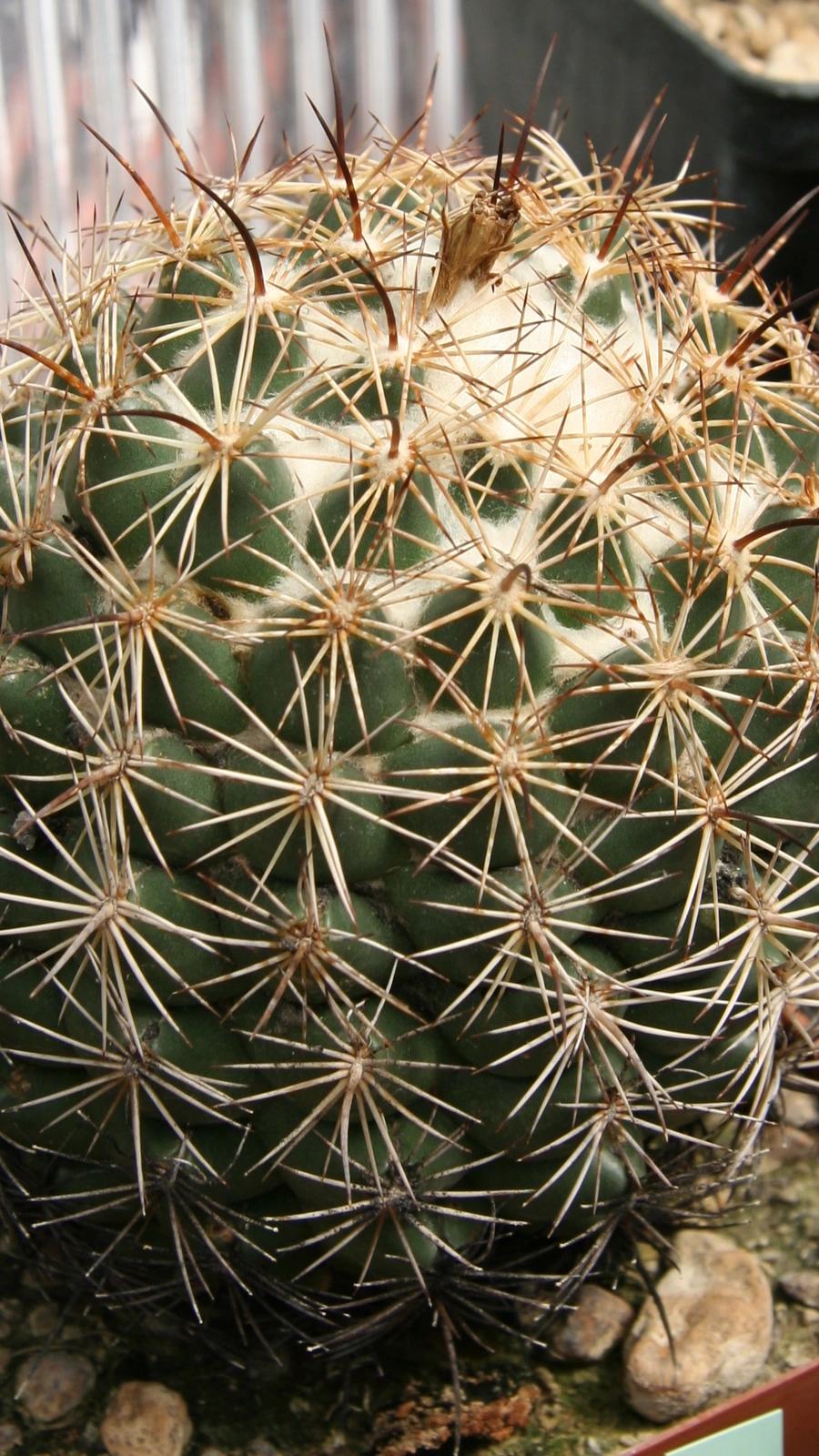 Reference image
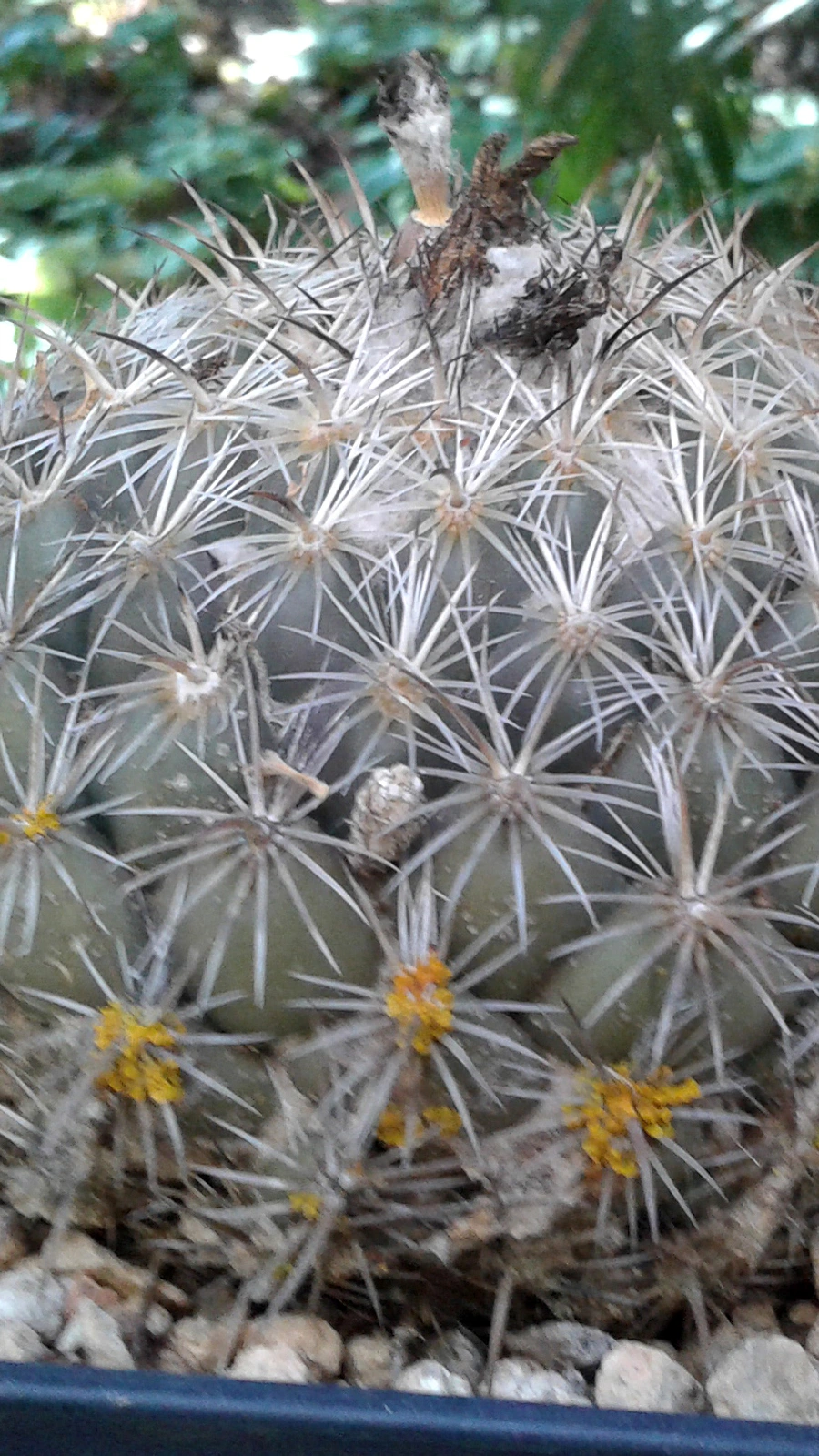 Reference image
Compact Beehive Cactus
Coryphantha compacta is a small, usually solitary, globose to somewhat flattened cactus in the family Cactaceae. It is highly valued by collectors for its neat, pectinate spine arrangement and vivid yellow blossoms 1.
Originally described by George Engelmann, the species name compacta refers to the closely pressed, dense arrangement of its spines against the plant body. It has historically been classified under Mammillaria compacta 2.
Native to northern and central Mexico, particularly in Chihuahua, Durango, Coahuila, and Sonora. It typically occurs at elevations of 1500 to 2400 meters above sea level, growing on limestone rocky hillsides and dry shrublands 1.
The stem is pale green to grayish-green, reaching up to 5-9 cm in diameter, covered in prominent tubercles. Areoles bear 11 to 16 radial spines that are flattened against the stem in a comb-like (pectinate) fashion. Central spines are usually absent. Bright yellow flowers emerge from the plant apex, measuring 3-4 cm across 2.
This species requires excellent drainage and a very gritty mineral substrate. It thrives in full sun and requires careful watering. During the winter dormancy, the plant should be kept entirely dry in a cool environment to prevent root loss 1.
Overwatering and using standard organic potting soils are the primary causes of failure, quickly leading to root rot. Lack of adequate direct sunlight will result in weak, etiolated growth 2.
Requires full sun or very bright indirect light. Direct morning and afternoon sun promotes healthy spine density.
Allow the potting mix to dry out fully between waterings. Keep completely dry in winter.
Use a highly porous mineral substrate rich in pumice, coarse sand, and perlite, with minimal organic matter.
Spines are sharp and can easily penetrate the skin. Handle with care using tongs or thick gloves.
Moderate difficulty due to strict watering requirements and high susceptibility to rot if overwatered.
Mainly distributed throughout Northern Mexico in the states of Chihuahua and Durango, growing in rocky limestone soils within desert grasslands.
