
Light
Full Sun
Requires at least 6 hours of direct sunlight daily; otherwise, it loses its compact shape.
 Reference image
 Reference image
Sea-Urchin Cactus
Coryphantha echinus, commonly known as the Sea-Urchin Cactus or rhinoceros cactus, is a heavily spined, highly decorative globose cactus belonging to the family Cactaceae. Adapted to survival in arid, rocky environments, this species is highly valued by collectors for its geometric spiral tubercles and sharp, protective spine shield 1.
Initially described by George Engelmann, the species exhibits the typical morphological features of the genus Coryphantha. Synonyms include Mammillaria echinus. The genus name is derived from the Greek words "koryphe" (summit/crown) and "anthos" (flower), referring to the characteristic apical flowering zone of these plants 2.
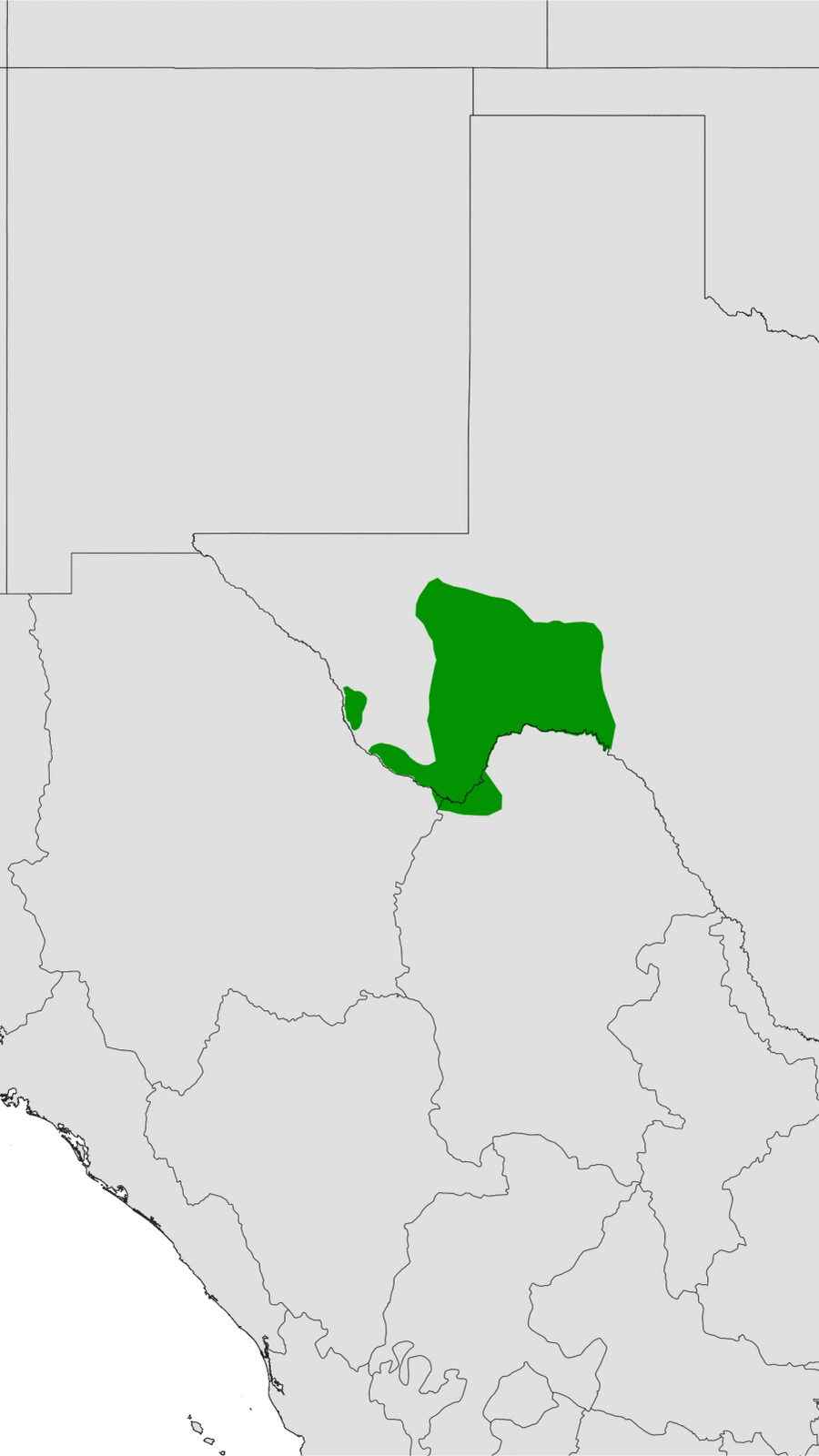
This species is native to the desert regions of North America. It is distributed across southwestern Texas in the United States and extends southwards into northern Mexican states including Coahuila, Chihuahua, Durango, and San Luis Potosí. It thrives on limestone hills, gravelly slopes, and dry shrublands within the Chihuahuan Desert 1.
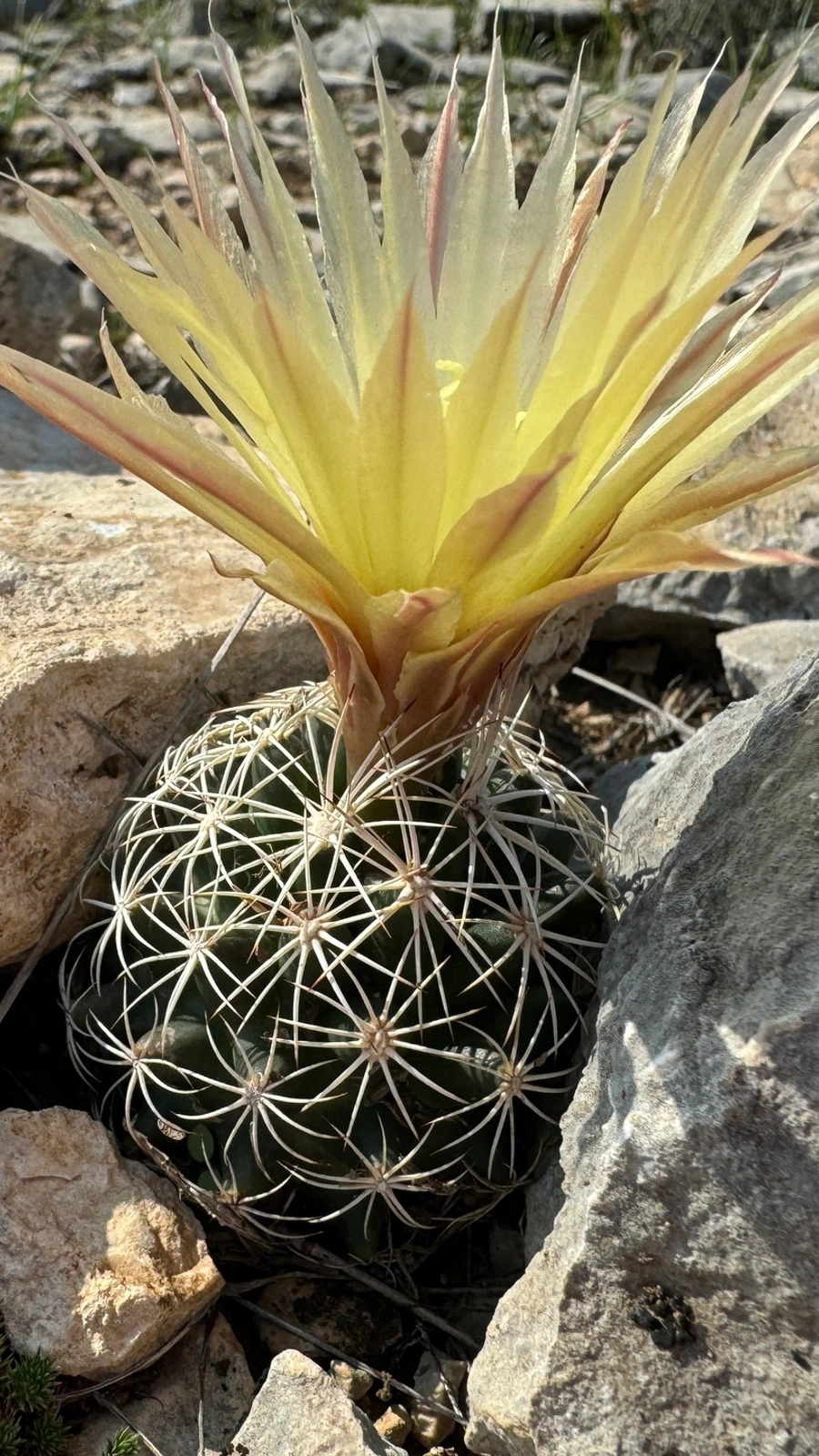
The stem is solitary, globose to short cylindrical, covered in prominent conical tubercles arranged in spirals. Areoles bear 15 to 30 radiating white or grayish spines that closely appress the stem. Centrally, 1 to 4 stouter, dark-tipped spines project outwards and curve slightly upward. In late spring and summer, it produces large, bright yellow, funnel-shaped flowers from the woolly stem apex.
In cultivation, Coryphantha echinus requires maximum light exposure and exceptional drainage. Mimicking its natural limestone habitat by adding a small amount of calcium carbonate or crushed limestone to the potting mix promotes root health and spine development. Watering should be deep but infrequent, allowing the growing medium to dry out completely between waterings 2.
The most critical mistake is overwatering, particularly during the dormant winter period. Excess moisture combined with low temperatures quickly leads to root rot. Growing the plant in low-light conditions causes etiolation, resulting in weak, elongated growth and a lack of defense spines.
Requires at least 6 hours of direct sunlight daily; otherwise, it loses its compact shape.
Water only when the substrate is completely dry. Keep dry in winter.
Needs mineral-rich, porous soil with added limestone gravel and low organic matter.
Non-toxic, but the sharp, curved spines can cause injury; handle with thick gloves.
Moderate. Easy if drainage is flawless and watering is kept strictly minimal.
Commonly distributed throughout the gravelly hills and limestone outcrops of the Chihuahuan Desert. It thrives in harsh, rocky terrains where soil is thin and drainage is extremely rapid.
