
Light
Full Sun
Requires full sun; direct sunlight promotes robust spines and flowers.
 Reference image
 Reference image
Upright Beehive Cactus
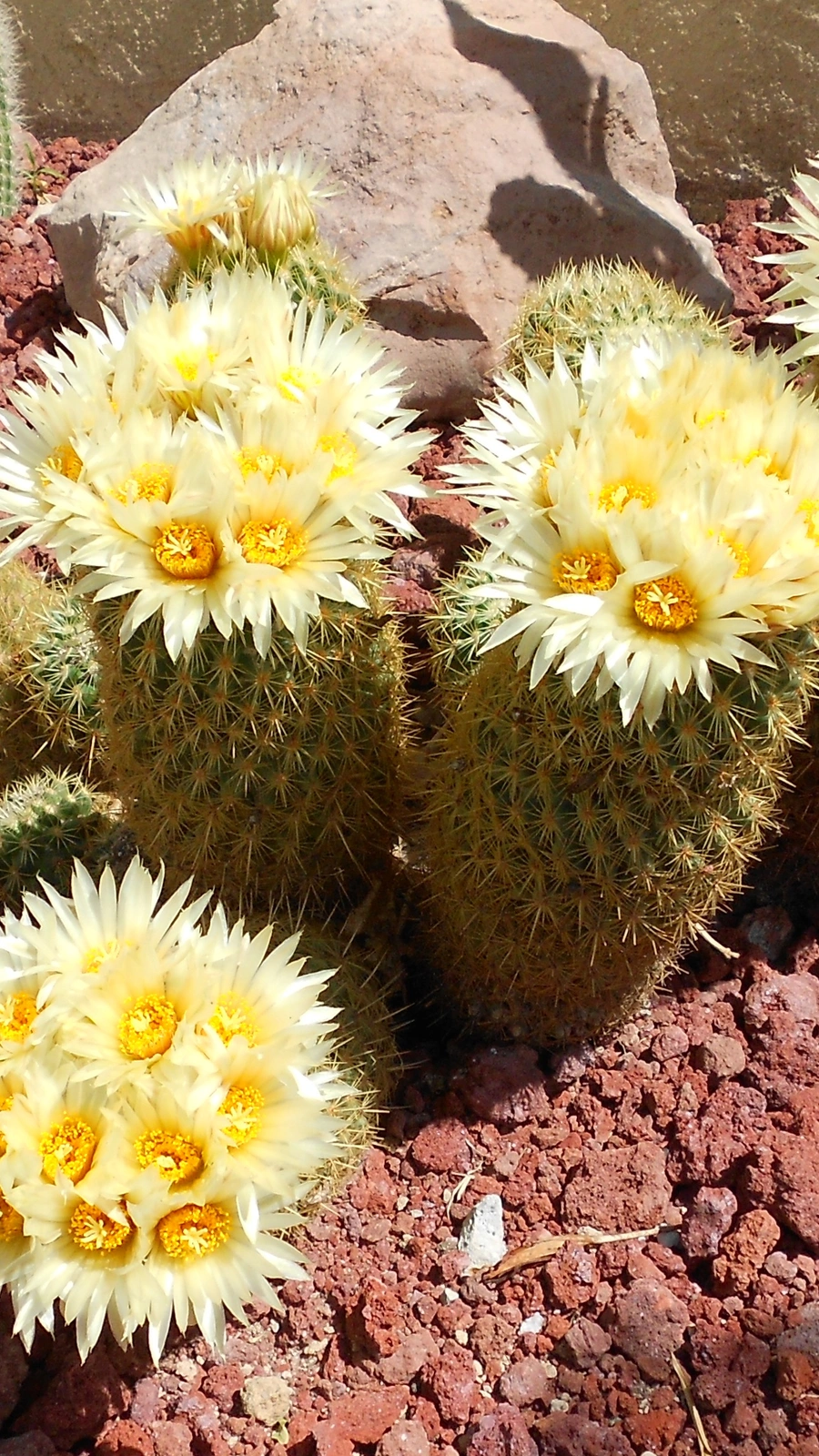
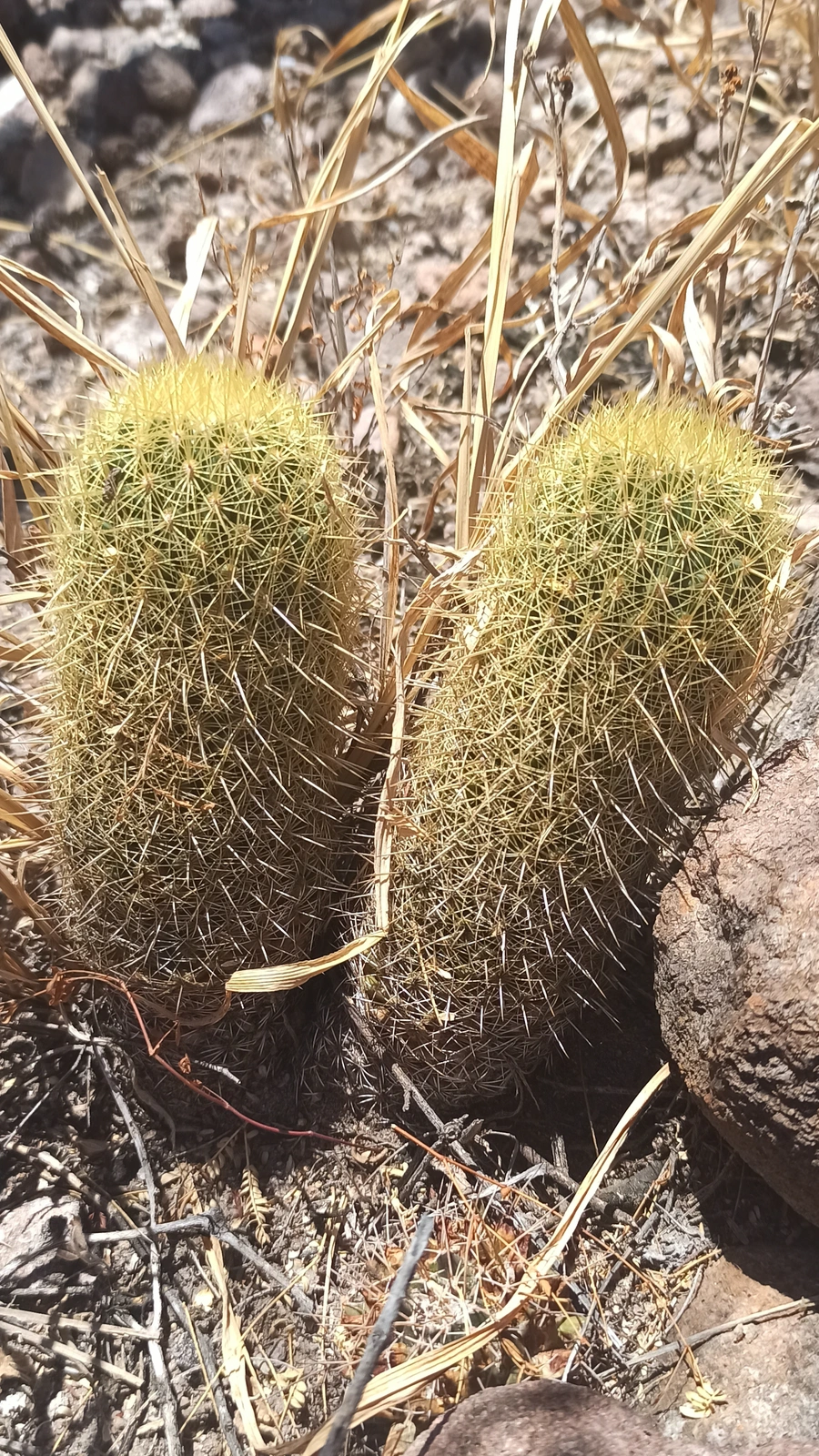
Coryphantha erecta is a perennial succulent subshrub in the family Cactaceae, characterized by its cylindrical growth habit, distinct spiral tubercles, and golden-yellow spines. In its natural habitat, it often offsets from the base to form dense, attractive clumps.
Originally described as Mammillaria erecta by Lem., the species was later transferred to the genus Coryphantha 1. The genus name is derived from the Greek words 'koryphe' (summit) and 'anthos' (flower), referring to the apical flowering zone. The specific epithet 'erecta' highlights its upright or erect growth habit.
This species is native to Mexico, particularly across the states of Hidalgo, Querétaro, Guanajuato, and San Luis Potosí 2. It thrives in desert or dry shrubland biomes, typically on limestone slopes and rocky hillsides at elevations ranging from 1000 to 2300 meters above sea level.
The stems are cylindrical, light green, reaching up to 30 cm in height and 8 cm in diameter. It features prominent conical tubercles arranged spirally. Areoles bear golden-yellow to brownish radial and central spines. During summer, it produces large, funnel-shaped, bright yellow flowers at the apex, up to 6 cm wide.
It requires full sun exposure and extremely well-draining soil. Water thoroughly during the growing season only when the substrate has dried out completely. In winter, keep the plant dry and cool (can tolerate brief light frosts down to -5°C) to prevent root rot.
Overwatering and inadequate sunlight are the primary causes of failure. Insufficient light leads to etiolation (pale, stretched growth), while stagnant moisture in heavy soils rapidly triggers root and stem rot.
Requires full sun; direct sunlight promotes robust spines and flowers.
Water only when soil is completely dry. Keep dry in winter.
Extremely well-draining, mineral-rich gritty cactus mix.
Non-toxic, but sharp golden spines require careful handling.
Easy; very low-maintenance if kept dry and sunny.
Endemic to the high-elevation arid zones of central and northern Mexico, growing on limestone-rich gravel slopes.
