
Light
Full Sun
Requires full sun to maintain its natural globose form and promote flowering.
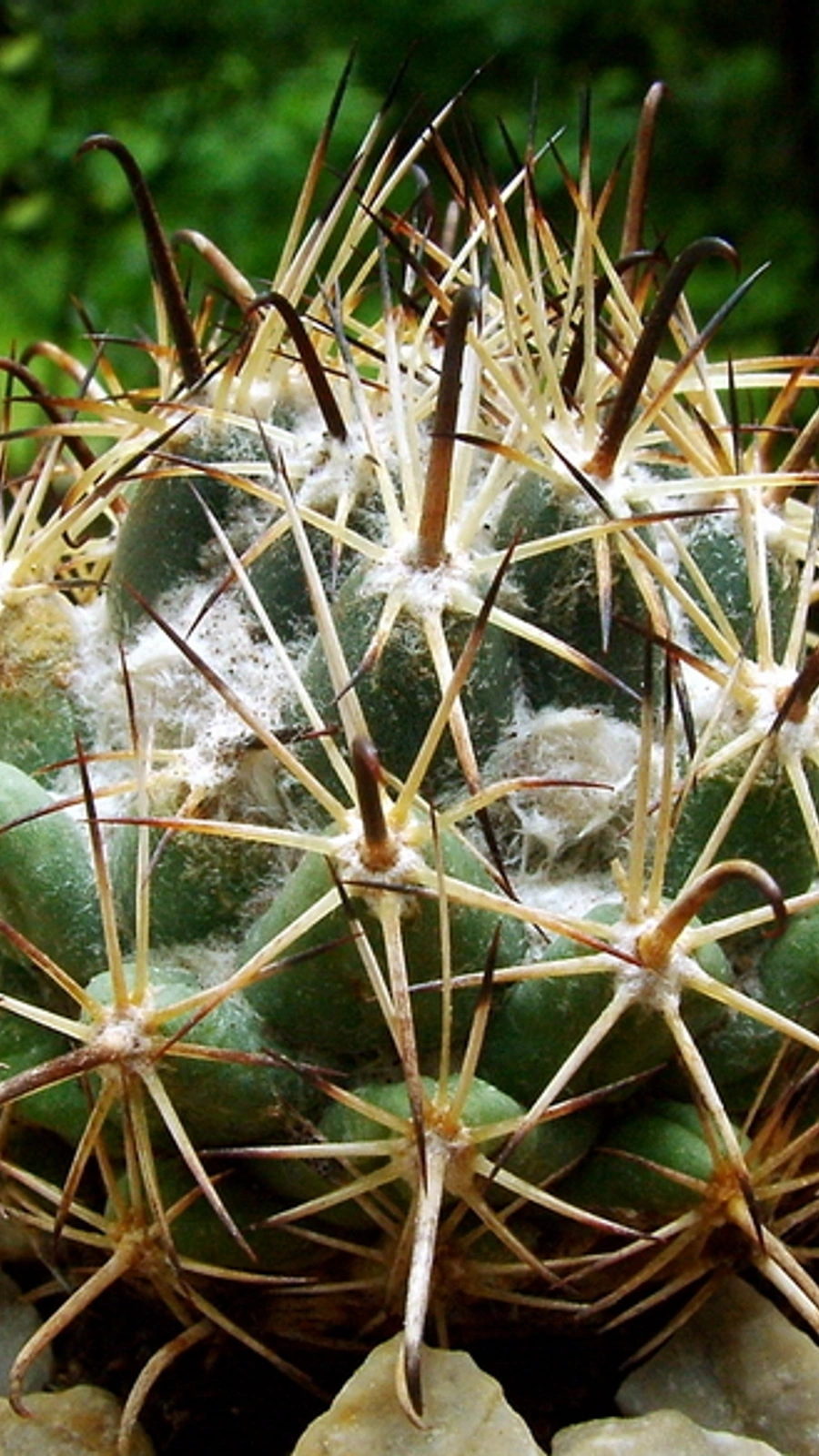 Reference image
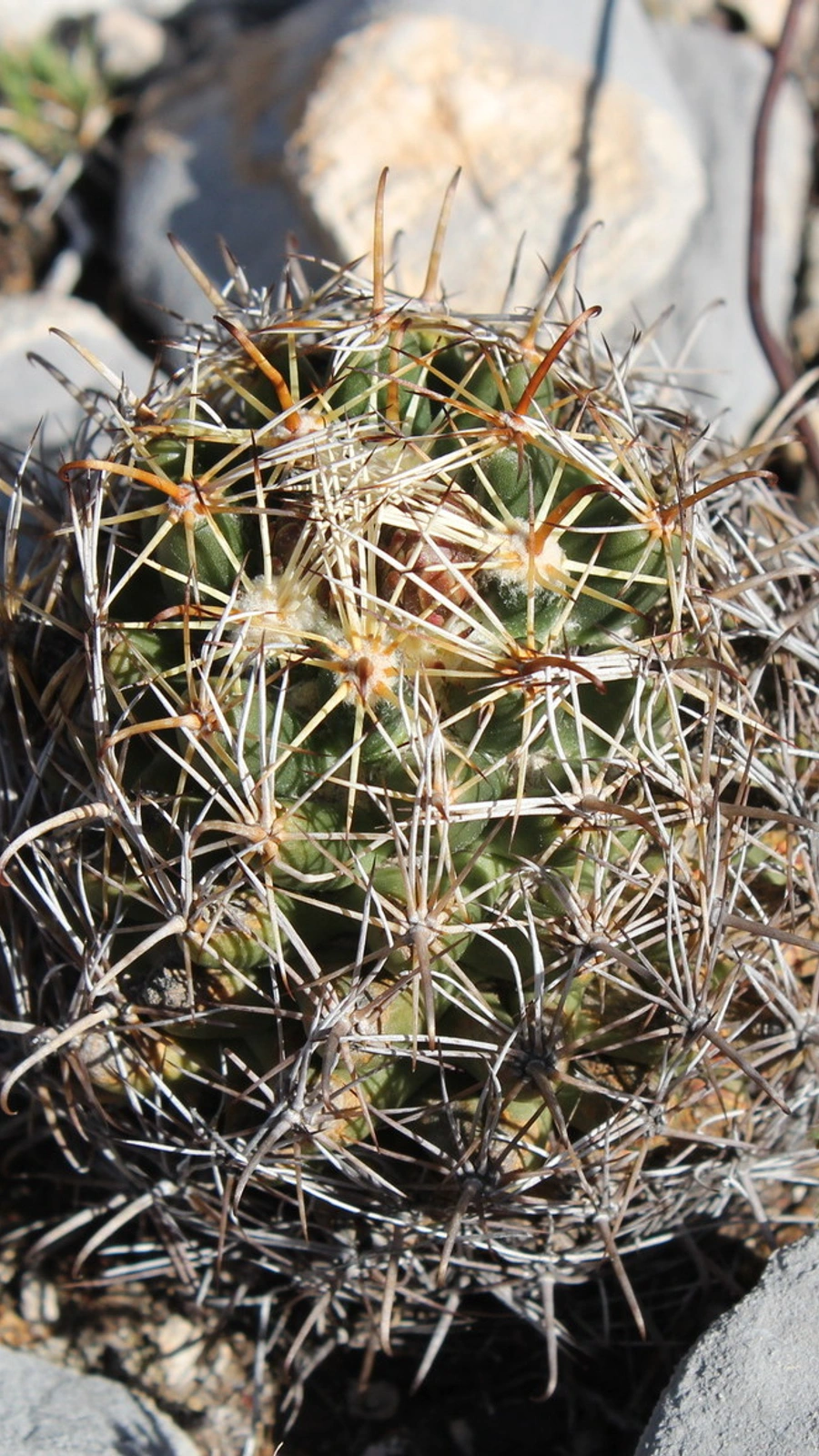 Reference image
Hintons' Beehive Cactus
Coryphantha hintoniorum is a rare, globose to short-cylindrical cactus species in the family Cactaceae. Known for its distinct spiraled tubercles and yellow woolly crown, this succulent subshrub is highly prized by succulent collectors for its resilience and beautiful summer blooms 1.
Belonging to the genus Coryphantha, this species was named in honor of the Hinton family, renowned botanical collectors in Mexico. Taxonomic treatments sometimes recognize subspecies such as C. hintoniorum subsp. geoffreyi. It shares close evolutionary ties with the Coryphantha pycnacantha complex 1, 2.
Endemic to northeastern Mexico, particularly in the states of Nuevo León, Coahuila, and San Luis Potosí. It thrives in desert shrublands on gypsum-rich hills and calcareous gravelly soils, typically at elevations ranging from 1000 to 1600 meters above sea level 1.
The stem is solitary, grayish-green, and topped with dense white woolly felt in the apical region. It features well-defined conical tubercles. The radial and central spines are pale yellow to brownish, stiff, and slightly curved. Yellow funnel-form flowers appear at the plant apex during summer 2.
This species requires an open, mineral-rich potting medium to facilitate excellent drainage. It thrives in full sun conditions, which encourage compact growth and heavy flowering. Water thoroughly during the hot summer months, but allow the substrate to dry out completely before the next watering 2.
Overwatering is the primary cause of failure, leading to root rot. Keeping the soil wet in winter or during cold spells is particularly lethal. Insufficient light leads to etiolation (stretching) and weak spine development.
Requires full sun to maintain its natural globose form and promote flowering.
Drench thoroughly when completely dry, and keep dry during the winter.
Use a mineral-heavy substrate with pumice, grit, and very little organic soil.
Non-toxic, but sharp spines require careful handling and placement.
Moderate; susceptible to root rot if overwatered, but hardy under dry conditions.
Native to the dry gypsophilic slopes and limestone shrublands of northeastern Mexico, thriving in high-elevation desert microhabitats.
