
Light
Bright Indirect Light
Prefers bright, filtered sunlight or at least 4-6 hours of direct morning sun exposure.
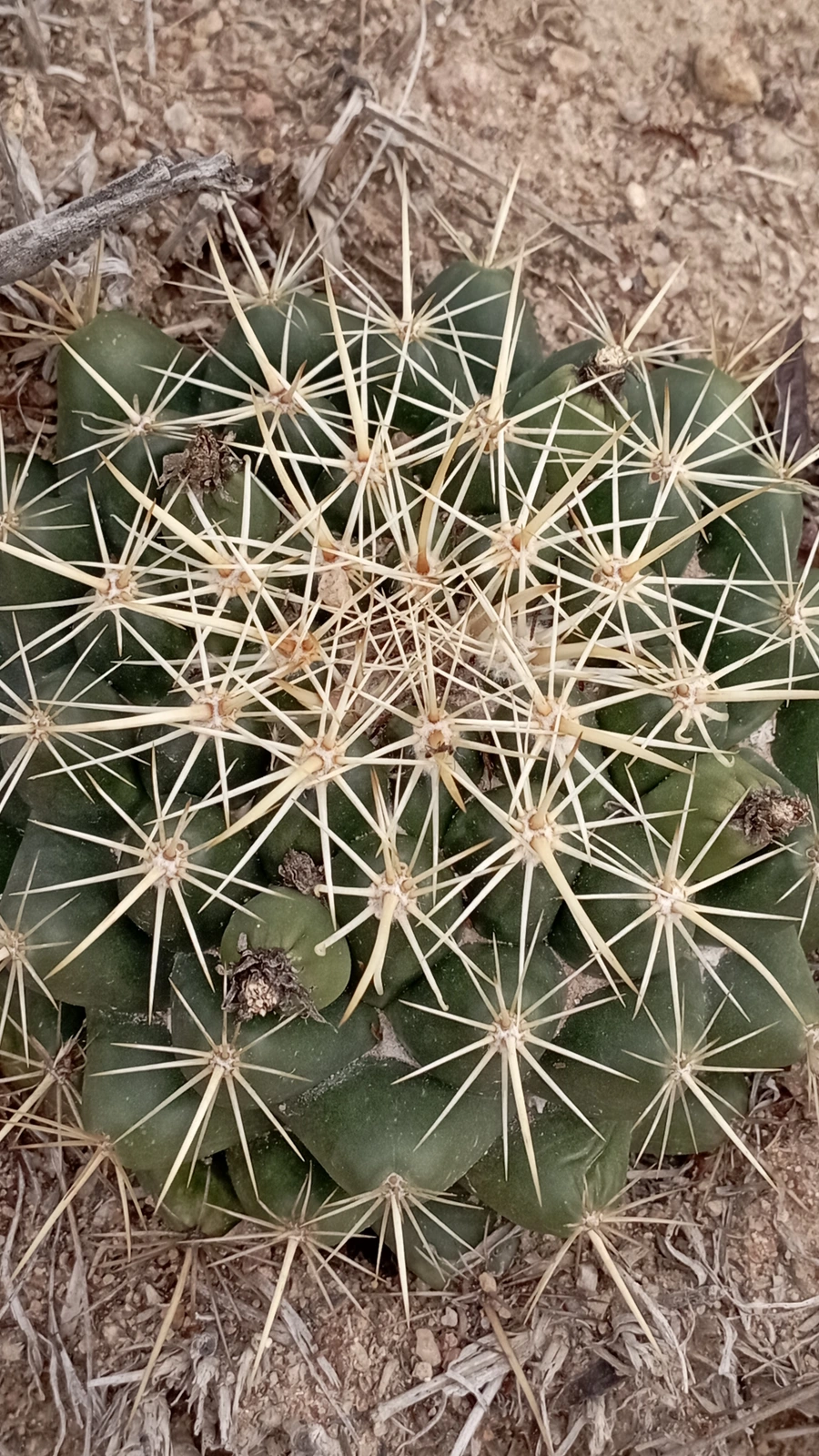 Reference image
Ottonis Beehive Cactus
Coryphantha ottonis is a small, slow-growing, globose to subglobose succulent subshrub belonging to the Cactaceae family. Highly appreciated by succulent enthusiasts, it is characterized by its prominent tubercles and showy, bright yellow flowers 1.
Originally described under the genus Mammillaria, it was later combined into Coryphantha. The genus name derives from the Greek words 'koryphe' (summit) and 'anthos' (flower), referring to the typical apical flowering habit of this genus 2.
This species is native to the arid desert and dry shrubland biomes of central and northeastern Mexico. It is frequently documented in states such as Hidalgo, Querétaro, and Guerrero, where it colonizes rocky slopes and limestone crevices 1.
The stem is solitary, dark green, reaching about 5 to 8 cm in diameter. It features spirally arranged tubercles. Each areole bears 8-12 radiating radial spines and 1-4 stouter central spines. In summer, funnel-shaped, vibrant yellow flowers, up to 6 cm wide, arise from the young woolly apex 2.
It requires a highly porous mineral substrate. Watering should be thorough during the active growing season, allowing the soil to dry completely in between. Keep dry and cool during winter dormancy to promote healthy spring growth and flowering 3.
The most prevalent issue is overwatering during winter, which leads to root rot. Insufficient ventilation combined with high humidity makes the plant highly susceptible to fungal infections 3.
Prefers bright, filtered sunlight or at least 4-6 hours of direct morning sun exposure.
Water only when the substrate is fully dry. Keep completely dry throughout winter.
Requires gritty, mineral-heavy soil containing pumice, lava rock, and coarse sand.
Possesses sharp spines; keep out of reach of inquisitive pets and children.
Moderately easy if winter watering is strictly avoided to prevent rot.
Native to the high-altitude arid scrublands and rocky limestone hillsides of central and eastern Mexico.
