
Light
Full Sun
Abundant direct sunlight is essential to maintain the dense spination and golden coloration.
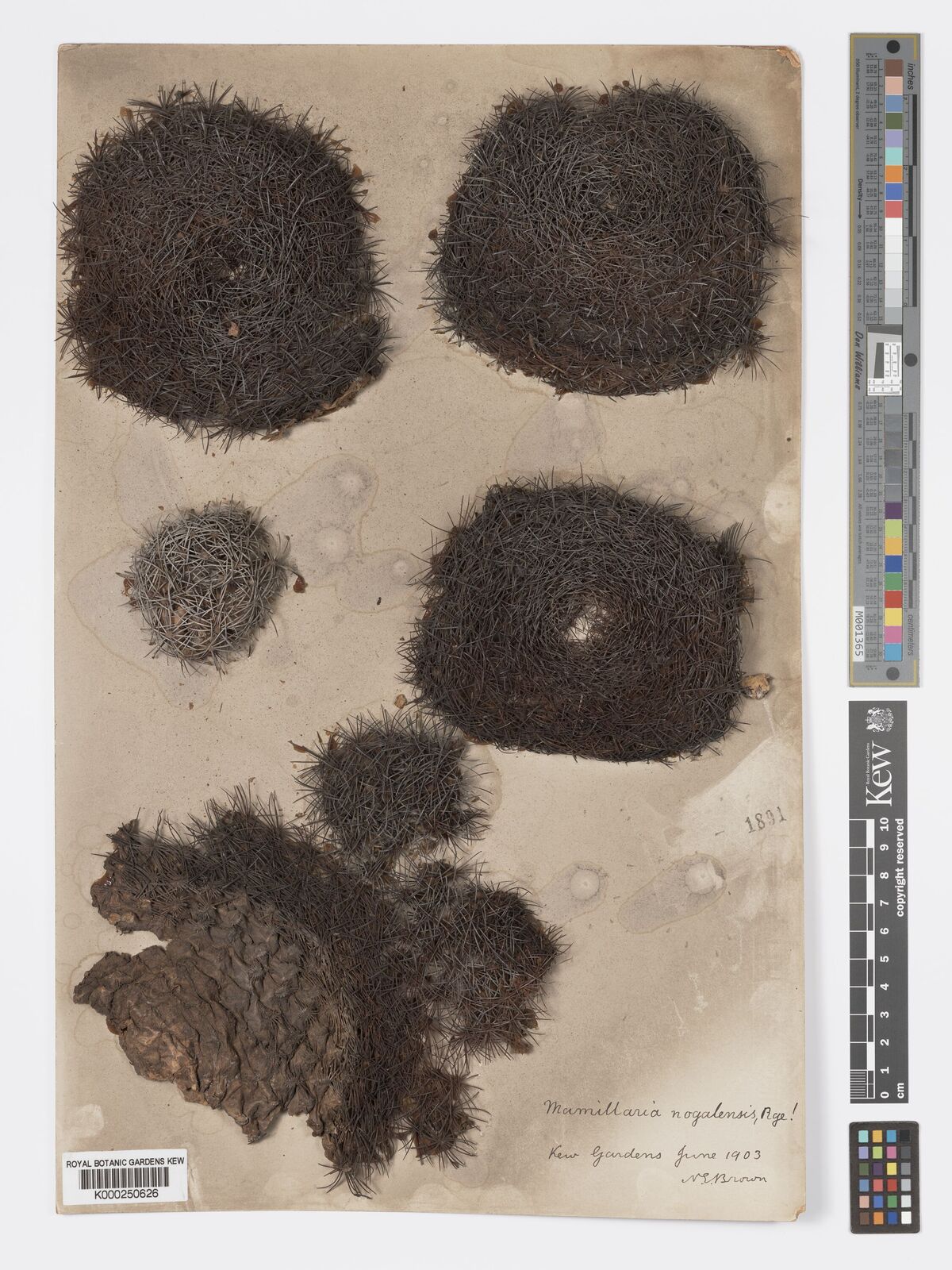 Reference image
Golden-chested Beehive Cactus
Coryphantha recurvata, commonly known as the Golden-chested Beehive Cactus, is a beautiful clustering succulent in the family Cactaceae. Known for its dense, golden-yellow spines and capability to form large, impressive mounds, it is highly prized by collectors 1.
The species was initially described as Mammillaria recurvata by George Engelmann. It was subsequently reassigned to the genus Coryphantha by Britton and Rose 2. The specific epithet "recurvata" refers to the distinctively curved or recurved spines that press close to the stem body.
Coryphantha recurvata is native to the borderlands of southern Arizona (USA) and northern Sonora (Mexico) 1. It thrives in gravelly hills, desert grasslands, and dry oak woodlands, typically at elevations between 1000 and 1800 meters.
The plant features globose to short-cylindrical stems, usually growing in dense clusters containing up to dozens of heads. The pectinate, golden-brown radial spines overlap tightly, obscuring the stem. In mid-summer, pale yellow, funnelform flowers emerge from the apical meristem 2.
This cactus requires maximum light exposure, preferring full sun and exceptional air circulation. It should be grown in a heavily mineralized, fast-draining substrate. Water deeply but allow the soil to dry out completely between waterings, and suspend water in winter 1.
The most frequent mistake is overwatering, which rapidly induces root rot in this desert species. Insufficient solar radiation leads to weak, elongated growth (etiolation) and inhibits the development of its signature golden spines and blooms 2.
Abundant direct sunlight is essential to maintain the dense spination and golden coloration.
Never water until the soil is bone-dry; keep the pot completely dry during the winter months.
Highly mineral-based mixes rich in pumice, gravel, and coarse sand, with minimal organic matter.
Non-toxic, but features sharp, dense spines; handle with thick gloves or tongs.
Relatively straightforward to grow provided strict watering and light requirements are met.
Occurs naturally along the border regions of southern Arizona in the United States and northern Sonora in Mexico, inhabiting arid gravelly hills and desert shrublands.
