
Light
Full Sun
Requires full sun or strong direct light to preserve its spine density.
 Reference image
 Reference image
Salinas Beehive Cactus
Coryphantha salinensis is a robust, globose to cylindrical cactus species belonging to the family Cactaceae. Well-adapted to harsh desert environments, it is highly valued by succulent collectors for its strong spination and attractive golden-yellow flowers.
Classified within the genus Coryphantha, this species belongs to the subfamily Cactoideae. The epithet 'salinensis' refers to the saline, limestone-rich plains of northern Mexico where it was historically documented 1. It represents the classic 'beehive' morphology typical of its genus.
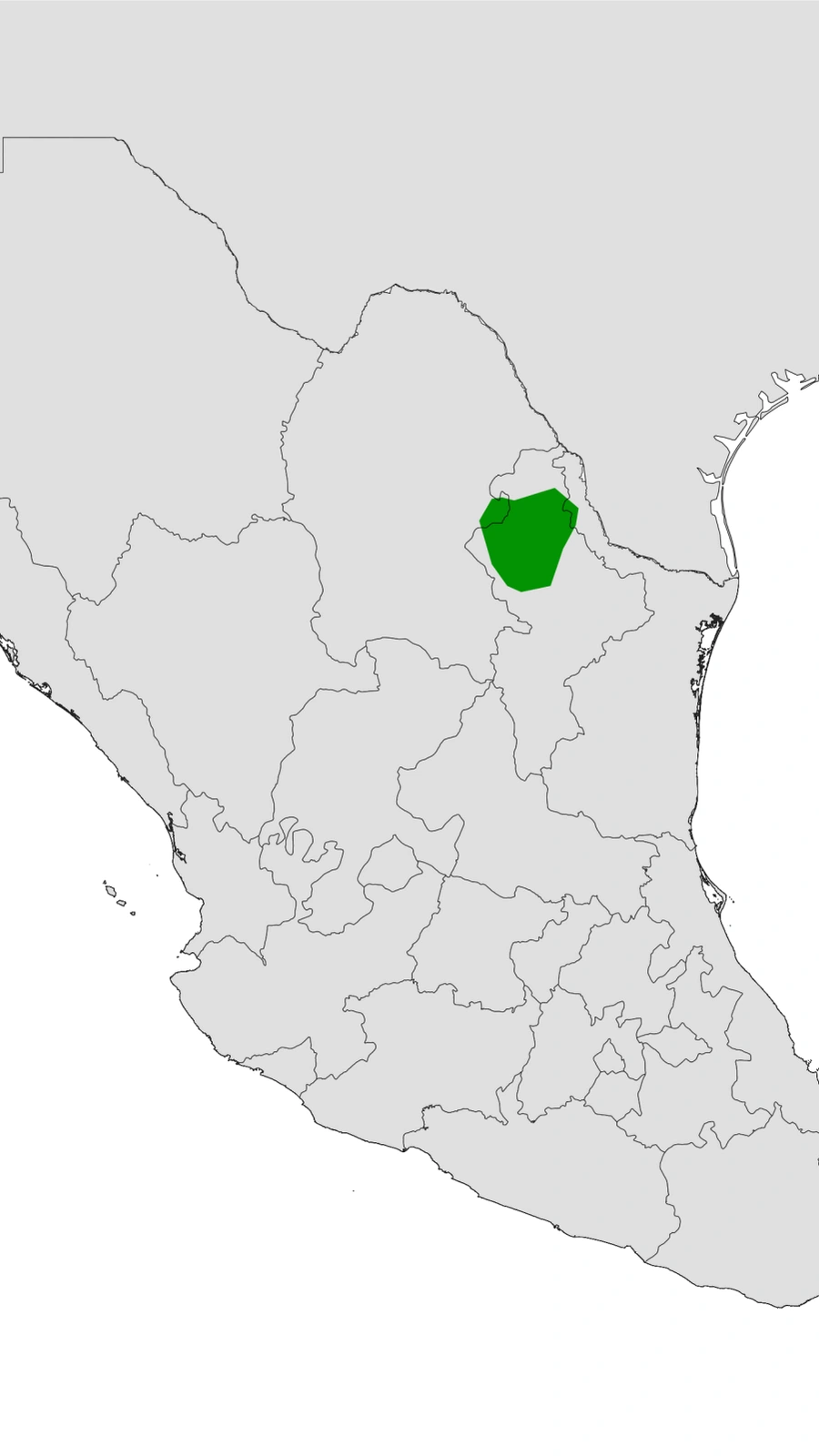
This species is native to northern and northeastern Mexico, specifically within the states of Coahuila, Nuevo León, San Luis Potosí, Tamaulipas, and Zacatecas 2. It thrives in dry desert shrublands, alluvial fans, and rocky limestone slopes at elevations ranging from 800 to 1,500 meters above sea level.
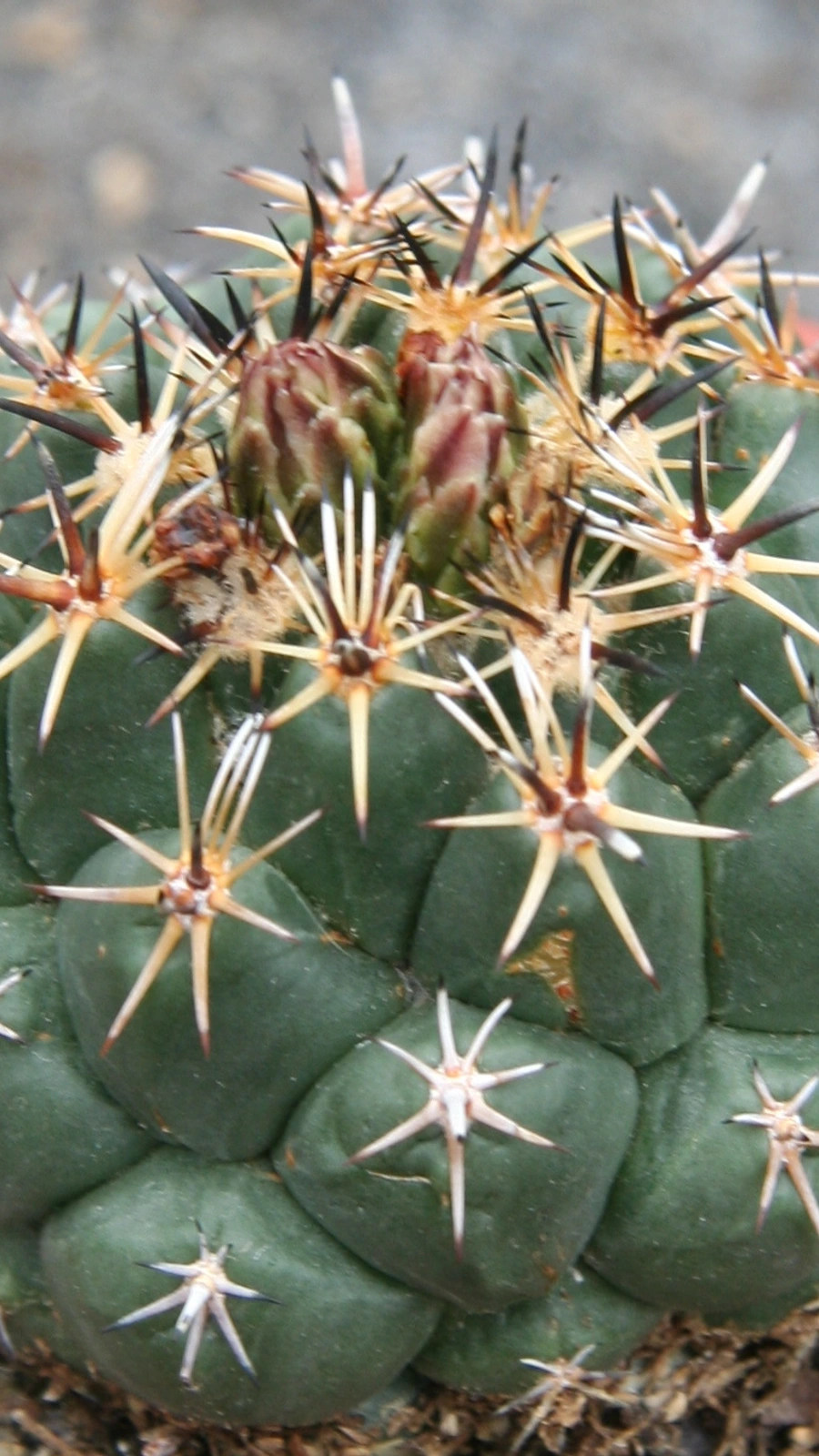
The stem is solitary or slowly clustering, olive-green, covered in prominent spiraled tubercles. Each tubercle bears woolly young areoles from which sharp, rigid central and radial spines emerge, colored gray-white with darker tips. In summer, large, showy yellow flowers emerge from the plant's apex.
Coryphantha salinensis requires full sun to maintain its compact shape and dense spine cover. It demands a highly porous mineral substrate and a strict wet-to-dry watering cycle 1. If kept completely dry during winter dormancy, it can tolerate light frost down to brief freezing temperatures.
The most prevalent issue is overwatering during winter, which leads to root rot and systemic fungal infections. Lack of adequate light causes etiolation, where the stem becomes pale and unnaturally elongated, losing its aesthetic appeal and making it susceptible to pests.
Requires full sun or strong direct light to preserve its spine density.
Water only when the substrate is fully dry; keep dry in winter.
Requires highly porous, inorganic cactus mix containing pumice and grit.
Possesses sharp, rigid spines. Keep out of reach of children and pets.
Moderately easy if overwatering is strictly avoided.
Found naturally in the arid, limestone-rich soils of the Chihuahuan Desert and surrounding dry shrublands throughout northeastern Mexican states.
