
Light
Direct Sun
Requires at least 6 hours of direct sunlight daily; ideal for south- or west-facing windows.
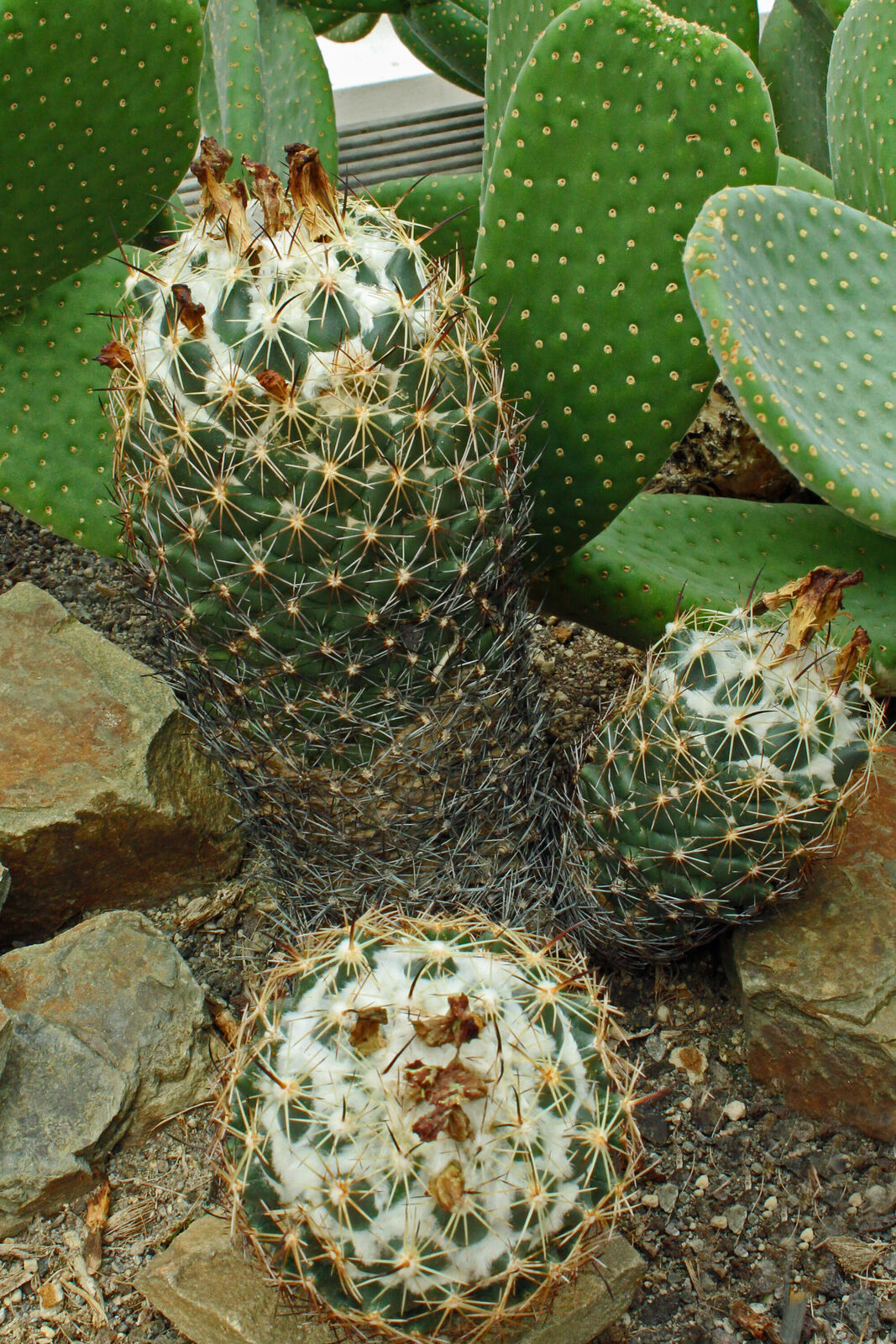 Reference image
Pineapple Cactus
Coryphantha sulcata is a low-growing, clumping succulent perennial cactus famous for its attractive yellow flowers with reddish centers 1. It is commonly known as the pineapple cactus or furrowed nipple cactus due to its unique tubercular structure.
This species was originally described in 1845 by the renowned botanist George Engelmann. The genus name Coryphantha derives from the Greek words for 'top' and 'flower', referring to the apical blooms, while the specific epithet sulcata means 'furrowed' or 'grooved' in Latin, pointing to the distinctive groove on the upper side of the tubercles 2.
Its native range extends from South-Central United States, primarily in Texas, down into northeastern Mexico 1. It thrives in gravelly, limestone soils, rocky hillsides, dry shrublands, and desert grasslands, often growing under the shelter of nurse plants.
The stems are globose to short-cylindrical, eventually offsetting to form dense mounds. The tubercles are prominent, bearing a deep longitudinal groove on their upper surface. Radial spines are needle-like, yellowish-brown, and spread outwards. Large, showy yellow flowers appear from the plant's apex during late spring and summer.
In cultivation, it requires full sun to maintain its compact shape and promote healthy spination and flowering. The soil must be highly porous and mineral-based. Water thoroughly during the hot summer months only after the soil has completely dried out, and keep completely dry in winter.
Overwatering is the primary cause of failure, quickly leading to root and stem rot. Placing the plant in low-light conditions results in etiolation (weak, stretched growth) and susceptibility to pests like mealybugs.
Requires at least 6 hours of direct sunlight daily; ideal for south- or west-facing windows.
Allow soil to dry out 100% between waterings. Cease watering during winter dormancy.
Prefers mineral soils rich in pumice, gravel, coarse sand, and minimal organic matter.
Non-toxic, but features sharp spines that can cause mechanical injury to skin and pets.
Easy to moderate; highly resilient provided it is kept dry in winter and given bright light.
Native to the rocky limestone hillsides, gravelly plains, and semi-arid grasslands of Southern Texas and Northern Mexican states such as Coahuila, Nuevo Leon, and Tamaulipas.
