
Light
Filtered Sun
Requires bright filtered light to maintain its dense white hair. Avoid intense midday direct summer sun which can scorch the stems.
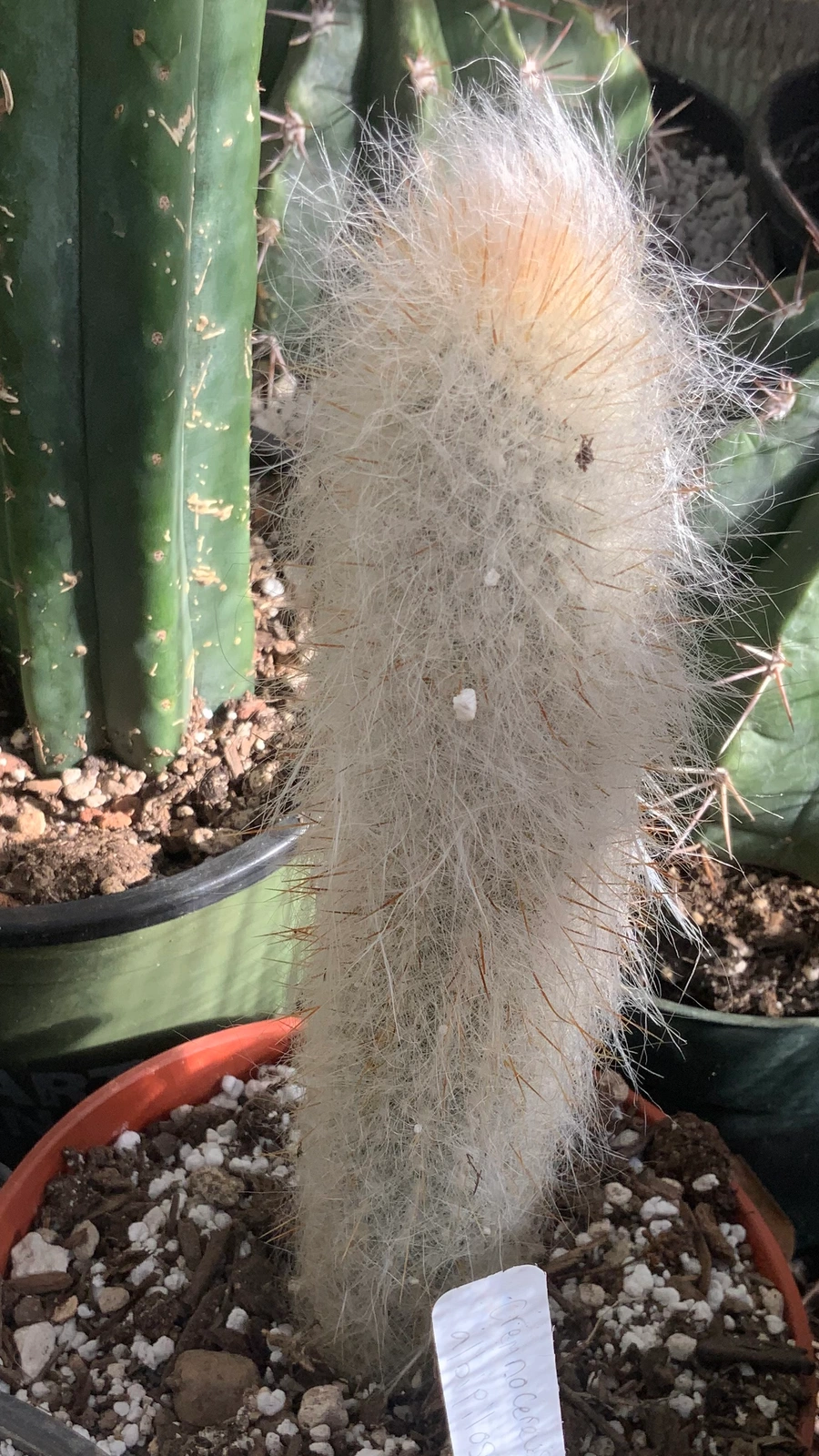 Reference image
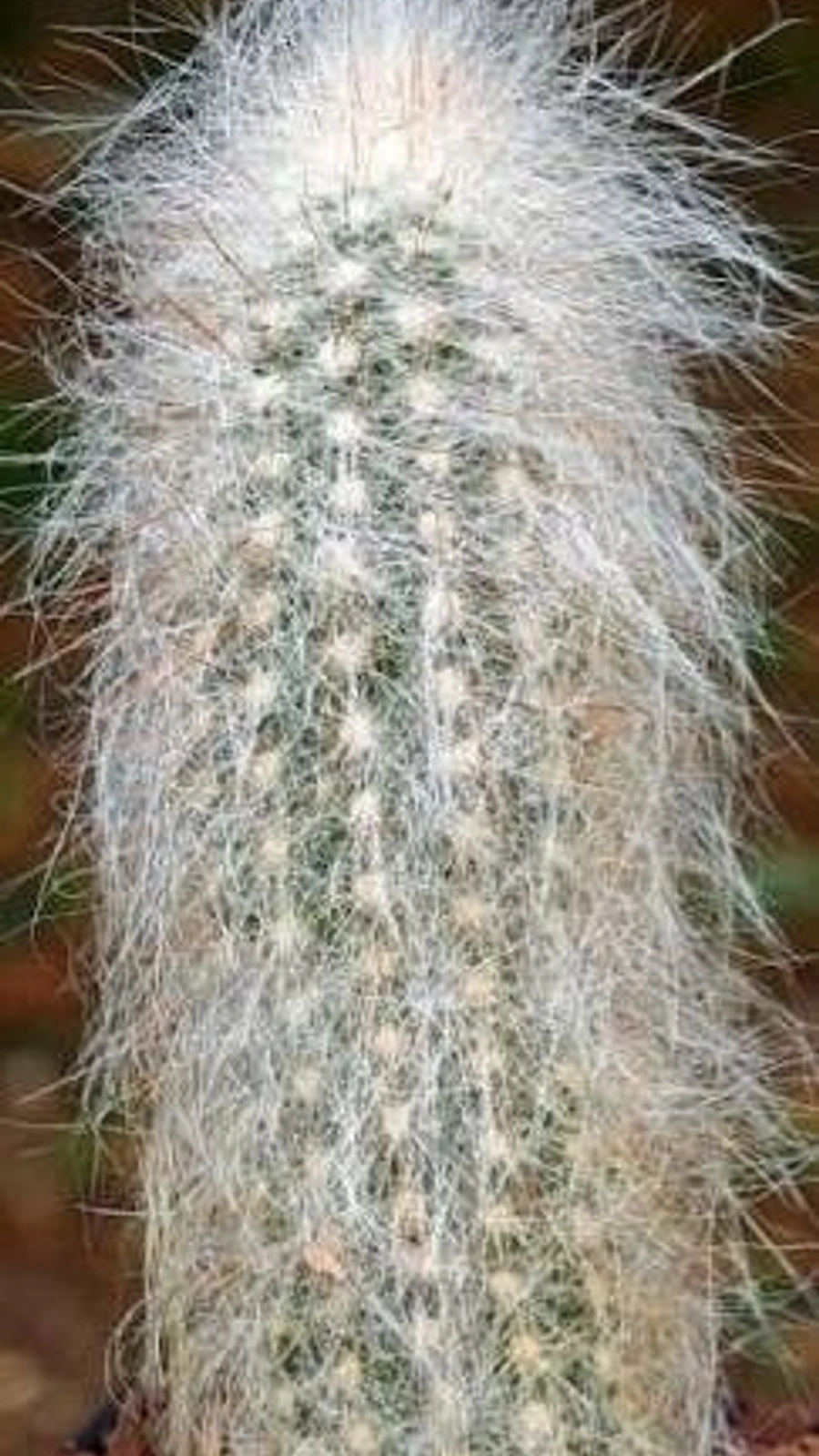 Reference image
White-Haired Cliff Cactus
Cremnocereus albipilosus is an extraordinary and highly specialized cliff-dwelling succulent cactus belonging to the Cactaceae family 1. Distinguished by its pendulous stems covered in dense, silky white hairs, this species is highly coveted by cacti enthusiasts and specialized collectors for its unique hanging habit and woolly appearance.
The genus name Cremnocereus is derived from the Greek word cremnos, meaning 'cliff', and Cereus, referring to its columnar and trailing stems 1. The specific epithet albipilosus translates from Latin as 'white-haired', highlighting the long, soft trichomes that emerge from the areoles, giving the plant its distinct woolly coat.
This species is endemic to Bolivia, specifically growing on sheer calcareous cliffs and steep canyon walls in seasonally dry tropical environments 2. In its natural habitat, it survives as a lithophyte, anchoring its roots into narrow rock crevices filled with minimal organic matter and high mineral content.
Cremnocereus albipilosus is a pendulous, clumping succulent shrub. Its cylindrical stems hang gracefully downwards, densely enveloped in long, soft, white woolly hairs that shield the epidermis from intense solar radiation and limit evaporation 1. Under ideal conditions, it produces tubular, nocturnal cream-white flowers that emerge from the hairy areoles.
Replicating its vertical, rocky habitat is crucial for successful cultivation. It requires an outstandingly porous, purely mineral-based substrate containing pumice, lava rock, and coarse sand. It thrives in bright, filtered sunlight; insufficient light will cause the new growth to stretch and lose its dense white hair. Water thoroughly only when the substrate is completely dry, and maintain dry conditions during the winter.
The most critical mistake is overwatering or using heavy, organic-rich soil mixes that retain moisture, which quickly triggers root rot 2. Wetting the dense white hairs during watering should also be avoided, as trapped moisture can cause fungal issues and unsightly staining.
Requires bright filtered light to maintain its dense white hair. Avoid intense midday direct summer sun which can scorch the stems.
Water only when the substrate is fully bone-dry. Reduce watering to a bare minimum during the winter resting phase.
Must be potted in an ultra-porous, mineral-dominant medium consisting largely of pumice, perlite, and fine gravel.
Non-toxic to pets, but the soft-looking white hairs cover tiny sharp spines, so handle with care.
Moderately challenging due to its sensitivity to stagnant moisture and its specific lithophytic requirements.
Native to the vertical limestone cliffs and steep, seasonally dry tropical canyon ecosystems of Bolivia in Western South America.
