
Light
Bright Indirect Light
Prefers abundant, bright indirect sunlight or filtered sun. Avoid intense, direct afternoon sun during peak summer.
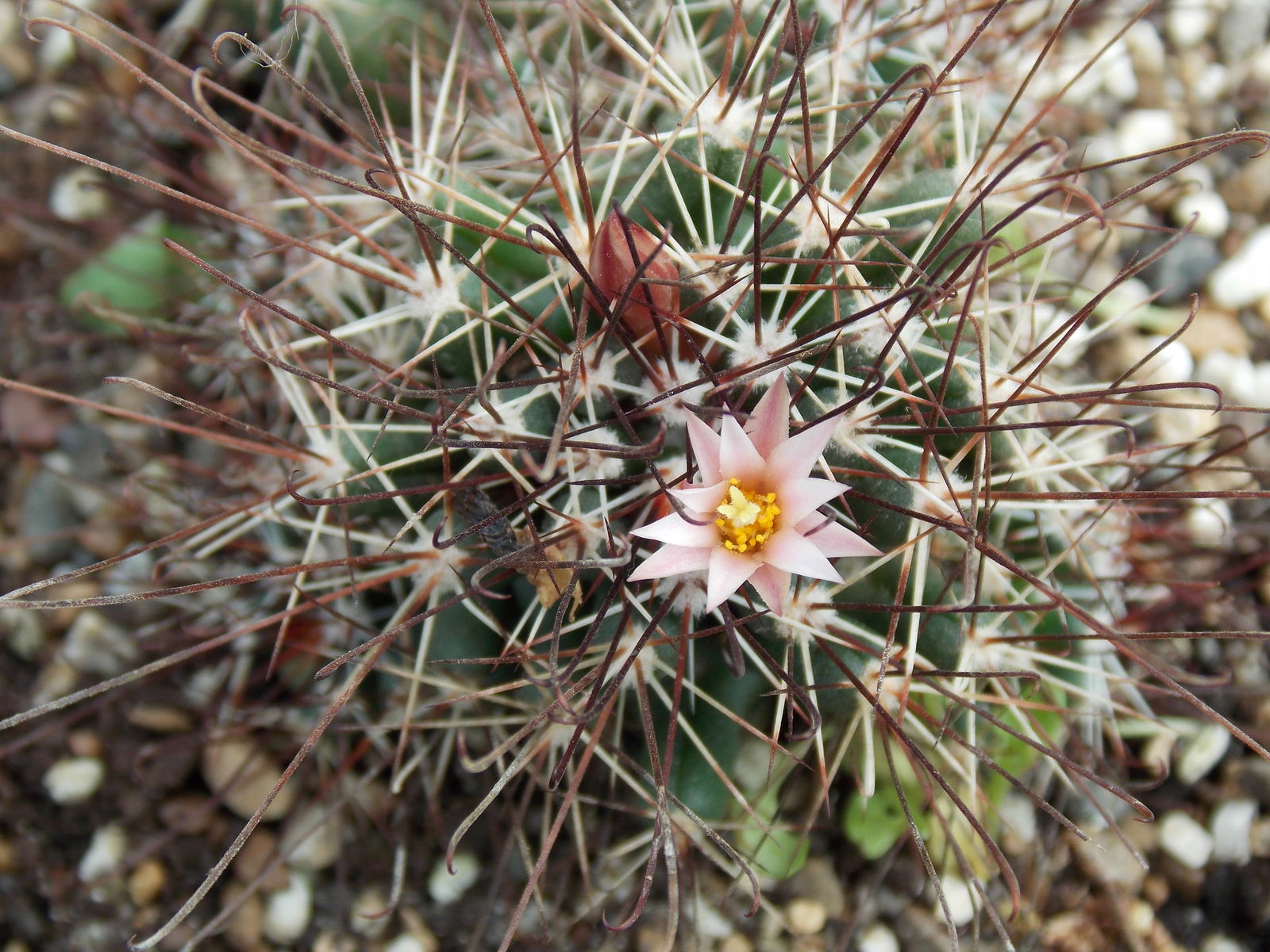 Reference image
Sweet-scented Cumarinia
Cumarinia odorata is a highly specialized, small succulent subshrub belonging to the Cactaceae family, native to the arid and semi-arid zones of Mexico. Celebrated among collectors for its intricate, hooked spination and unique sweet aroma when dried, this miniature cactus is a prized specimen for specialized collections 1.
Initially classified within the genus Coryphantha, this species has been placed in its own monotypic or oligotypic genus Cumarinia 2. The specific epithet "odorata" refers to the sweet, coumarin-like fragrance emitted by the plant tissues, particularly when dried or bruised. Common synonyms include Neobesseya odorata and Coryphantha odorata.
Native to north-central Mexico, particularly in the states of San Luis Potosí, Tamaulipas, and Nuevo León. It thrives on limestone hills, rocky slopes, and gravelly flats in desert shrublands, often growing tucked under the protection of nurse plants or in rock crevices 3.
The stem is globose to shortly cylindrical, growing solitary or offsetting from the base to form small, compact clumps. The body is covered in distinct tubercles. Areoles bear dense, radial spines and prominent, dark, hooked central spines. The flowers are relatively small, funnel-shaped, and usually pale yellow, cream, or greenish-yellow.
Cumarinia odorata requires careful moisture management as its fibrous root system is exceptionally prone to rot. It needs a highly mineral, gritty substrate with superb drainage. Water thoroughly only when the soil has completely dried out, and keep virtually dry during the cold winter dormancy.
The most prevalent issue is overwatering combined with heavy, organic-rich soils. Lack of air circulation and inadequate light lead to weak, etiolated growth and make the plant highly susceptible to fungal infections and rapid root collapse during winter.
Prefers abundant, bright indirect sunlight or filtered sun. Avoid intense, direct afternoon sun during peak summer.
Allow the potting medium to dry out entirely between waterings. Suspend watering almost completely during the winter dormancy.
Requires an extremely free-draining, mineral-based cactus mix containing pumice, coarse sand, and lava rock.
Possesses sharp, hooked central spines that can easily catch on clothing or skin. Place away from children and pets.
Moderate difficulty due to strict watering requirements and high sensitivity to root rot if overwatered.
Discovered across the limestone hills and desert shrublands of north-central Mexico, where it grows in porous, mineral-rich soils under the shelter of surrounding vegetation.
