
Light
Full Sun
Requires full sun to maintain compact growth and strong spine formation.
 Reference image
Bertero's Cumulopuntia
Cumulopuntia berteroi is a fascinating cushion-forming succulent subshrub belonging to the Cactaceae family. Highly adapted to arid environments, it is appreciated by succulent collectors for its compact, segmented growth and dense spine structure.
Originally described as Opuntia berteroi, this species was later reassigned to the genus Cumulopuntia following modern phylogenetic studies 1. The genus name Cumulopuntia derives from the Latin "cumulus" (meaning heap or pile) and "Opuntia", referencing its characteristic growth habit. The specific epithet "berteroi" honors the Italian physician and botanist Carlo Giuseppe Bertero 2.
This species is native to Southern South America, particularly restricted to the arid and semi-arid regions of central Chile. It thrives on rocky slopes, barren hills, and sandy terraces in subtropical, low-precipitation zones, where drainage is instantaneous.
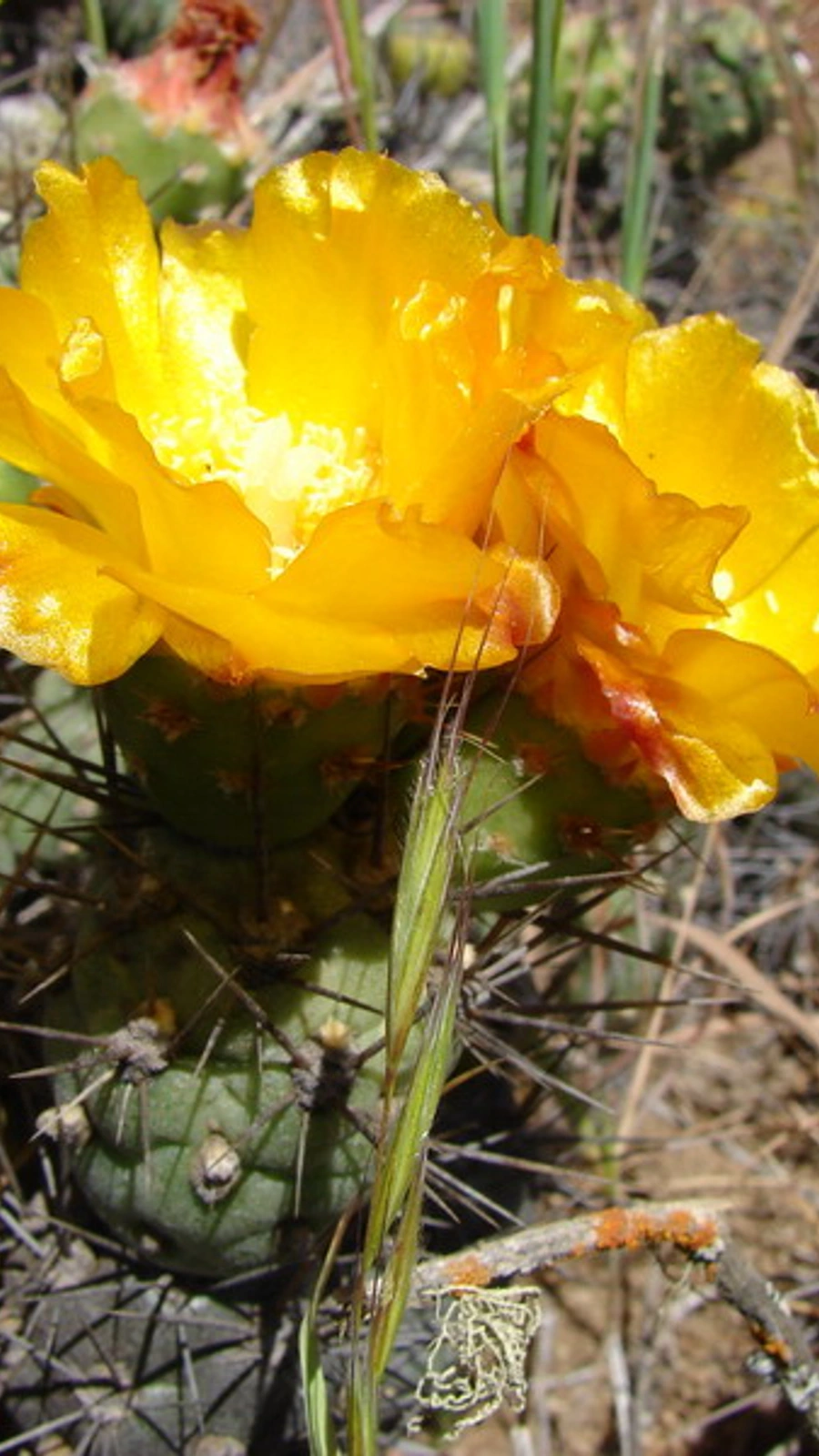
Cumulopuntia berteroi produces globose to ovoid stem segments that stack upon each other, forming dense, low-growing mounds. The epidermis ranges from pale green to grayish-green. Large areoles carry sharp, yellowish to brownish-red spines. The flowers are typically bright yellow, emerging from the tips of mature segments.
In cultivation, it requires maximum light exposure and excellent air circulation. The potting medium must be predominantly mineral, incorporating pumice, gravel, and sand. Watering should follow a strict soak-and-dry cycle during summer, transitioning to a completely dry state in winter to prevent root rot.
Overwatering and poor soil drainage are the primary causes of failure, rapidly inducing root rot 2. Lack of adequate direct sunlight leads to etiolation, causing the segments to grow thin, weak, and lose their natural compactness.
Requires full sun to maintain compact growth and strong spine formation.
Soak and dry method. Must be kept dry and cold-hardened in winter.
Extremely well-drained mineral mix containing pumice and grit.
Has sharp spines; handle with thick gloves and keep away from pets.
Moderate. Easy if watering is controlled and sun is ample.
Inhabits the arid coastal valleys and low-altitude Andean foothills of central Chile, thriving in rocky, sun-exposed soils.
