
Light
Full Sun
Requires minimum 6 hours of direct sunlight daily; otherwise, it will suffer from etiolation.
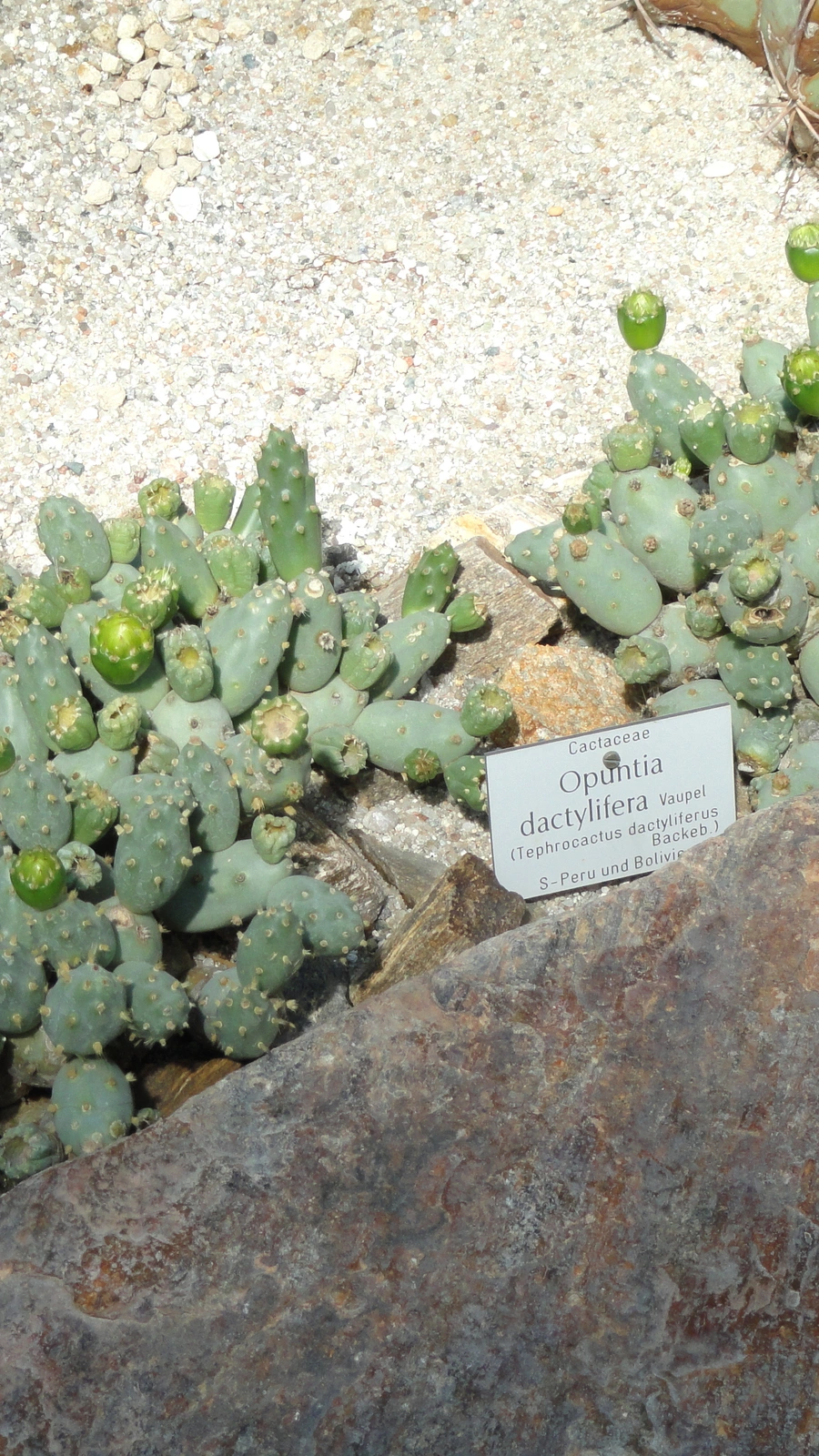 Reference image
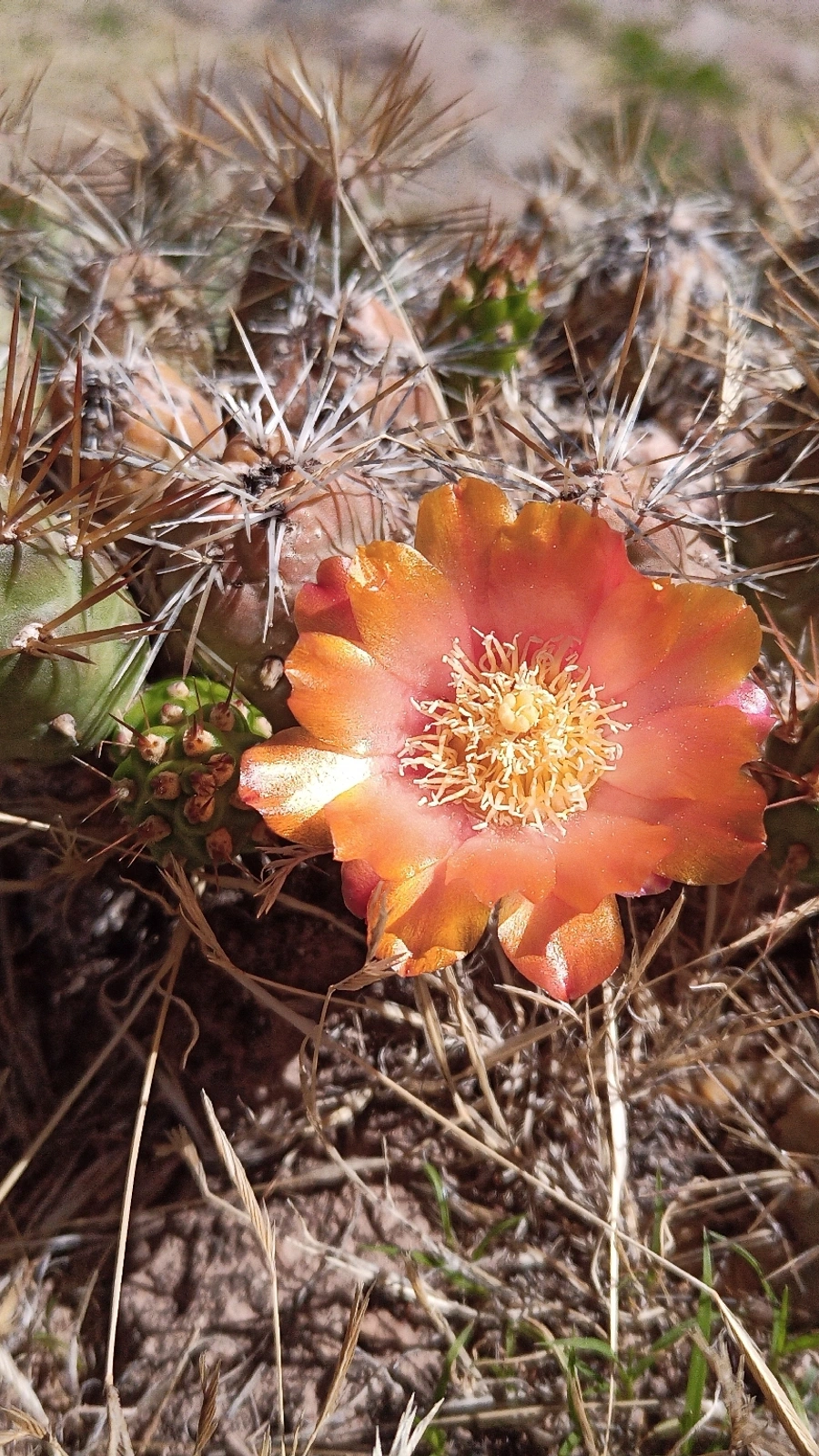 Reference image
Finger-bearing Cumulopuntia
Cumulopuntia dactylifera is a cushion-forming, succulent subshrub belonging to the Cactaceae family. Adapted to harsh alpine conditions, this species is highly valued by succulent collectors for its compact growth habit and uniquely shaped stem segments.
Originally described by Friedrich Ritter, the species belongs to the genus Cumulopuntia 1. The specific epithet "dactylifera" translates from Latin to "finger-bearing," referencing the elongated, finger-like shape of its seed pods and fruits. It shares close evolutionary ties with the Tephrocactus complex.
Cumulopuntia dactylifera is native to the high-altitude regions of the Andes in Bolivia and Peru, typically thriving at elevations between 3,000 and 4,000 meters above sea level 2. It grows in montane tropical biomes, clinging to rocky, barren slopes exposed to intense UV radiation and dramatic diurnal temperature shifts.
The plant consists of small, oval to ellipsoidal green-to-greyish segments that stack upon each other to form dense, rounded mounds. Areoles are armed with sturdy, yellowish-brown spines. Its striking flowers, which bloom in late spring to summer from the topmost segments, exhibit bright yellow to deep orange hues.
In cultivation, it requires maximum direct sunlight and excellent air circulation to thrive. A purely mineral-based potting substrate with pumice, grit, and minimal organic matter is essential. When kept completely dry in winter, it can tolerate sub-zero temperatures remarkably well.
The most prevalent mistakes include placing the plant in low-light indoor environments and overwatering. Prolonged moisture leads to rapid root rot, while inadequate sunlight causes the tight, globose segments to stretch unnaturally (etiolation), ruining its natural shape.
Requires minimum 6 hours of direct sunlight daily; otherwise, it will suffer from etiolation.
Allow soil to dry out completely between waterings. Maintain absolute dryness in winter.
Thrives in a highly porous, mineral-heavy substrate with plenty of pumice and coarse sand.
Equipped with sharp spines and irritating glochids; wear thick gloves during repotting.
Moderately demanding due to strict light and watering requirements, but highly resilient once established.
Sparsely distributed throughout the high-elevation rocky slopes of the Andean mountain range, surviving under intense solar exposure and dry mountain winds.
