
Light
Full Sun
Requires full sun and intense direct light; shaded conditions lead to weak, pale, and stretched growth.
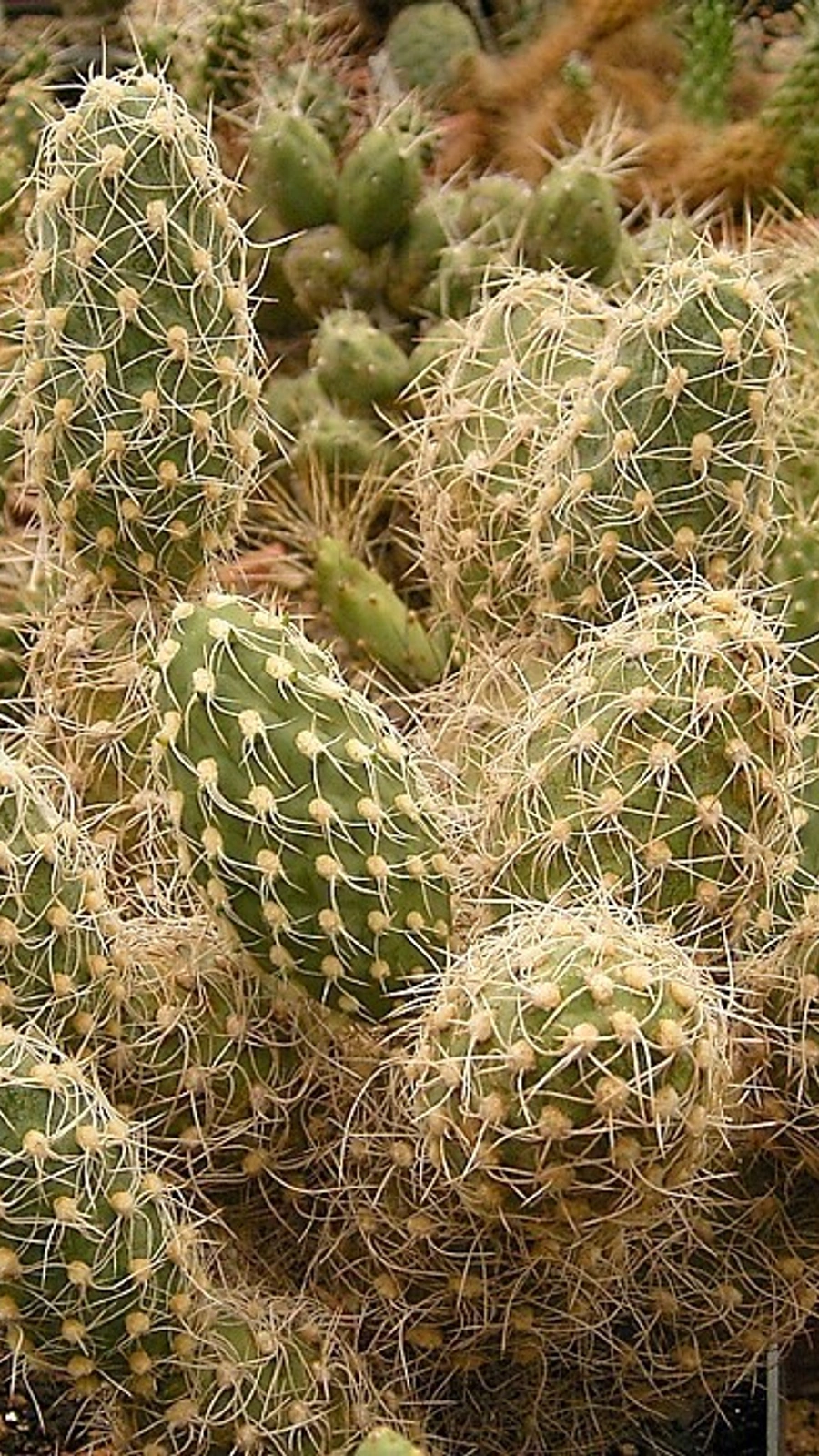 Reference image
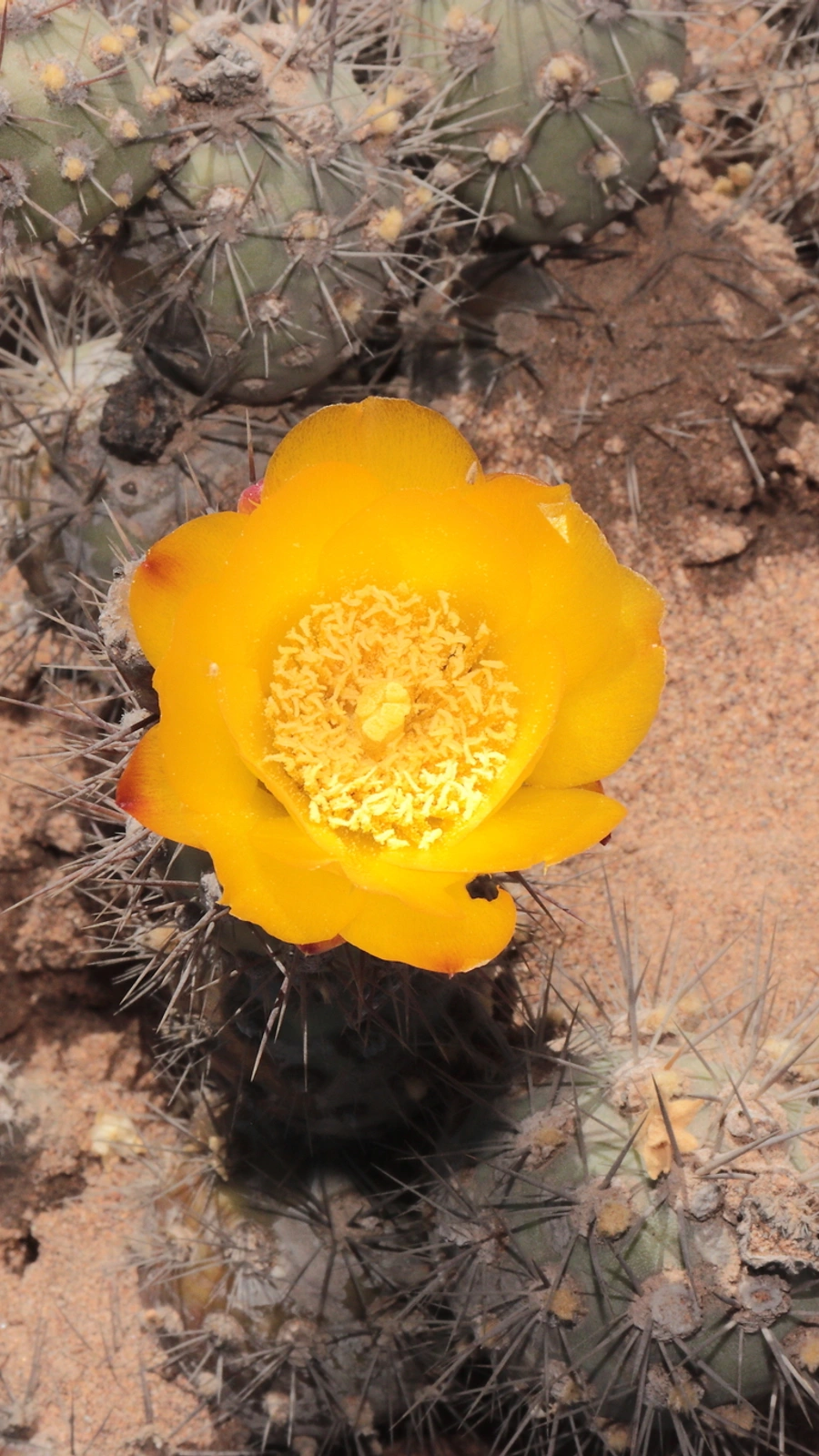 Reference image
Dimorphic Tufted Cactus
Cumulopuntia dimorpha is a fascinating, small-segmented, succulent subshrub in the family Cactaceae. Known for forming dense, low-growing mounds, this species is highly adapted to arid conditions and features a unique growth habit suitable for collectors of high-altitude Andean cacti.
Originally described within the broader genus Opuntia, it has been reclassified into Cumulopuntia to reflect its distinct clump-forming habit and seed morphology 1. The specific epithet dimorpha refers to the dimorphic nature of its stem segments or spine development, which can vary noticeably as the plant matures 2.
This species is native to Western South America, particularly Peru, where it thrives in montane tropical biomes 1. It is typically found growing at high elevations on rocky, steep slopes, exposed to intense solar radiation and minimal atmospheric moisture.
The plant consists of small, globose to ovoid, light-green to grayish-green joints that stack upon each other. Areoles carry small glochids and variable spines; lower segments may be nearly spineless, while upper segments exhibit long, needle-like, yellowish-brown spines. During summer, it produces attractive yellow to light orange flowers at the stem tips.
In cultivation, Cumulopuntia dimorpha requires maximum light exposure and highly porous, mineral-rich soil. It is drought-tolerant and can survive sub-zero temperatures (down to -5 °C) if kept entirely dry during its winter dormancy 2. Watering should be thoroughly applied only when the substrate is bone dry.
The most frequent issue is root rot triggered by overwatering or compacted soil that holds moisture. Lack of adequate sunlight will also cause etiolation, where the pads grow weak, pale, and elongated, ruining its compact tufted appearance.
Requires full sun and intense direct light; shaded conditions lead to weak, pale, and stretched growth.
Allow soil dry out 100% between waterings in summer; keep completely dry in winter.
Prefers a mineral-dominant substrate rich in pumice, grit, and sand with very little organic material.
Equipped with tiny, irritating glochids and sharp spines. Keep away from pets and curious children.
Highly resilient and easy to grow as long as overwatering and dark rooms are strictly avoided.
Grows natively in high-altitude rocky environments and dry valleys across Peru's western Andean slopes.
