
Light
Full Sun
Full direct sun is essential for proper spine formation and flowering.
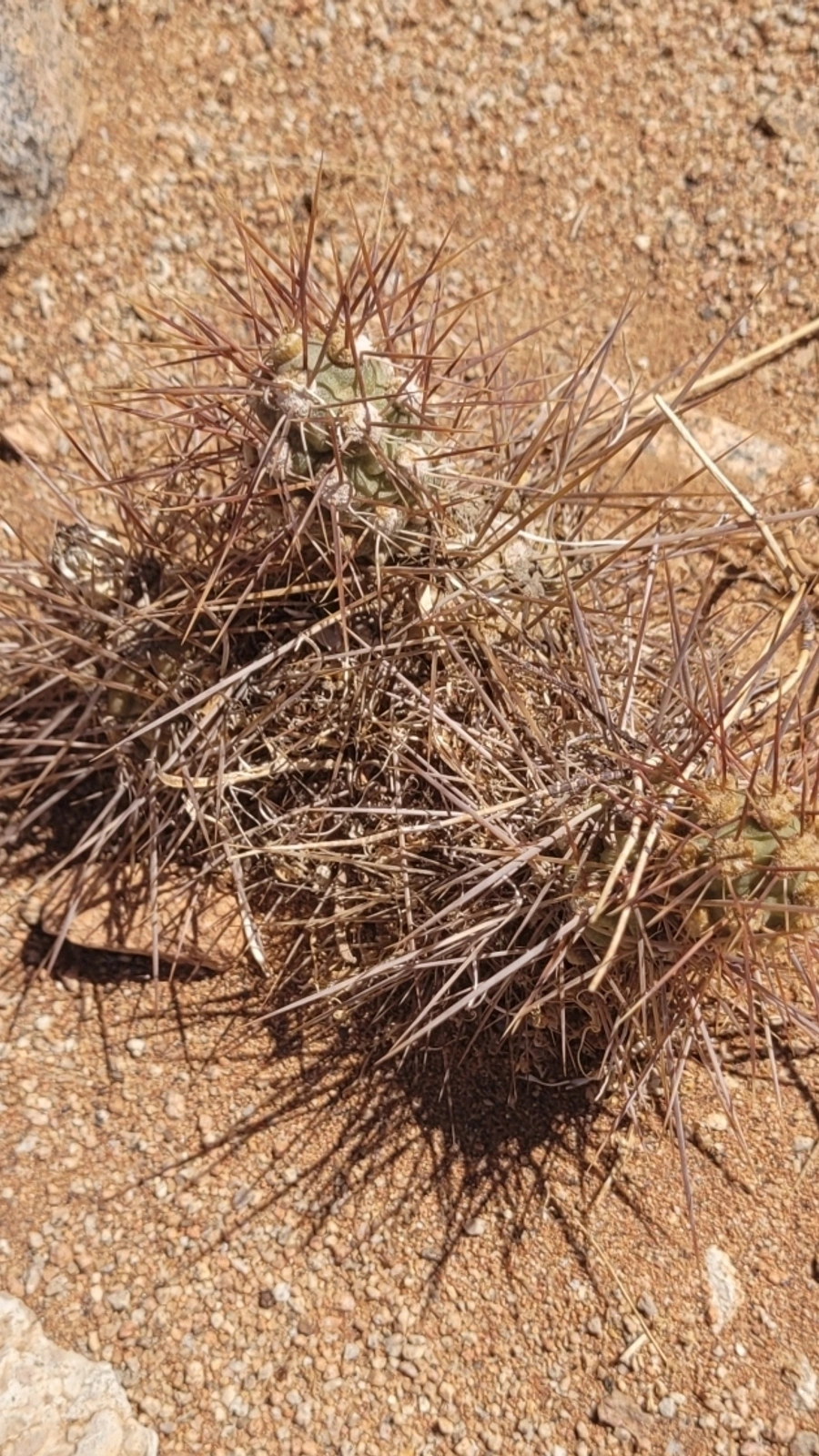 Reference image
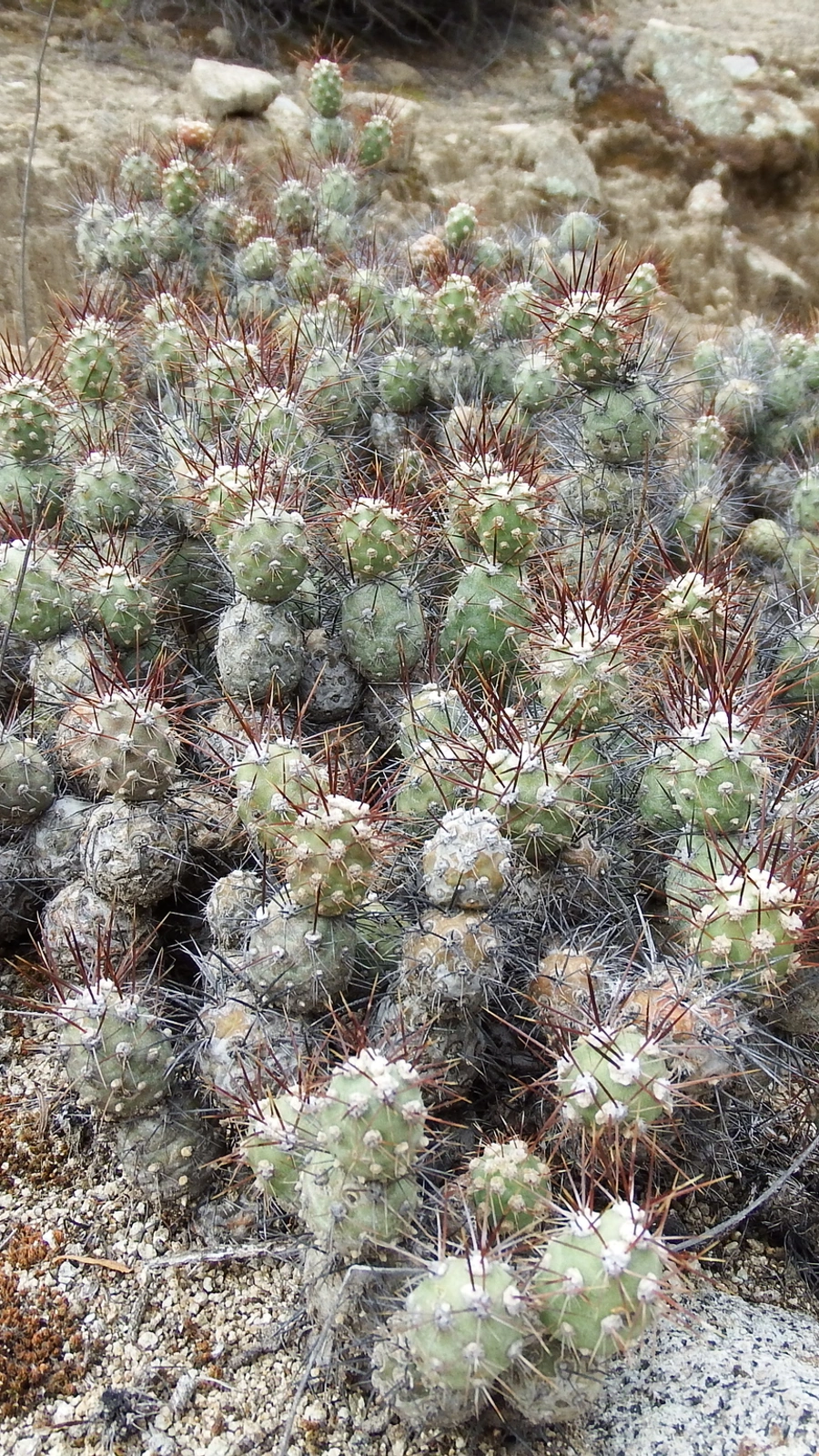 Reference image
White-Spined Mound Cactus
Cumulopuntia leucophaea is a robust, cushion-forming succulent subshrub belonging to the Cactaceae family. Extremely adapted to harsh desert environments, it is characterized by its heavily armed, segmented stems and compact growth habit 1.
The genus name Cumulopuntia derives from the Latin 'cumulus' (meaning heap or pile), combined with Opuntia, referring to its clump-forming growth. The specific epithet leucophaea comes from Greek roots meaning ash-colored or dusty white, pointing to the distinctive grayish-white spines of the older segments 2.
This species is native to western South America, specifically the hyper-arid regions of northern Chile (Antofagasta, Atacama, Tarapacá) and southern Peru. It typically occurs on rocky slopes, gravelly plains, and altitude screes where rainfall is extremely minimal 1.
The individual segments are globose to ovoid, measuring about 3-5 cm long. The areoles bear dense, rigid, whitish-grey spines that give the plant its characteristic frosty appearance. In summer, it produces bright yellow, orange, or sometimes reddish flowers on the upper areoles 2.
In cultivation, it requires maximum sunlight exposure and very airy conditions. It is frost-tolerant down to -5°C if kept bone dry in the winter months. Mineral-heavy soils are key to avoiding moisture retention 1.
The most prevalent errors are placing the cactus in low-light indoor areas and overwatering. Poor drainage and standing water lead to rapid root rot and segment collapse.
Full direct sun is essential for proper spine formation and flowering.
Allow the substrate to dry out entirely before watering again.
Use a mineral-rich substrate containing pumice, lava grit, and coarse sand.
Equipped with sharp spines and glochids; handle with thick gloves.
Moderate difficulty; easily managed if watering is strictly controlled.
Native to the coastal ranges and high-altitude desert steppes of northern Chile and southern Peru, thriving in stony, volcanic substrates under extreme solar radiation.
