
Light
Full Sun
Requires full sun (at least 6 hours of direct sunlight daily). Unsuitable for low-light rooms.
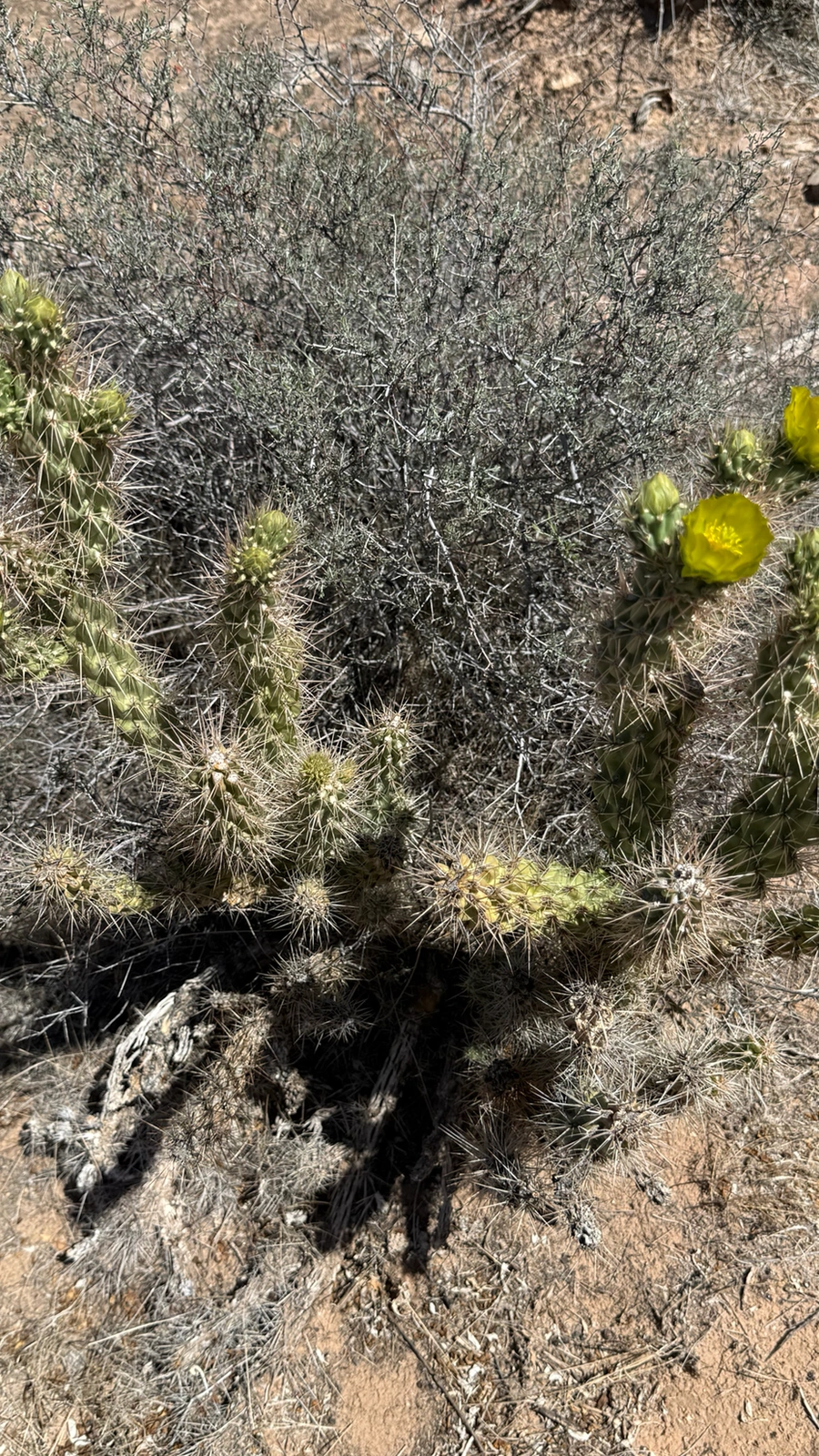 Reference image
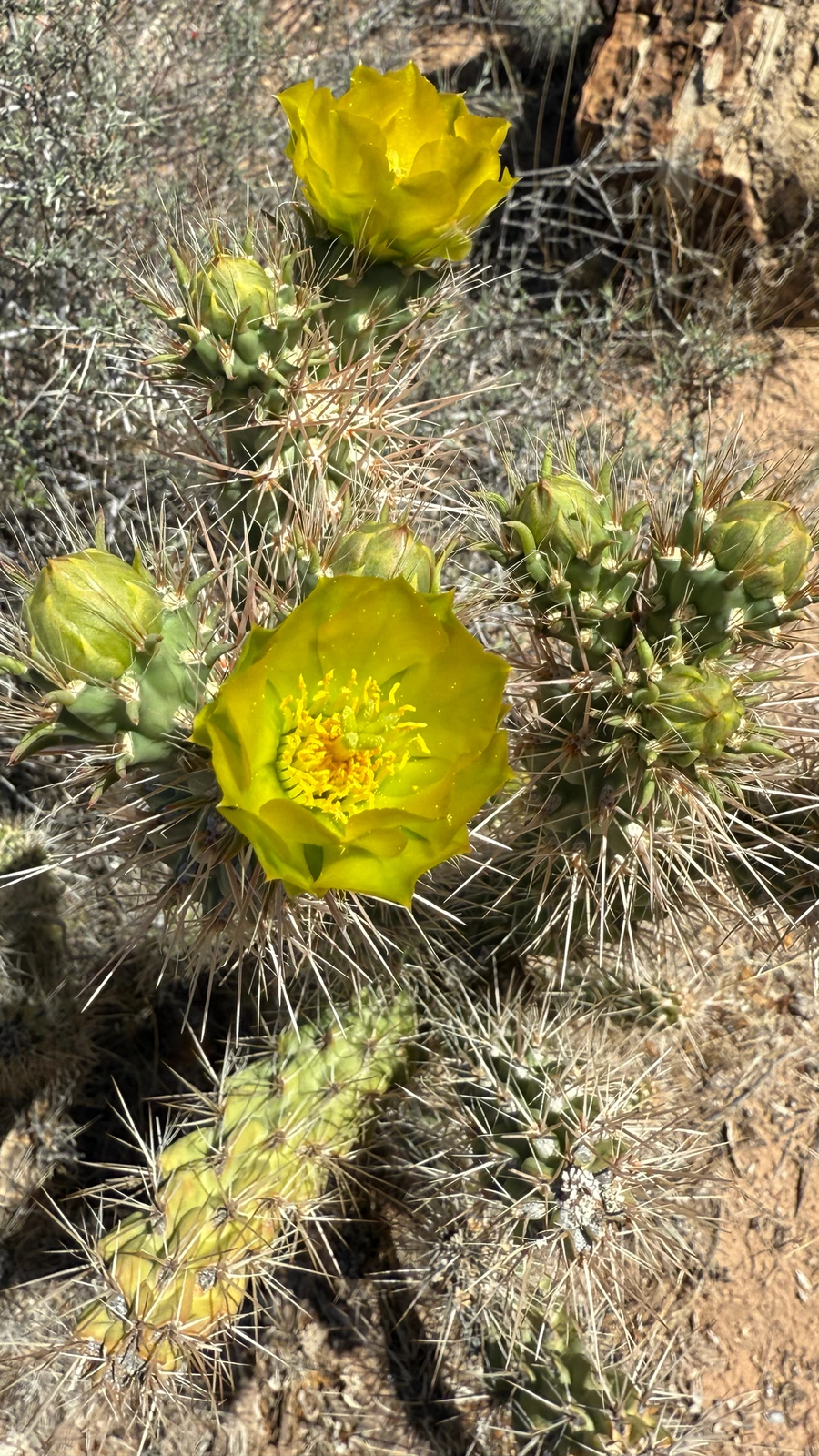 Reference image
Abyss Cholla
Cylindropuntia abyssi, commonly known as the Abyss Cholla, is a shrubby, cylindrical-jointed succulent belonging to the family Cactaceae 1. It is well-adapted to extremely arid environments and is notable for its heavily armed stems.
Historically classified under the broader genus Opuntia, modern taxonomic works place this species in Cylindropuntia due to its characteristic cylindrical joints and sheathed spines 2. The specific epithet 'abyssi' refers to its typical habitat of steep canyons and precipitous abysses.
Native to Northern America, specifically the Southwestern USA (primarily Arizona), Cylindropuntia abyssi thrives on rocky slopes, canyon rims, and dry desert shrublands 1. It grows in harsh gravelly soils under intense sunlight.
This succulent shrub features cylindrical stem segments covered in prominent tubercles and dense, needle-like spines that range from pale yellow to gray. Its flowers are typically pale greenish-yellow or bronze, blooming in late spring, followed by dry, spiny fruits 3.
In cultivation, Cylindropuntia abyssi requires maximum direct sunlight and exceptional soil drainage. It is highly drought-tolerant and susceptible to root rot if overwatered. Keep the plant dry during winter dormancy to prevent cold-induced rot 3.
The most frequent mistake is keeping the plant in low-light indoor areas, which causes weak, elongated growth. Using standard potting soil without added grit or pumice will also lead to rapid root decline.
Requires full sun (at least 6 hours of direct sunlight daily). Unsuitable for low-light rooms.
Allow soil to dry out completely between waterings. Suspend watering during the cold winter months.
Mineral-rich, extremely gritty soil with plenty of pumice and sand. Avoid organic peat.
Features vicious, barbed spines that easily attach to skin and clothing. Keep away from pets.
Moderate. Easy if provided with scorching sun and zero standing water, but unforgiving of overwatering.
Native to the southwestern regions of the United States, particularly within the state of Arizona. It occurs naturally along steep canyon walls and arid desert washes, where its highly specialized structure allows it to withstand extreme temperature fluctuations and prolonged drought.
