
Light
Full Sun
Requires full sun. Insufficient light leads to pale, stretched stems (etiolation).
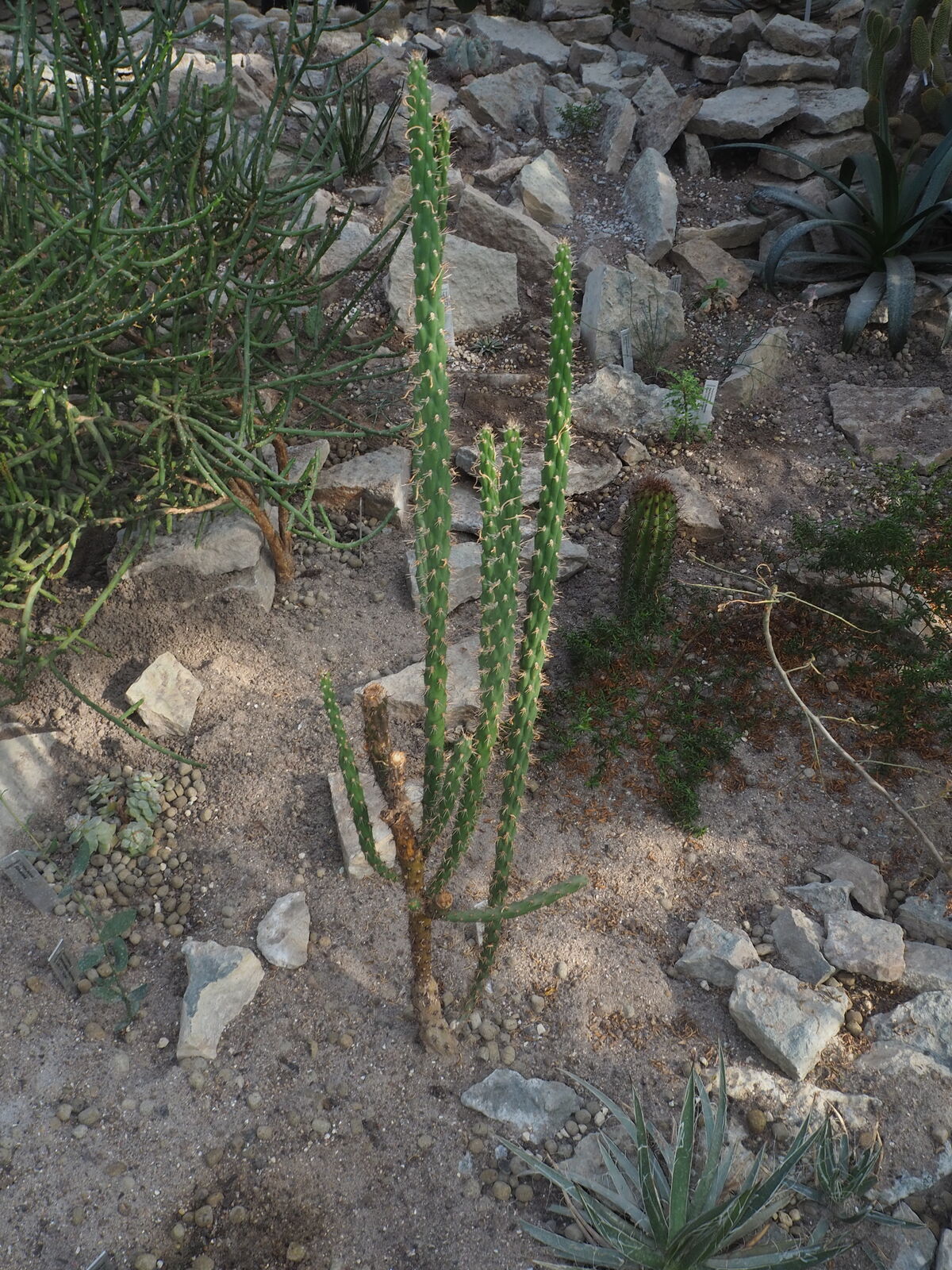 Reference image
Buckhorn Cholla
Cylindropuntia acanthocarpa, commonly known as the Buckhorn Cholla, is a robust, shrubby cactus species in the Cactaceae family, native to the arid expanses of the Sonoran and Mojave Deserts. It is well-known for its intricate branching structure and highly defensive armor of spines 1.
Originally described as Opuntia acanthocarpa by Engelmann and Bigelow in 1856, it was later classified under the genus Cylindropuntia due to its cylindrical stem segments. The specific epithet acanthocarpa translates from Greek as "thorny fruit," emphasizing its heavily spined seed pods 2.
This species is widely distributed across the Southwestern United States (Arizona, California, Nevada, Utah) and Northwest Mexico (Sonora, Baja California). It thrives on desert slopes, gravelly flats, and dry shrublands, coping with both scorching heat and freezing winter temperatures.
Growing as a highly branched, woody-stemmed shrub, it can reach up to 2 meters in height. The cylindrical jointed segments are covered in prominent tubercles, with areoles bearing numerous sharp, yellow-to-brown spines encased in papery sheaths. Copper-yellow to red flowers bloom in late spring, followed by dry, spiny fruits.
Buckhorn Cholla requires full, unfiltered sun to maintain its natural growth habit and dense spination. In cultivation, it demands extremely porous gravelly soil with minimal organic matter. Watering should follow a strict soak-and-dry cycle, decreasing to zero during the freezing winter months.
The most frequent mistakes are overwatering and placing the plant in shady locations. Poor drainage leads to quick root decay, while low light levels result in weak, etiolated growth and loss of natural spine color.
Requires full sun. Insufficient light leads to pale, stretched stems (etiolation).
Highly drought-tolerant. Water only when the potting mix is 100% dry.
Requires excellent drainage. Use a mix heavy in pumice, gravel, and coarse sand.
Spines are extremely sharp and easily detach from the plant into skin. Keep away from pets.
Easy to moderate; very low maintenance if kept in hot, sunny, and dry conditions.
Found naturally across desert flats, dry valleys, and rocky slopes of the Mojave and Sonoran deserts.
