
Light
Full Sun
Requires 6+ hours of direct sunlight daily; unsuitable for low-light indoor areas.
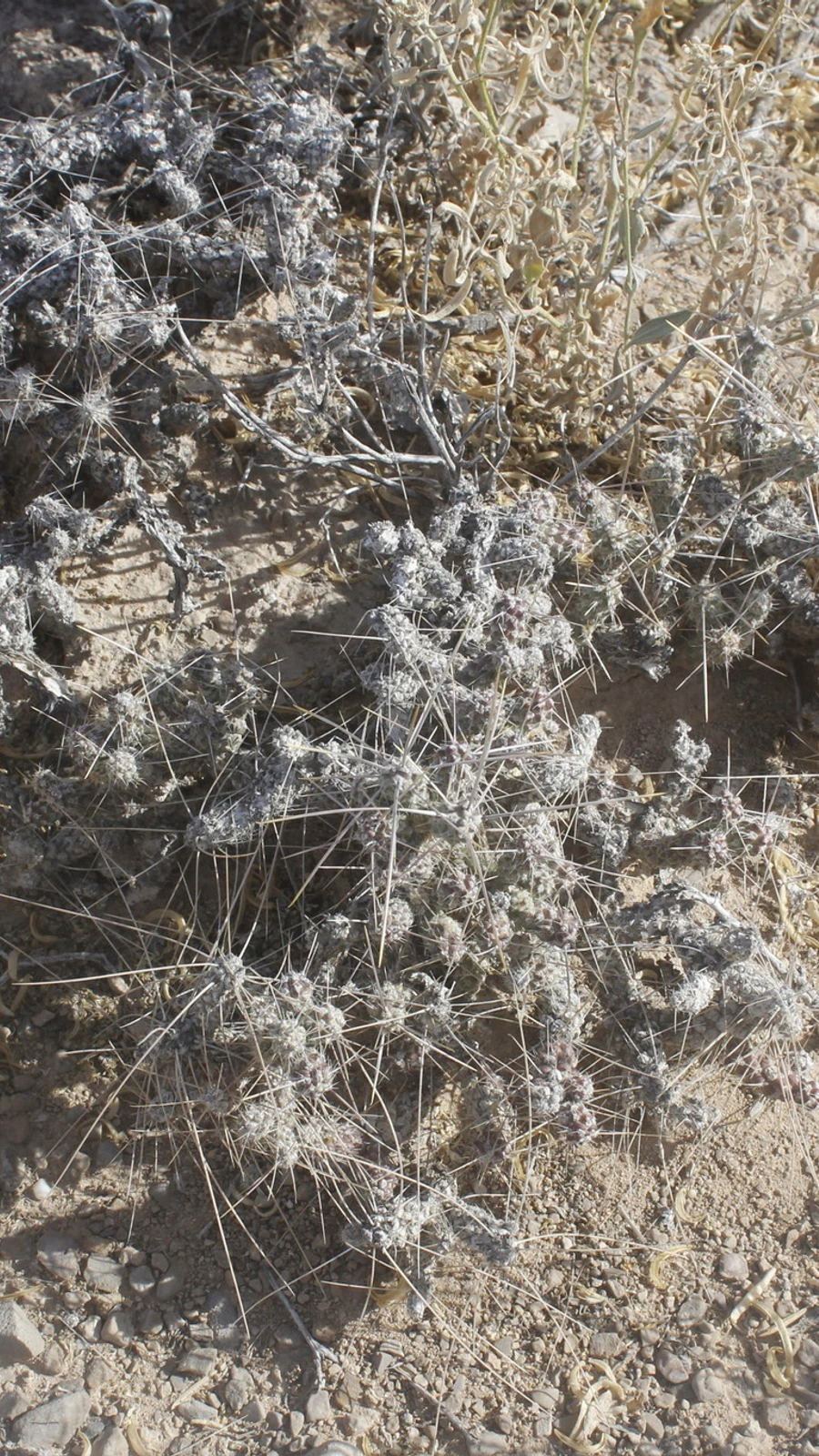 Reference image
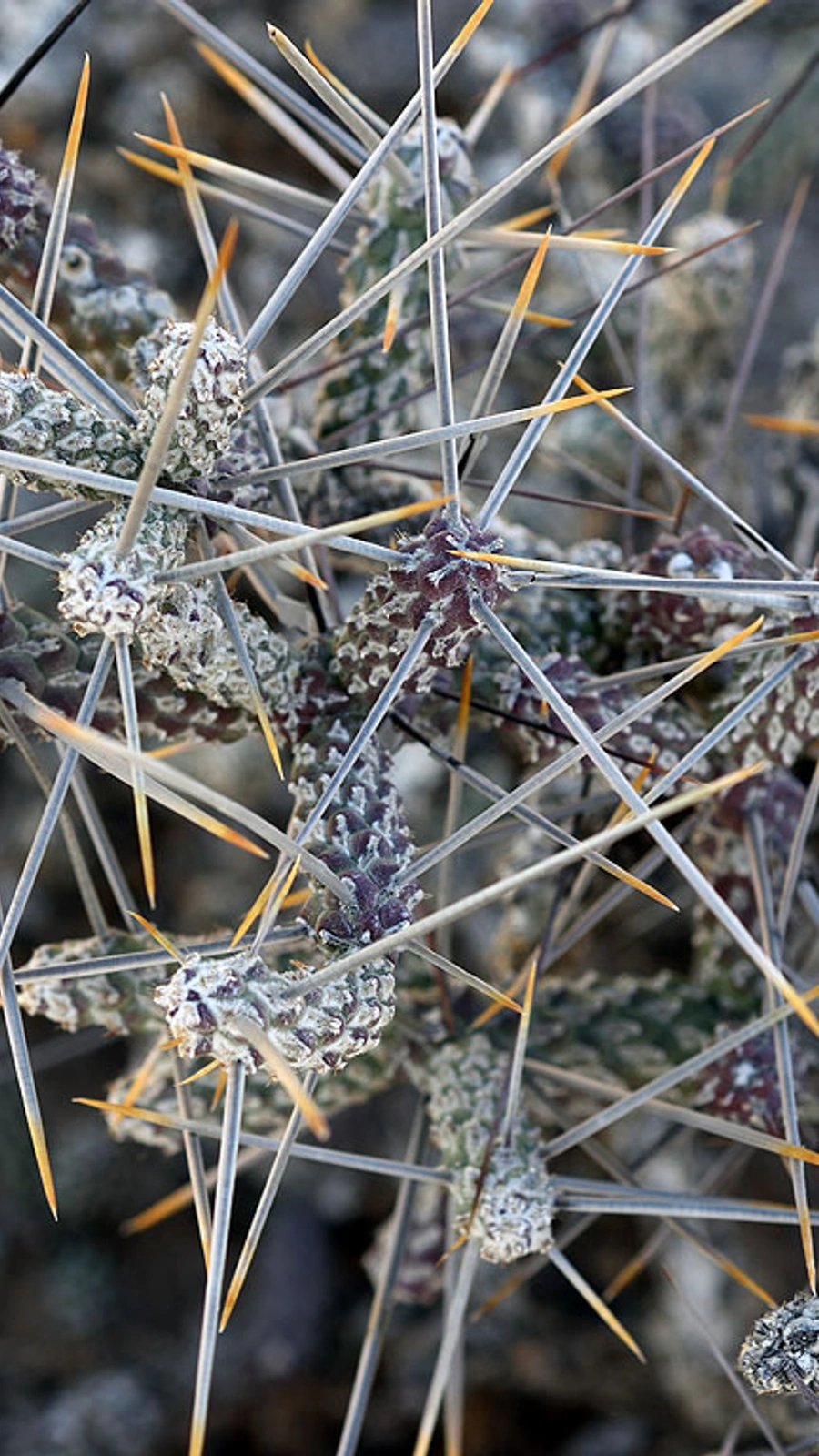 Reference image
Anteojo Cholla
Cylindropuntia anteojoensis is a resilient, cylindrical cactus species belonging to the Cactaceae family. Highly adapted to harsh arid climates, it is appreciated by succulent enthusiasts for its intricate, heavily armed jointed stems and structural growth form.
Classified within the genus Cylindropuntia, formerly included in Opuntia, this species is distinguished by its cylindrical jointed segments rather than flat pads 1. The specific epithet 'anteojoensis' refers to its type locality or associated geographic features in Coahuila, Mexico.
This species is native to northern Mexico, particularly within the arid state of Coahuila and the surrounding Chihuahuan Desert region 2. It thrives in limestone soils, stony hillsides, and desert shrublands where it experiences hot, dry summers and cool, dry winters.
The plant features jointed, cylindrical stems that are greyish-green in color, adorned with prominent tubercles. The areoles bear sharp, dense spines covered in papery sheaths, a typical feature of chollas. Its flowers are usually pale yellow or yellowish-green, developing into dry, spiny fruits.
In cultivation, it demands full sun exposure and an extremely porous, mineral-based substrate. Water should be applied only when the soil is dry to the core. During winter, it requires a dry rest period with almost no water to prevent rot and withstand low temperatures.
The most prevalent errors include overwatering, planting in moisture-retaining organic soils, and keeping the plant in shaded or poorly ventilated indoor spots. These conditions rapidly trigger root rot and etiolation.
Requires 6+ hours of direct sunlight daily; unsuitable for low-light indoor areas.
Water deeply but only when the soil is 100% dry. Keep dry in winter.
Requires highly mineralized, fast-draining soil with pumice, coarse sand, and limestone gravel.
Equipped with very sharp, easily detached spines and glochids. Keep away from pets and handle with thick gloves.
Moderate. Easy if underwatered, but highly sensitive to damp and humid conditions.
Native to the limestone flats and desert scrublands of northern Mexico, specifically within the dry environments of the Chihuahuan Desert.
