
Light
Full Sun
Requires at least 6 to 8 hours of direct sunlight daily to maintain its compact, woody form.
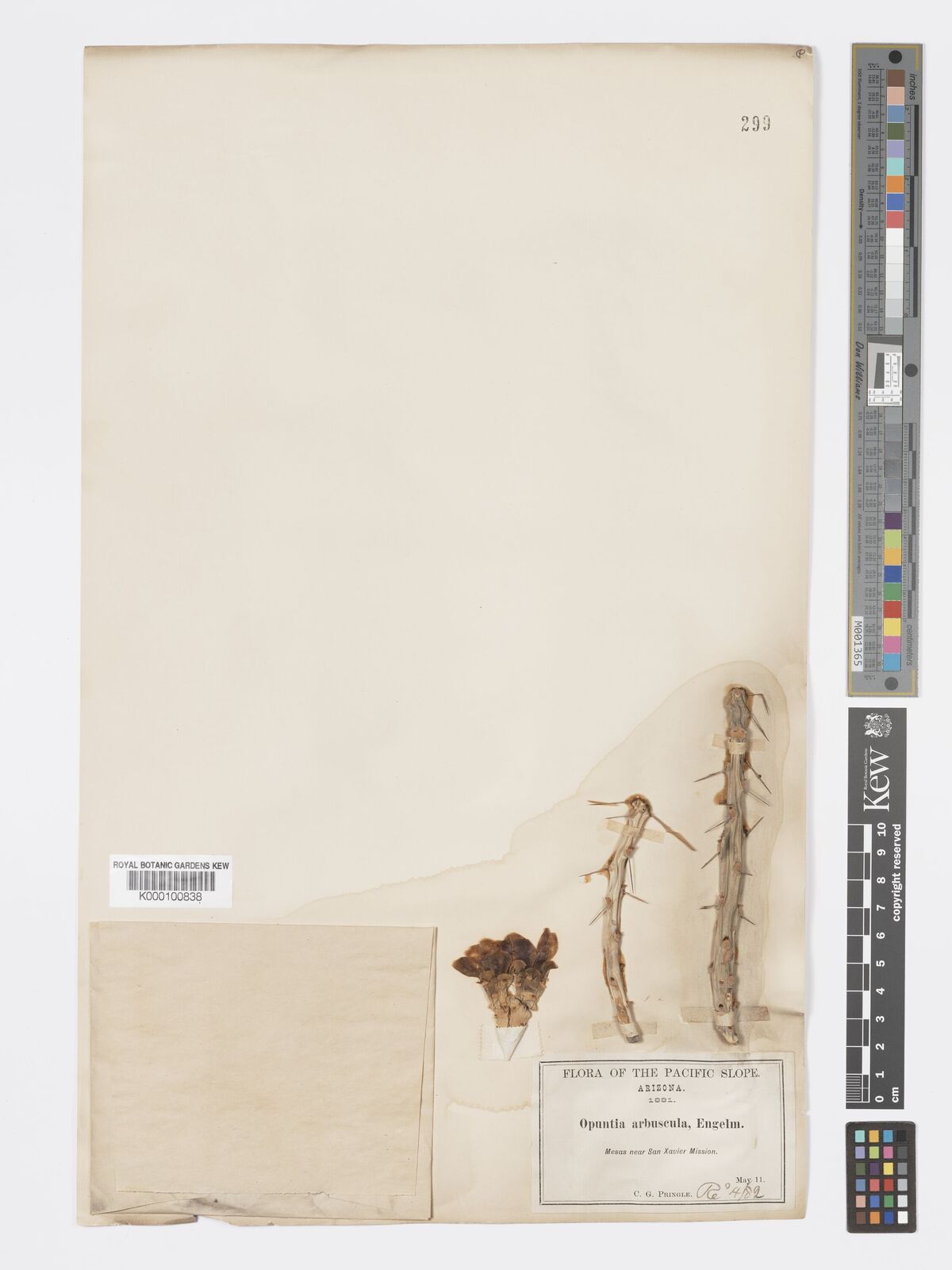 Reference image
Pencil Cholla
Cylindropuntia arbuscula, commonly known as the Pencil Cholla, is a shrubby, tree-like cactus native to the arid desert regions of North America. It is highly valued for its striking, multi-branched form in xeriscape gardens 1.
Belonging to the Cactaceae family, this species was described by George Engelmann. The specific epithet arbuscula means 'resembling a small tree,' highlighting its branching growth habit. It was previously classified as Opuntia arbuscula 2.
This species is native to the Southwestern United States, particularly Arizona, and northwestern Mexico (Sonora). It thrives in desert shrublands, sandy flats, and gravelly slopes up to elevations of 1,000 meters 1.
Growing up to 3 meters tall, it features thin, cylindrical, green to bronzy-green stem joints. The spines are sheathed and range from yellow to brown. In late spring, it produces attractive greenish-yellow, copper, or bronze-colored flowers 2.
It requires full sun exposure and extremely well-draining, gritty soil. Once established, it is highly drought-tolerant and can survive winter frosts down to -7°C if kept completely dry 1.
Overwatering is the leading cause of root rot for this desert species. Insufficient sunlight leads to weak, elongated stems. Avoid keeping it in poorly ventilated or highly humid environments 2.
Requires at least 6 to 8 hours of direct sunlight daily to maintain its compact, woody form.
Water thoroughly only when the soil is 100% dry. Keep dry in winter.
Use a specialized succulent mix heavily amended with pumice, grit, and coarse sand.
Features numerous fine, easily detached spines (glochids) that cause skin irritation. Keep away from pets and children.
Extremely easy to care for and highly drought-resistant, perfect for xeriscaping.
Widely distributed throughout the Sonoran Desert plains of Arizona and Sonora, adapting to sandy and gravelly desert soils.
