
Light
Full Sun
Requires full, direct sun for at least 6 hours daily to maintain its structural integrity.
 Reference image
 Reference image
San Bernardino Cholla
Cylindropuntia bernardina is a robust, shrubby succulent species belonging to the cactus family (Cactaceae). Highly adapted to arid desert ecosystems, this species is characterized by its heavily armed cylindrical joints and resilient nature, making it a prominent component of xeric landscapes.
Originally aligned with the broad genus Opuntia, it was later moved to Cylindropuntia due to its cylindrical stem structure and the presence of papery sheaths on its spines 1. The specific epithet bernardina refers to the San Bernardino region in Southern California, where the plant is commonly found.
This species is native to Southwestern United States (primarily Southern California) and northwestern Mexico (Baja California) 2. It thrives in desert chaparral, dry gravelly slopes, wash margins, and alluvial fans, often tolerating harsh, rocky soils and extreme summer heat.
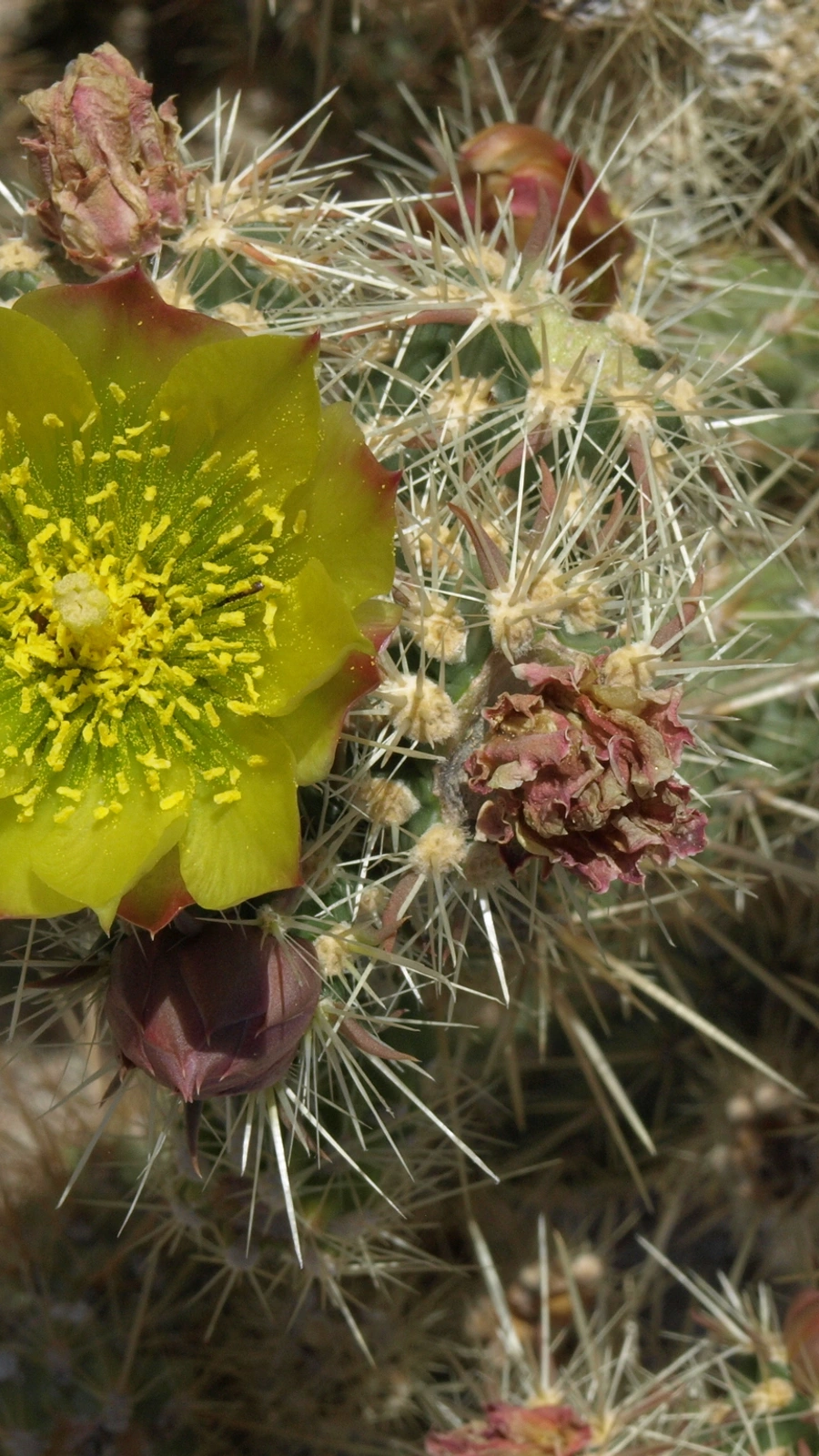
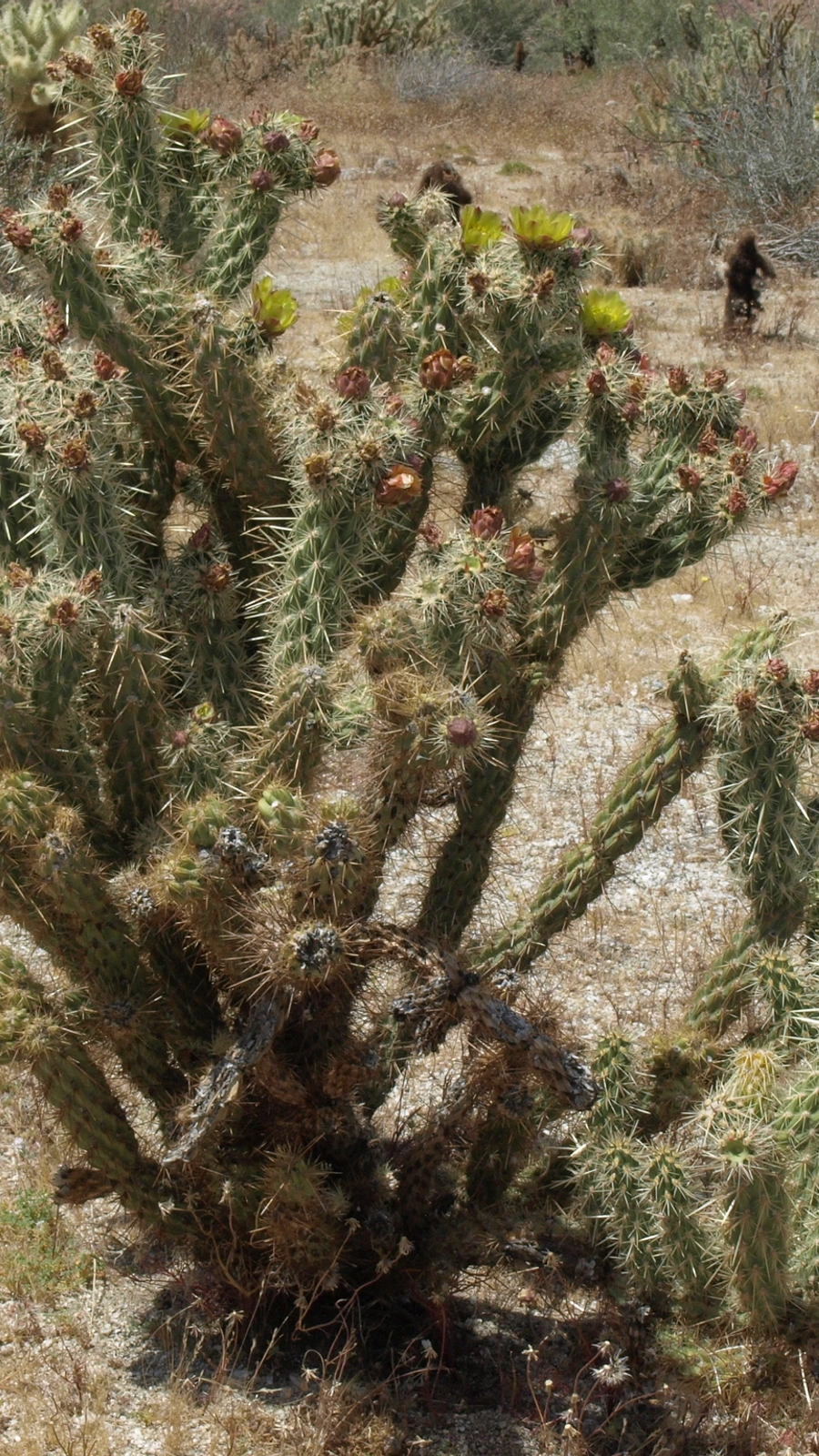
Growing as a multi-branched shrub from 1 to 2.5 meters tall, Cylindropuntia bernardina features segmented, cylindrical green to gray-green stems. The stems are covered in pronounced tubercles bearing aeroles with formidable yellowish-brown spines and irritating glochids. Its flowers, appearing in late spring, display greenish-yellow petals.
In cultivation, it requires full sun exposure and exceptional drainage. Watering should be infrequent, allowing the soil medium to dry out completely between sessions. During the winter, irrigation must be suspended to mimic its natural dry dormancy cycle.
Overwatering and placing the plant in low-light environments are the most common mistakes. These lead to root rot and etiolation, where the plant becomes weak, pale, and structurally compromised.
Requires full, direct sun for at least 6 hours daily to maintain its structural integrity.
Allow the potting medium to dry out completely between waterings. Water minimally in winter.
Use a specialized, mineral-heavy cactus soil mix with excellent drainage properties.
Features sharp spines and micro-barbed glochids that easily penetrate skin. Keep away from pets and children.
Extremely drought-tolerant and easy to grow if overwatering is strictly avoided.
Native to the arid slopes and desert flats of Southern California and the Baja California peninsula in Mexico.
