
Light
Full Sun
Requires full sun, ideally at least 6 hours of direct sunlight daily from a south-facing aspect.
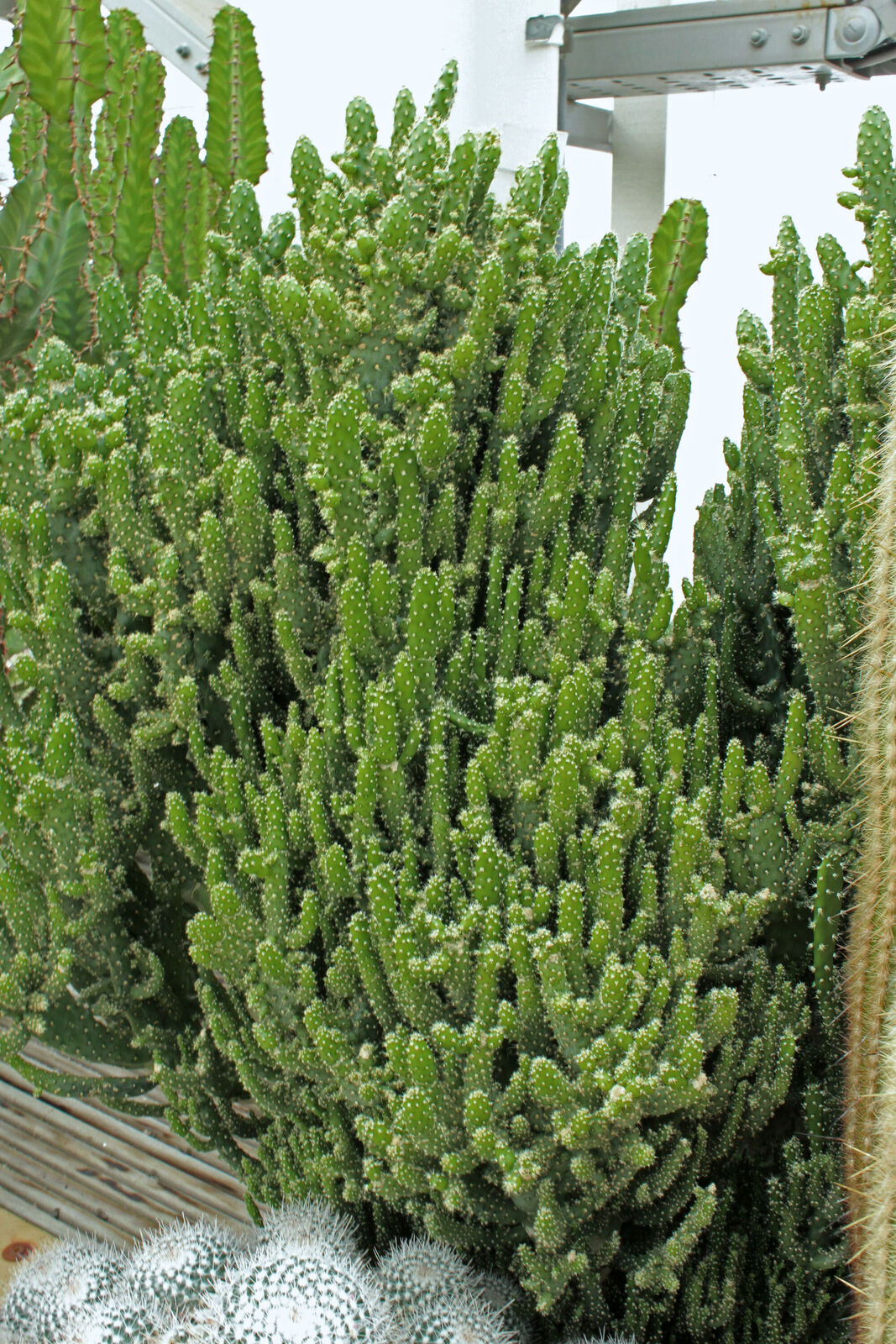 Reference image
California Cholla
Cylindropuntia californica, commonly known as the California cholla or snake cholla, is a perennial succulent shrub belonging to the Cactaceae family 1. It is a prominent structural plant found in coastal sage scrub, chaparral, and desert transition zones.
Originally described under the genus Opuntia, it was subsequently transferred to Cylindropuntia due to its characteristic cylindrical stem segments and the presence of paper-like sheaths surrounding its spines. It comprises several recognized varieties, including the rare coastal Cylindropuntia californica var. californica 2.
This species is native to southwestern North America, primarily distributed throughout Southern California in the United States and Baja California in Mexico 1. It thrives at elevations below 1000 meters on dry, rocky slopes, canyon walls, and sandy alluvial plains with excellent drainage.
Cylindropuntia californica forms an upright or sprawling shrub ranging from 1.5 to 2.5 meters in height. Stems are composed of green to greyish-green cylindrical segments covered in prominent tubercles. The spines are yellowish or brownish, enclosed in thin, papery sheaths. In late spring, it produces pale green to yellow flowers, occasionally tinged with purple or red, followed by dry, spiny fruits 2.
In cultivation, it requires full sun exposure and extremely porous, gravelly soil. Overwatering is the most common cause of failure; the soil must dry out completely between waterings. It has a moderate cold tolerance, enduring short-lived frosts down to -5°C if kept entirely dry.
Using standard organic potting soil is a fatal mistake as it retains moisture for too long, leading to root rot. Growing the plant indoors without high-intensity grow lights will cause weak, etiolated growth.
Requires full sun, ideally at least 6 hours of direct sunlight daily from a south-facing aspect.
Water deeply but infrequently, allowing the soil to dry out completely. Minimize watering in winter.
Requires a gritty mineral mix containing pumice, coarse sand, and minimal organic matter.
Equipped with sharp spines and micro-barbed glochids; dangerous for pets and children.
Moderate difficulty due to physical handling challenges and strict watering requirements.
The native range of this species extends across Southern California and down into the Baja California peninsula of Mexico, where it populates dry hillsides, coastal bluffs, and desert valleys.
